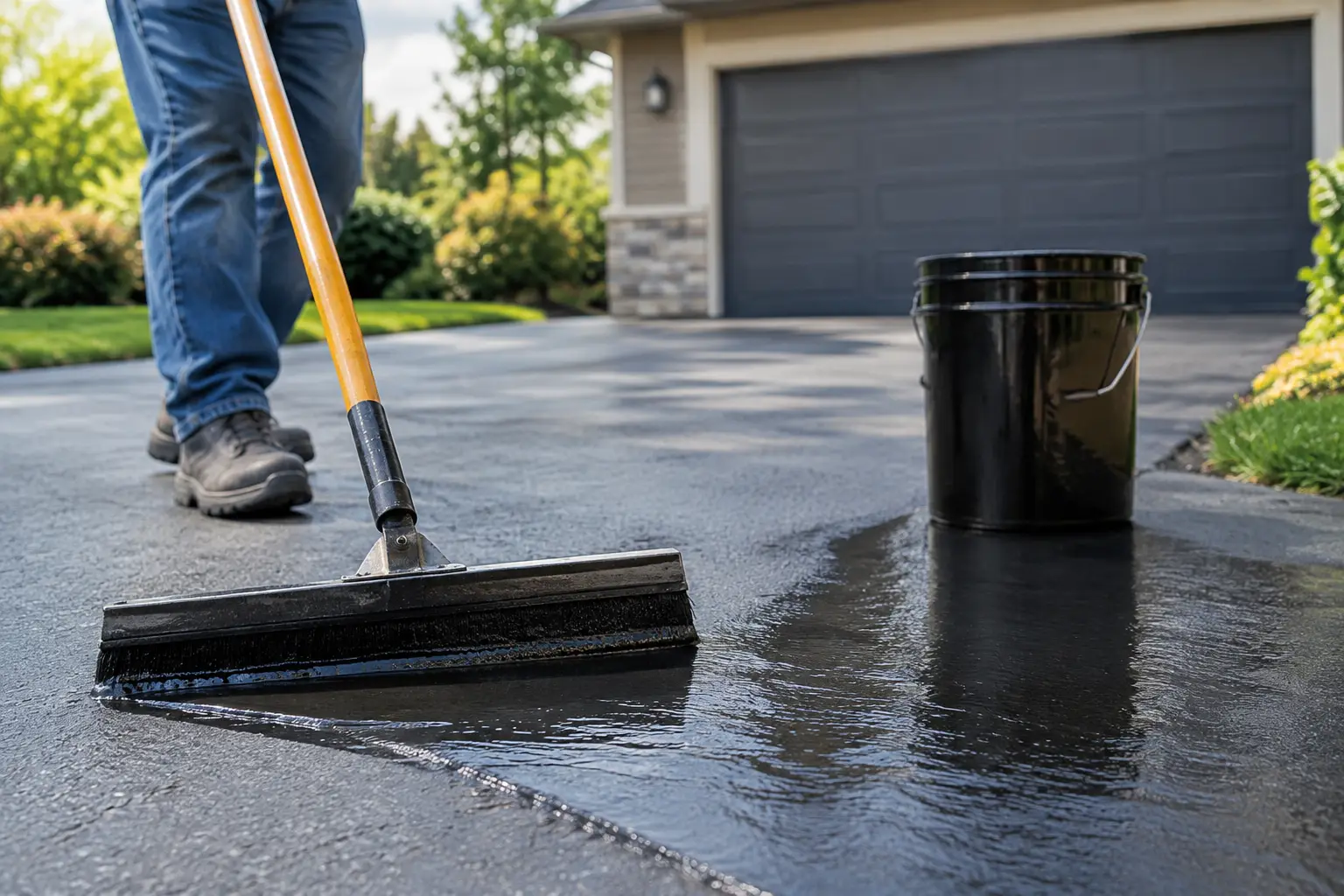
A faded driveway is more than a curb-appeal problem. When asphalt loses its protective surface, water can work into small cracks, sunlight dries out the binder, and Pennsylvania freeze-thaw cycles turn minor wear into expensive repairs. The best driveway sealer for asphalt is the one that fits the condition of your pavement, the exposure around your home, and the quality of the preparation before it is applied.
A good sealer restores a rich black appearance. A great sealer also creates a protective barrier against water, UV exposure, salt, oil drips, and everyday traffic. But sealer is not a magic cover-up. The right material, applied to a properly repaired driveway at the right time, is what keeps asphalt looking sharp and lasting longer.
What Makes a Driveway Sealer Worth Using?
The purpose of seal coating is protection, not structural repair. Asphalt is made with aggregate held together by petroleum-based binders. Over time, oxygen, sunlight, rain, and vehicle fluids break down those binders. The surface turns gray, becomes more brittle, and is more likely to crack or unravel.
A quality sealer slows that process by shielding the surface from the elements. It also fills very small surface voids, improves water runoff, and gives a worn driveway a clean, uniform finish. For homeowners, that means better curb appeal now and a better chance of avoiding premature resurfacing later.
The best product is not always the thickest-looking coating or the cheapest bucket at the hardware store. It should adhere well, cure evenly, hold up to your driveway’s traffic, and suit local weather conditions. Preparation matters just as much as the sealer itself. If the surface is dirty, damp, oil-stained, or cracked, even premium material will not perform as it should.
Best Driveway Sealer for Asphalt: Match the Material to the Job
There is no single sealer that is right for every driveway. The material that makes sense depends on traffic, surface age, drainage, exposure to automotive fluids, and local regulations. A contractor should explain the options plainly instead of pushing a one-size-fits-all coating.
Refined Tar Emulsion Sealers
Refined tar emulsion sealers have long been valued for strong resistance to gasoline, oil, sunlight, and water. They can provide a deep black finish and durable protection on driveways and parking areas with regular vehicle use.
The trade-off is that coal-tar-related products can be subject to environmental concerns and local restrictions because of their PAH content. Availability and permitted use vary by location. Before choosing this type of sealer, confirm what is appropriate for your property and municipality. A responsible contractor will recommend materials that meet applicable local requirements.
Asphalt Emulsion Sealers
Asphalt emulsion sealers are water-based and generally have lower odor and lower PAH concerns than coal-tar products. They are a practical choice for many residential driveways, especially when the pavement is in sound condition and receives normal household traffic.
Their performance depends heavily on product quality, surface preparation, and weather during application. Lower-grade asphalt emulsions can wear faster than professional-grade materials, particularly on steep driveways, turning areas, or spots where tires pivot. A properly formulated and professionally applied asphalt emulsion can still deliver excellent protection and a clean black finish.
Acrylic and Specialty Sealers
Acrylic-based and specialty coatings are often selected when fast curing, color retention, or enhanced durability is a priority. Some are well suited to high-visibility areas, commercial properties, or locations where a specific performance requirement calls for a more advanced coating.
These products typically cost more, and they are not automatically necessary for every home driveway. For a standard residential surface, the better investment may be thorough crack repair, careful cleaning, and a premium professional sealer rather than paying for a specialty product your driveway does not need.
Start With the Condition of Your Asphalt
Before selecting any sealer, look at what is happening below the surface. Fine, hairline cracks are common and can often be cleaned, filled, and sealed as part of routine maintenance. Wider cracks need proper crack filling before seal coating. Potholes, crumbling edges, low spots that hold water, and large alligator-cracked areas require repair first.
Applying sealer over failing asphalt may make the driveway look better for a short time, but it will not stop base failure or repair broken pavement. In fact, a jet-black finish can make a serious problem less obvious until it worsens. Honest advice means separating what can be protected from what must be repaired.
Age matters, too. Fresh asphalt needs time to cure before it is sealed, usually several months and sometimes longer depending on conditions and the asphalt mix. Sealing too soon can interfere with the pavement’s natural curing process. Older asphalt that is dry and faded is often an ideal candidate, provided the surface is still structurally stable.
Preparation Is Where the Protection Begins
The difference between a coating that lasts and one that peels often comes down to the work performed before the first spray or brush stroke. The driveway should be cleared of vehicles, dirt, leaves, loose aggregate, and weeds. Edges need to be trimmed cleanly so the finished work looks intentional rather than rushed.
Oil spots deserve special attention. Sealer may not bond correctly to petroleum-stained areas unless they are cleaned and primed as needed. Cracks should be cleaned out and filled with the right crack-repair material. Potholes and deteriorated sections should be patched, compacted, and allowed to set properly before coating.
Drainage should also be evaluated. A sealer protects the surface, but standing water remains hard on asphalt. If water regularly pools near a garage, along an edge, or in a wheel path, correcting the drainage issue can do more for the driveway’s long-term life than simply adding another coat of sealer.
Application Quality Matters More Than a Quick Black Finish
A driveway can look dark on the day it is sealed and still wear poorly if the coating was thinned excessively, applied unevenly, or put down over damp pavement. Professional application starts with suitable weather: a dry surface, favorable temperatures, and enough time for the coating to cure before rain or traffic.
Coverage must be consistent, especially around edges, joints, cracks, and vehicle turning zones. Two properly applied coats may be appropriate for a worn surface or high-use area, while a sound residential driveway may perform well with the recommended application system for that product. More material is not always better. Excessively heavy coating can track, crack, or cure unevenly.
Homeowners should also plan for cure time. Keep vehicles off the driveway until the coating has cured according to the product, weather, and contractor’s guidance. Avoid sharp turns from parked tires during the early curing period. That small amount of patience helps protect a finish that is meant to serve for years, not days.
When to Seal Coat an Asphalt Driveway in Pennsylvania
For most Pennsylvania homes, seal coating is best scheduled during a stretch of dry, reliably mild weather. Spring through early fall is often suitable, provided temperatures and rain forecasts support the material being used. A contractor should never treat the calendar as more important than actual site conditions.
Many driveways benefit from evaluation every two to three years, but that is a guideline, not a rule. A shaded driveway may stay damp longer. A south-facing surface may take more UV exposure. Families with multiple vehicles, delivery traffic, or frequent turning movements may see faster wear in certain areas. Watching for fading, small cracks, and water absorption is more useful than sealing on an arbitrary schedule.
Choose Protection, Not Just the Lowest Price
A low quote can be tempting, especially when two driveways appear similar from the street. Ask what material will be used, whether cracks and oil spots are included, how the driveway will be cleaned, how many coats are planned, and what cure time is expected. Clear answers are a sign of disciplined workmanship.
At Eagle Seal Coating, every job is treated like our reputation depends on it. Because it does. The right recommendation may be seal coating, crack repair first, or a larger repair that prevents money from being wasted on a cosmetic coating.
Your driveway does not need sales pressure. It needs an honest look at its condition and a plan that protects the asphalt you already own. A free, no-pressure estimate can give you that clarity before small surface wear has the chance to become a larger repair.
Need Help With Your Driveway?
Get a free, no-obligation estimate from Eagle Seal Coating. We'll give you an honest recommendation — no pressure.
Get My Free Estimate →