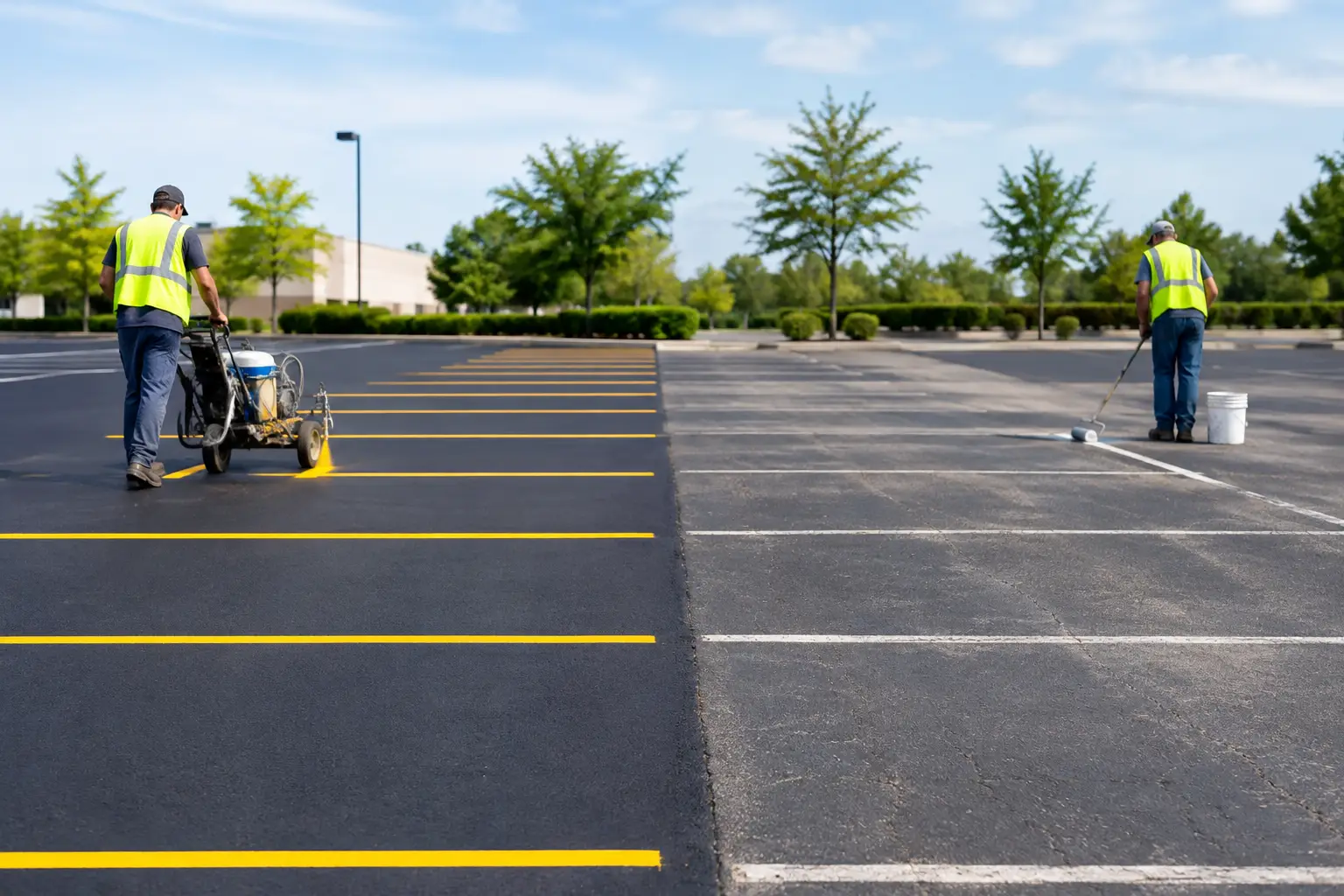
A faded parking lot can make a well-maintained property look neglected before a visitor ever reaches the door. More importantly, weak markings create real confusion around traffic flow, parking boundaries, accessible spaces, and fire lanes. When property owners ask about parking lot restriping versus repainting, they usually want a straightforward answer: Does the lot need fresh paint, or does it need a more complete layout reset?
The answer depends on the condition of the pavement, the visibility of the existing markings, and whether the lot still functions the way it should. A proper assessment looks beyond faded white and yellow lines. It considers safety, ADA access, drainage, traffic patterns, and the condition of the asphalt underneath.
What Is the Difference Between Restriping and Repainting?
In everyday conversation, restriping and repainting are often used interchangeably. Both services restore visible pavement markings. But there is a useful distinction when planning work for a commercial property, apartment community, office complex, or retail center.
Repainting generally means refreshing existing markings in the same locations. The parking stalls, arrows, stop bars, curbs, and accessible symbols are still correctly placed and clearly laid out. They simply need new, high-visibility paint.
Restriping is broader. It may include repainting existing lines, but it can also involve measuring and laying out new stall dimensions, changing traffic flow, adding or relocating accessible spaces, revising loading zones, and replacing outdated markings. If a lot has been resurfaced, seal coated, expanded, or altered over the years, restriping is often the right term and the right scope of work.
The practical question is not which word sounds better. It is whether your property needs a visual refresh or a functional correction.
When Repainting Is the Right Call
Repainting is often the most efficient choice when the pavement is in sound condition and the current layout still serves the property well. The lines may be worn from traffic, weather, snow removal, UV exposure, or time, but drivers can still see where they belong.
This approach works well when parking spaces remain properly sized, accessible markings are current, directional arrows still make sense, and there are no major changes to the property’s use. A professional crew cleans the surface, prepares the marking areas, and applies durable traffic paint with crisp, consistent coverage.
Fresh paint does more than improve appearance. It helps drivers park efficiently, reduces the chance of door dings and blocked lanes, and gives visitors a clear path through the property. For businesses, that clean first impression matters. For multifamily properties and offices, it supports safer daily use without disrupting the site with unnecessary work.
Repainting is also a smart finishing step after seal coating. A newly sealed lot has a deep black appearance that protects the asphalt and makes bright white, yellow, blue, and red markings stand out sharply. The surface looks cared for because it is cared for.
When Parking Lot Restriping Is Necessary
A simple repaint will not solve a layout problem. Restriping is the better investment when existing markings are inaccurate, outdated, poorly placed, or no longer suited to the property.
For example, a retail center may need wider travel lanes because delivery traffic has increased. An office property may want to convert underused space into additional stalls. A multifamily community may need clearer visitor parking, reserved spaces, or fire-lane markings. These are not paint-only decisions. They require a measured layout that supports how the property actually operates.
Restriping is also common after major pavement work. If pothole repairs, asphalt patching, milling, resurfacing, or drainage improvements have changed the surface, old striping may no longer align properly. Starting with a clean layout prevents crooked rows, inconsistent stall widths, and awkward traffic paths.
ADA compliance is another major reason to restripe. Accessible parking spaces need more than a blue symbol. Their number, location, access aisles, signage, slopes, and routes to the building all matter. Requirements can vary by site, and older lots often need updates after property changes or repaving. A professional striping plan helps property owners avoid treating accessibility as an afterthought.
The Pavement Condition Comes First
No line striping job can compensate for failing asphalt. If the surface is heavily cracked, raveled, sunken, or broken around potholes, paint will follow the damage rather than fix it. The new markings may look better for a short time, but the lot will still present safety concerns and a poor impression.
Before repainting or restriping, inspect the pavement for cracks that allow water into the base, potholes that create trip and vehicle hazards, and areas where water stands after rain. In Pennsylvania, freeze-thaw cycles can turn small defects into larger failures quickly. Water enters a crack, freezes, expands, and weakens the pavement from below.
The right sequence is usually repair first, protect second, stripe last. Crack filling and pothole repair address active damage. Seal coating helps shield sound asphalt from water, oxidation, UV exposure, fuel drips, and everyday wear. Once the surface is properly cured, fresh markings complete the job.
This order protects the investment. It also prevents the frustration of painting a lot only to cut through the new lines for repairs a few months later.
Preparation Determines How Long the Lines Last
A clean, straight line is not just a matter of running a striping machine across the pavement. Good results begin with preparation and layout.
The surface must be dry and free of loose debris, dirt, oil, and standing water. Oil spots may require special treatment because traffic paint will not bond reliably to contamination. The crew should also verify dimensions, spacing, and alignment before paint is applied. A few rushed measurements can leave a whole row of spaces visibly uneven.
Material selection matters as well. Standard traffic paint is a practical choice for many parking lots, particularly when applied to a properly prepared surface in suitable weather. Higher-traffic areas, curbs, loading zones, and specialty markings may require a different approach depending on the property’s needs. The goal is not to oversell a material. It is to match the product and application method to the traffic, surface, and expected wear.
Weather affects the schedule. Paint needs a dry surface and appropriate temperatures to cure properly. Trying to stripe during damp conditions or just ahead of heavy rain can compromise adhesion and appearance. A dependable contractor plans around conditions rather than forcing a job that will not meet the standard.
Signs Your Lot Needs More Than Fresh Paint
Property managers often notice faded lines first, but several conditions point to a fuller restriping plan. Watch for inconsistent stall widths, spaces that are difficult to enter, arrows that conflict with current traffic patterns, missing fire-lane markings, or accessible spaces that no longer appear properly configured.
It is also worth reassessing the layout when the property changes tenants or uses. A medical office, restaurant, warehouse, and retail storefront can have very different parking and traffic needs. What worked years ago may now cause backups, blocked access, or unnecessary frustration for visitors.
A striped lot should make movement feel obvious. Drivers should know where to park, where to stop, which direction to travel, and which areas must remain clear. When people hesitate or improvise, the markings are no longer doing their job.
How Often Should a Parking Lot Be Restriped or Repainted?
There is no single calendar rule for every property. Traffic volume, snowplow use, sun exposure, pavement condition, paint type, and maintenance history all affect how quickly markings fade. A busy retail lot may need attention sooner than a lightly used office lot.
A practical approach is to inspect the markings at least once each year, ideally after winter. If lines are difficult to see in daylight, nearly invisible in wet conditions, or no longer guiding vehicles clearly, schedule an evaluation. Waiting until markings disappear entirely can create avoidable safety issues and leave the property looking behind on maintenance.
For many properties, combining line striping with a planned asphalt maintenance schedule is the most cost-effective approach. Instead of reacting to every visible problem, owners can address repairs, surface protection, and markings in the right order.
Protect the Surface and the First Impression
Your parking lot works every day, whether anyone is thinking about it or not. It guides customers to your door, gives employees a safe place to park, and takes the first hit from weather and traffic. Clear markings make that work easier.
Eagle Seal Coating approaches every striping project with the same standard used for asphalt protection and repair: measure carefully, prepare properly, and leave the property looking like it is managed with pride. If you are unsure whether your lot needs repainting or a complete restriping plan, a no-pressure estimate can provide a clear answer before small problems become expensive ones.
Need Help With Your Driveway?
Get a free, no-obligation estimate from Eagle Seal Coating. We'll give you an honest recommendation — no pressure.
Get My Free Estimate →