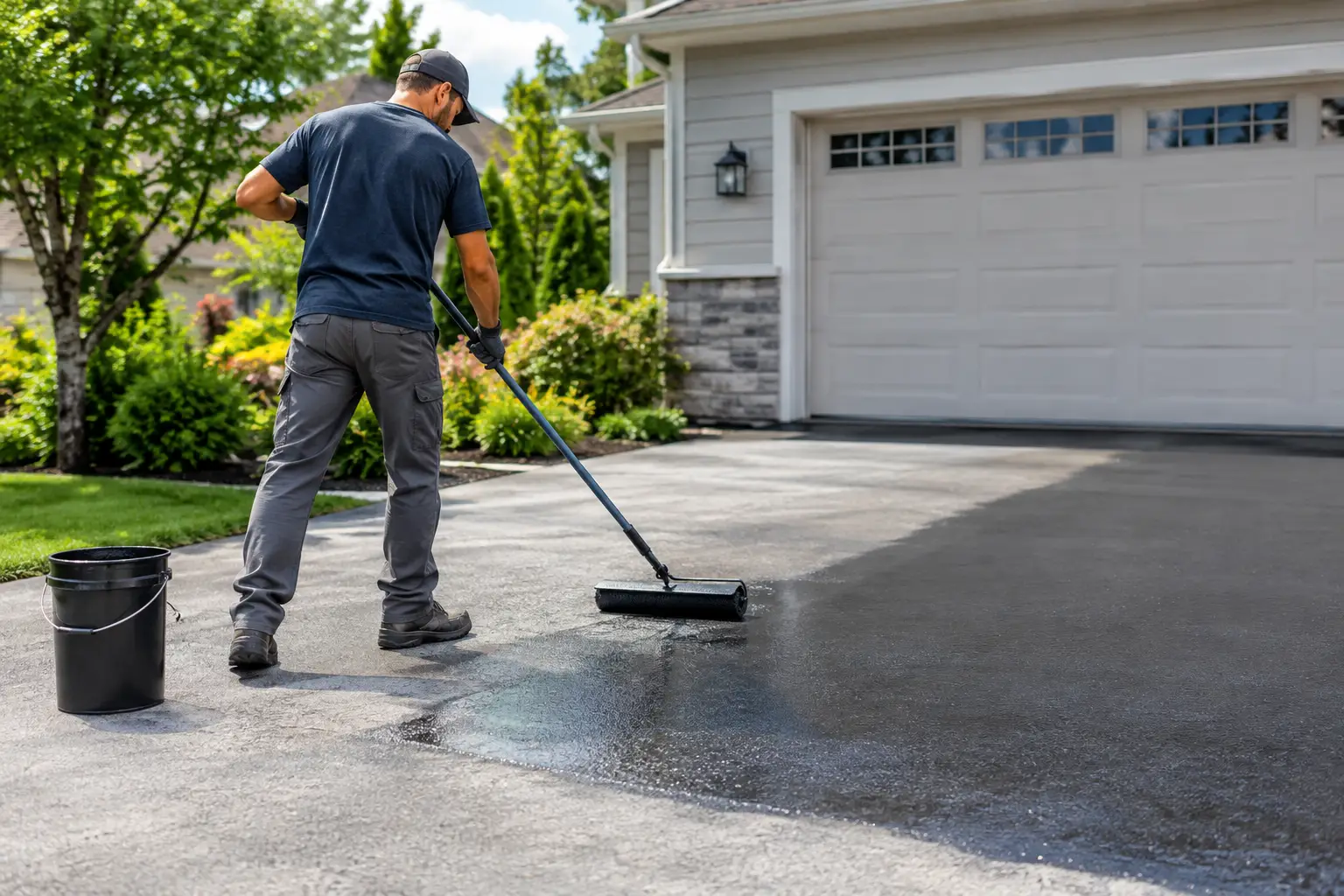
A driveway rarely fails all at once. It starts with a thin crack near the edge, a dull gray surface, or a spot that stays wet after rain. Then Pennsylvania winter arrives. Water works into those openings, freezes, expands, and turns a manageable issue into broken asphalt. Residential driveway maintenance is how homeowners stop that chain reaction before it reaches the point of costly resurfacing or replacement.
A well-maintained asphalt driveway should look clean, drain properly, and feel solid underfoot and under tires. It should also protect the base beneath it, because the base is what gives the driveway its strength. The Eagle protects. Your asphalt lasts.
Why Residential Driveway Maintenance Pays Off
Asphalt is durable, but it is not maintenance-free. Sunlight dries out the binder that holds asphalt together. Rainwater finds cracks and reaches the base. Vehicle weight puts added pressure on weak spots, especially where cars turn, park, or enter from the street. Oil, gasoline, road salt, and snow-removal equipment can add to the wear.
The biggest threat is water infiltration. Once water reaches the stone base beneath the asphalt, the problem is no longer just cosmetic. The base can soften, shift, or wash out. That movement causes cracks to widen, edges to crumble, and potholes to form. A simple repair becomes a larger restoration project.
Preventive care costs less because it addresses damage while the structure of the driveway is still sound. It also protects curb appeal. Fresh black seal coating gives a home a sharp, cared-for appearance, but the real value is the protective barrier it provides against weather and daily use.
Start With an Honest Driveway Inspection
Walk your driveway a few times each year, particularly in spring after freeze-thaw weather and in fall before winter returns. Look beyond the overall color. Pay attention to changes in the surface and areas that hold water.
Hairline cracks may be early signs of normal aging, but they still need attention before they open up. Wider cracks, cracks with broken edges, and branching patterns can indicate that water has already begun to affect the pavement or base. Potholes, low spots, and sections that feel soft under a vehicle deserve prompt professional evaluation.
Check the driveway edges, too. Asphalt needs support. When grass, soil erosion, or tire traffic breaks down the edges, the pavement can begin to unravel from the outside in. Avoid routinely parking with tires hanging off the edge, especially after heavy rain when the ground is soft.
Drainage should be part of every inspection. Water should move away from the driveway and home, not collect in shallow depressions or run toward the garage. Seal coating protects the surface, but it cannot correct standing water caused by poor grading or a failed base. Those conditions need repair first.
Repair Cracks Before Sealing the Surface
Seal coating is protection, not a cure for structural damage. Applying sealer over open cracks or potholes may improve the color temporarily, but it does not stop water from working below the surface. Quality residential driveway maintenance follows the right order: clean the asphalt, repair damaged areas, allow repairs to set properly, then apply seal coating when conditions are right.
Crack filling or crack sealing keeps water out of small openings and slows further deterioration. The best method depends on the crack size, movement, and condition of the surrounding pavement. A clean, prepared crack accepts repair material better than one filled with weeds, loose asphalt, or moisture.
Potholes require more than a surface patch when the material beneath the pavement has failed. Loose or damaged asphalt must be removed, the base must be assessed, and the area should be rebuilt with a sound repair that matches the surrounding driveway. A properly completed repair will not make an aging driveway brand-new, but it should be level, compact, and built to handle normal traffic.
Alligator cracking, which resembles a web of connected cracks, calls for a closer look. This pattern often means the base has weakened. Filling individual lines may buy limited time, but the dependable solution is usually to remove and repair the failed section. Honest advice matters here. Not every driveway needs replacement, but a surface treatment should never be sold as a substitute for needed base repair.
Use Seal Coating at the Right Time
A driveway does not need to be sealed every year. For many Pennsylvania homes, a professional seal coating schedule of about every two to three years is a practical starting point. The right interval depends on the driveway’s age, sun exposure, drainage, traffic, previous repairs, and overall condition.
A newer driveway must cure before its first seal coating. Sealing too early can interfere with the natural curing process. On the other hand, waiting until asphalt is faded, cracked, and brittle leaves it exposed longer than necessary. A professional inspection can determine whether the surface is ready or whether repairs should come first.
Proper preparation separates durable work from a short-lived finish. The surface should be cleaned of dirt, debris, vegetation, and stains that could prevent adhesion. Cracks and potholes should be repaired. Then premium-grade sealer can be applied evenly, including careful work around edges and transitions.
The result is a renewed black finish that improves the look of the property while helping shield asphalt from UV exposure, water, and everyday wear. It is a protective service, not paint. A good application should look clean and uniform, but its job is to preserve the pavement beneath it.
Everyday Habits That Protect Asphalt
Homeowners can add years to a driveway with a few practical habits. Keep leaves, mulch, and soil from building up along the edges, where moisture can linger. Clear snow with care and avoid digging metal shovel blades into the pavement. If using a snowplow service, make sure the operator understands where driveway edges and raised areas are located.
Clean fuel and oil spills as soon as possible. Petroleum products can soften asphalt binder, particularly during warm weather. For routine cleaning, a broom and light rinse are usually enough. High-pressure washing can force water into weak cracks, so it should be used cautiously and never as a replacement for repair.
Try not to park heavy trailers, dumpsters, or equipment in the same place for extended periods. A residential driveway is designed for normal household traffic, not concentrated commercial weight. If heavier vehicles must use the driveway, keep them away from unsupported edges and soft areas.
Do not assume every dark spot or rough patch needs immediate seal coating. If the pavement is breaking apart, sinking, or holding water, repairs come first. Maintenance works best when it is matched to the actual condition of the asphalt.
A Seasonal Plan for Pennsylvania Driveways
Spring is the time to inspect winter damage. Look for new cracks, loose material, potholes, and drainage issues after snow and ice have cleared. Address repairs early, before spring rain gets deeper into the pavement.
Summer typically offers favorable conditions for seal coating and asphalt repairs because surfaces can dry thoroughly and materials can cure as intended. Schedule work before the driveway reaches a point where multiple repairs are needed. A planned maintenance visit is easier to manage than an emergency repair after a pothole forms.
In fall, clear debris, inspect drainage, and handle any remaining crack repairs before repeated freezing temperatures arrive. Winter is mainly about protection: remove snow carefully, avoid harsh treatment at the edges, and watch for water collecting during thaw cycles.
When to Call a Professional
Call for an estimate when cracks are widening, potholes appear, water pools after rain, or the driveway has lost its dark protective finish. A dependable contractor should explain what the asphalt needs now, what can wait, and why. You should receive a clear scope of work, straightforward pricing, and no pressure to buy services that do not fit the condition of your driveway.
Eagle Seal Coating approaches each residential driveway as a visible investment in the home. Repairs, preparation, and seal coating are handled with the same standard: every job treated like our reputation depends on it. Because it does.
The right next step is simple. Take a close look at your driveway before the next season changes it. A small crack repaired today can keep water out, protect the base, and help your driveway serve your home with a clean, solid finish for years to come.
Need Help With Your Driveway?
Get a free, no-obligation estimate from Eagle Seal Coating. We'll give you an honest recommendation — no pressure.
Get My Free Estimate →