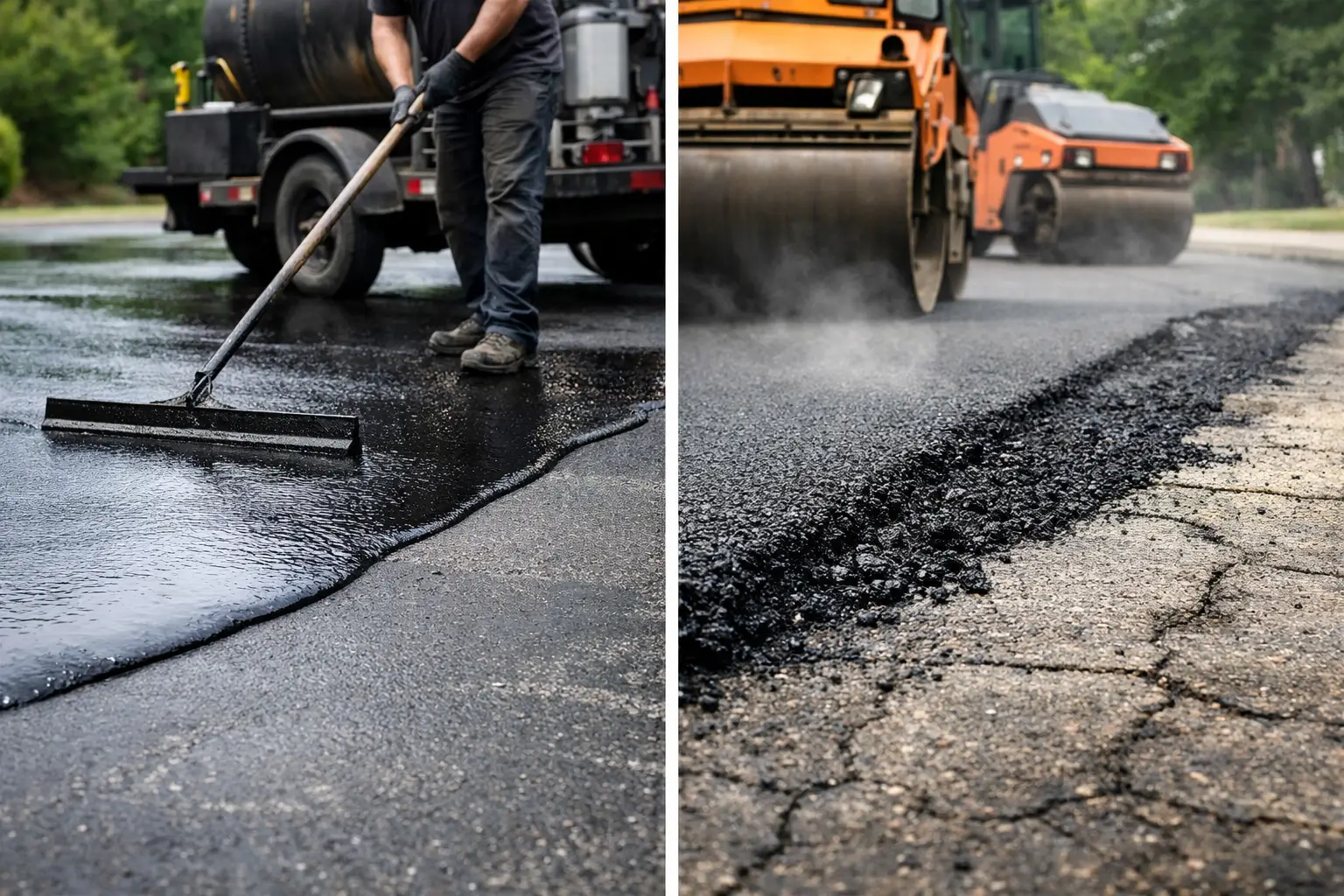
A driveway can look faded and tired long before it is structurally worn out. Other times, a fresh black surface is hiding cracks, low spots, and failing asphalt underneath. That is why the decision between sealcoating vs asphalt resurfacing should never come down to color alone. The right service depends on what is happening below the surface, how far damage has spread, and whether the existing asphalt still has a solid foundation.
For Pennsylvania homeowners and property managers, timing matters. Water, sun, vehicle traffic, fuel drips, and repeated freeze-thaw cycles can turn small defects into expensive repairs. Addressing the right problem early protects the pavement you already paid for.
Sealcoating vs Asphalt Resurfacing: The Core Difference
Sealcoating is a protective maintenance treatment. A professional crew cleans the asphalt, repairs suitable cracks and surface defects, then applies a protective coating over the existing pavement. The result is a renewed jet-black appearance and a barrier that helps defend the asphalt from water intrusion, UV oxidation, oil, and normal wear.
Resurfacing is a more substantial repair. It involves placing a new layer of hot-mix asphalt over a prepared existing surface. Before that overlay goes down, damaged areas must be repaired, the surface may need milling or leveling, and the base has to be stable enough to support the new material. Resurfacing creates a new driving surface. It does not simply protect the old one.
The practical difference is straightforward: sealcoating preserves sound asphalt, while resurfacing renews asphalt that is worn beyond the point where a protective coating can do its job.
When Sealcoating Is the Better Investment
Sealcoating makes sense when your driveway or parking lot is structurally sound but beginning to show its age. The asphalt may look gray, dry, or blotchy. Fine surface cracks may be present, but they should be repaired before sealing. The surface can have minor wear from traffic, weather, or chemical spills without needing a new asphalt layer.
A sealcoat will not fill deep cracks, correct drainage problems, or repair potholes. Those issues need proper repair first. But once the repairs are complete, a quality coating helps slow the causes of future damage. It seals the small pores in asphalt where water can enter, and it reduces UV exposure that makes asphalt brittle over time.
For many residential driveways, scheduled sealcoating every two to three years is a smart maintenance rhythm, depending on traffic, shade, drainage, and surface condition. Commercial lots may need a more tailored schedule because turning vehicles, delivery traffic, and parked cars create heavier wear in certain areas.
The appearance benefit matters, too. A clean black finish improves curb appeal and gives a property a maintained, cared-for look. On a commercial site, fresh sealcoating paired with crisp line striping makes parking areas easier to use and more professional from the first impression.
Sealcoating works best when you act early
The best time to sealcoat is before widespread deterioration sets in. Waiting until the surface is heavily cracked or broken apart usually means the coating will be cosmetic rather than protective. Proper preparation is the difference. Cracks, potholes, and failed edges need attention before the protective coating is applied.
That is the disciplined approach: repair what is failing, protect what is still sound, and avoid paying for a larger project before it is truly necessary.
When Asphalt Resurfacing Is the Right Call
Asphalt resurfacing is typically the better option when the pavement has extensive surface damage but the base beneath it remains stable. Common signs include widespread cracking, rough or uneven pavement, repeated patching, worn aggregate, shallow depressions, and surfaces that no longer drain consistently.
A resurfacing project can restore a smoother, stronger driving surface without the cost of full asphalt replacement. It is often appropriate for a driveway or lot that has reached the end of its maintainable surface life but has not suffered complete base failure.
The condition of the foundation determines whether resurfacing will hold up. If the pavement has deep alligator cracking, major sinking, soft areas, severe heaving, or ongoing water problems, simply placing new asphalt on top may not solve the problem. Those signs can point to a failed base, which may require excavation and reconstruction in affected areas.
Resurfacing also changes elevations. New asphalt adds thickness, so transitions around garage doors, walkways, curbs, drainage structures, and catch basins need careful planning. On commercial properties, striping layouts, ADA access areas, and traffic flow should also be reviewed once the new surface is in place.
A new layer is only as good as the preparation below it
Resurfacing is not a shortcut when it is done correctly. The existing pavement has to be evaluated, repaired, cleaned, and properly prepared to bond with the overlay. Problem areas should be addressed rather than buried. Otherwise, cracks and low spots can return through the new asphalt sooner than they should.
That is why a lower resurfacing quote is not always a better value. The scope should clearly explain what happens to damaged sections, drainage concerns, transitions, and edges. Good workmanship starts before the first truck arrives.
Cost: Why the Cheapest Option Is Not Always the Least Expensive
Sealcoating costs significantly less than resurfacing because it uses less material and does not involve installing a new asphalt layer. For a driveway with sound pavement, it is one of the most cost-effective ways to extend asphalt life and maintain a finished appearance.
Resurfacing costs more because it requires hot-mix asphalt, equipment, labor, preparation, and often repairs before the overlay. Yet it can still be less expensive than full replacement when the base remains in good condition.
The mistake is choosing sealcoating to avoid resurfacing when the surface has already failed. A sealcoat cannot rebuild broken pavement. On the other hand, resurfacing a driveway that only needs crack repair and routine protection spends money years before it needs to be spent.
A reliable estimate should be based on the pavement’s condition, not a one-size-fits-all recommendation. Ask what repairs are included, how drainage will be handled, what material will be used, and what preparation is required. Straight answers protect your budget as much as your asphalt.
How to Decide What Your Asphalt Needs
Start by looking beyond the color. Faded asphalt is normal and often responds well to cleaning, crack repair, and sealcoating. The more serious warning signs are structural: connected alligator cracks, crumbling edges, potholes, standing water, uneven sections, and depressions where vehicles repeatedly travel.
Next, consider the age and repair history of the pavement. A newer driveway with a few isolated cracks may be a strong candidate for maintenance. An older surface that has been patched repeatedly and continues to break down may need resurfacing or more extensive repair.
Finally, think about water. Water is asphalt’s most persistent enemy. If rainwater sits on the pavement, runs toward a garage, or enters open cracks, resolve that issue before investing in either service. Sealing over a drainage problem will not make it disappear. Resurfacing over it without correcting the cause can lead to the same damage returning.
Protect the Surface Before Small Problems Spread
Eagle Seal Coating approaches every driveway and parking lot with the same standard: recommend the work the surface actually needs. Sometimes that means repairing cracks and applying a premium sealcoat. Sometimes it means explaining why an overlay is the more responsible next step. No pressure, no unnecessary upsell, and no treating visible damage like it will fix itself.
If your asphalt is still fundamentally sound, maintenance now can help postpone major work and keep the surface looking sharp. If the pavement is rough, cracked, and beyond protection alone, a clear evaluation gives you a better path forward. A free, straightforward estimate is a practical place to start – before another Pennsylvania winter gives water and freeze-thaw damage more room to work.
Need Help With Your Driveway?
Get a free, no-obligation estimate from Eagle Seal Coating. We'll give you an honest recommendation — no pressure.
Get My Free Estimate →