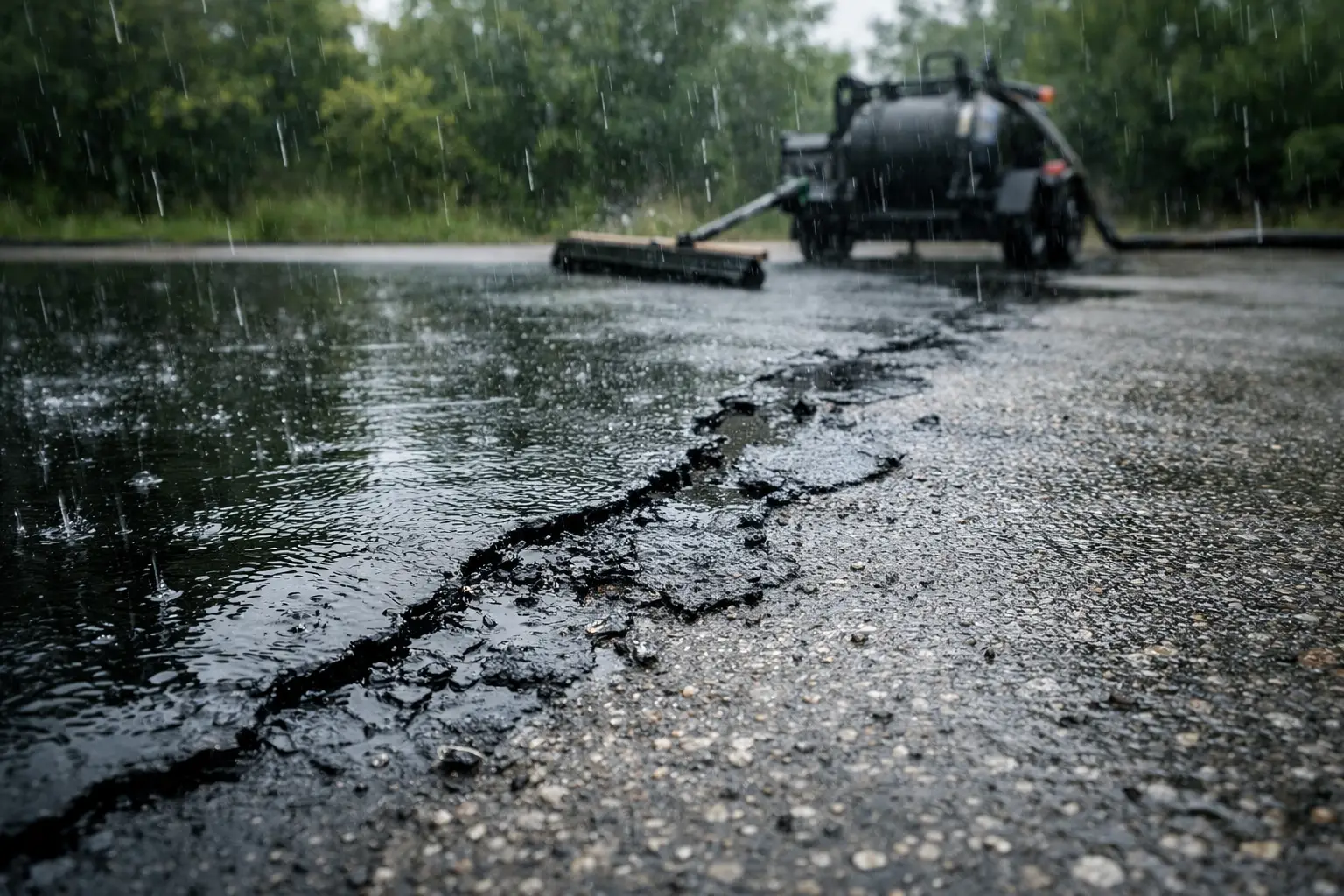
A surprise Pennsylvania thunderstorm can turn a fresh, jet-black driveway into a source of real concern. So, can rain ruin sealcoating? It can damage newly applied sealer if it arrives before the coating has set and cured. But rain does not automatically mean the job has failed. The timing, amount of rainfall, temperature, humidity, and condition of the asphalt all matter.
Fresh sealcoating needs dry conditions to bond properly and form the protective layer your asphalt depends on. That layer helps block water infiltration, UV exposure, vehicle fluids, and the freeze-thaw damage that is hard on West Chester driveways and parking lots. When weather interrupts the curing process, the right response is a careful inspection, not a quick assumption.
Why Rain Can Damage Fresh Sealcoating
Sealcoat is applied as a liquid or semi-liquid protective material. As the water in the coating evaporates, the sealer dries, bonds to the asphalt, and develops its finished black appearance. Rain falling onto that fresh surface can dilute the material, disturb its texture, or wash it into low spots before it has had time to set.
The most obvious result may be streaking, uneven color, dull patches, puddled material, or small areas where the black finish looks thin. In more serious cases, heavy rain can create bare spots, leave a sandy or rough texture, or prevent the sealer from adhering evenly. A parking lot that receives vehicle traffic too soon may also show tire marks, tracking, or peeling.
The concern is more than appearance. An uneven or poorly bonded coating can leave portions of the asphalt exposed to moisture and sunlight. Water finds cracks and weak edges, then works below the surface. When temperatures drop, that trapped water expands and can accelerate cracking, potholes, and surface breakdown.
When Is Rain Most Risky After Sealcoating?
The first few hours are the critical window. If steady or heavy rain begins shortly after sealcoat is applied, the likelihood of visible and functional damage rises sharply. The coating has not had enough time to stabilize, especially on shaded areas, low spots, or surfaces with limited airflow.
A light shower after the sealer has started to set may cause little more than temporary spotting. That spotting can sometimes fade as the surface completes its cure. Heavy rain shortly after application is different. It can move uncured material and create defects that will not correct themselves.
Weather conditions before and after the rain matter as much as the rainfall itself. A warm, sunny, breezy day supports faster drying. Cool temperatures, high humidity, heavy shade, and damp air slow the process. In southeastern Pennsylvania, a cloudy summer day can feel warm enough for outdoor work while still holding enough humidity to extend cure time considerably.
Dry Time Is Not the Same as Cure Time
A driveway may look dry before it is ready for cars, foot traffic, or rainfall. Surface dry means the top no longer appears wet. Cured means the coating has had enough time to develop stronger adhesion and durability.
As a general rule, professional sealcoating should be applied only when there is a dependable dry weather window. Many jobs need at least 24 hours without rain after application, and some conditions call for 48 hours or more before normal vehicle traffic. Cooler or humid weather can require additional time. The exact schedule depends on the sealer used, the number of coats, the surface condition, and the forecast.
That is why an experienced contractor does not treat weather as an afterthought. Delaying a job by a day is far better than applying premium material ahead of an uncertain storm and risking the finish.
What to Do If It Rains on Your Freshly Sealed Driveway
First, stay off the surface. Do not drive on it, walk through soft areas, sweep away water, or attempt to smooth the coating while it is wet. Well-meaning repairs often leave permanent marks and can pull the sealer away from the asphalt.
Let the rain stop and allow the surface to dry fully. Once the driveway or parking lot is dry, look for obvious issues in good daylight. Pay close attention to puddle-prone areas, turning zones, tire paths, edges, and spots beneath roof runoff. These are the places where water and uncured material are most likely to collect.
Some color variation immediately after rain is not always a failure. Fresh sealer may dry unevenly for a short period, particularly if clouds and humidity remain. Give it time to finish drying before judging the final result. If you see washed-out areas, peeling, standing sealer, exposed asphalt, or a rough, blotchy finish after the surface has dried, contact the contractor who performed the work.
A professional assessment should determine whether the area needs a touch-up, a recoat, or no action at all. The right fix depends on the damage. Applying more sealer over material that has not properly cured can compound the problem, so patience and inspection come first.
Can Rain Ruin Sealcoating That Has Already Cured?
No. Once sealcoating has properly cured, normal rain is part of what the surface is built to handle. A sound sealcoat helps shed water and slows moisture from working into the asphalt below. Rain may make the black finish look darker temporarily, but it should not wash away or harm a fully cured coating.
That does not mean sealcoating eliminates every water-related issue. Standing water is still a concern. If a driveway or lot repeatedly holds puddles, the problem may be poor drainage, low areas, failed base material, or worn asphalt rather than the sealer itself. Sealcoating protects the surface, but it cannot correct structural movement or drainage failures.
Likewise, sealcoat will not repair open cracks or potholes. Those issues should be addressed before sealing so water does not continue moving beneath the surface. Proper preparation is where durable results begin.
How Professionals Plan Around Rain
Reliable sealcoating starts with a clean, dry surface and a realistic weather plan. Cracks need to be filled, potholes repaired, debris removed, and oil spots properly treated before sealcoat goes down. Moisture on or within the asphalt can interfere with adhesion just as rain after application can.
The forecast deserves close attention, but a weather app alone is not enough. A skilled crew also considers overnight dew, shaded pavement, the direction of approaching storms, site drainage, and how quickly a particular driveway or parking lot will dry. Commercial properties require added planning because entrances, traffic flow, and ADA-accessible areas must remain safe throughout the project.
At Eagle Seal Coating, every job is treated like our reputation depends on it. Because it does. If the forecast does not support a quality application, the disciplined choice is to wait for better conditions rather than gamble with your property.
Protect the Work After the Skies Clear
The best protection against rain damage is choosing the right application day and giving the coating the time it needs. Keep vehicles, bicycles, patio furniture, lawn equipment, and sharp kickstands off the surface until the contractor confirms it is ready. If you manage a commercial property, use clear barricades and communicate reopening times so customers and employees do not enter the lot too early.
After curing, keep an eye on drainage and repair cracks as they appear. Scheduled maintenance is less disruptive and less expensive than waiting until water damage turns minor surface wear into larger asphalt repairs.
Rain should not leave you guessing about the condition of your driveway or parking lot. If a storm reached fresh sealcoating or you are planning a project around an unpredictable forecast, ask for a clear, no-pressure evaluation. A careful inspection can protect the finish you paid for and help your asphalt keep doing its job for years to come.
Need Help With Your Driveway?
Get a free, no-obligation estimate from Eagle Seal Coating. We'll give you an honest recommendation — no pressure.
Get My Free Estimate →