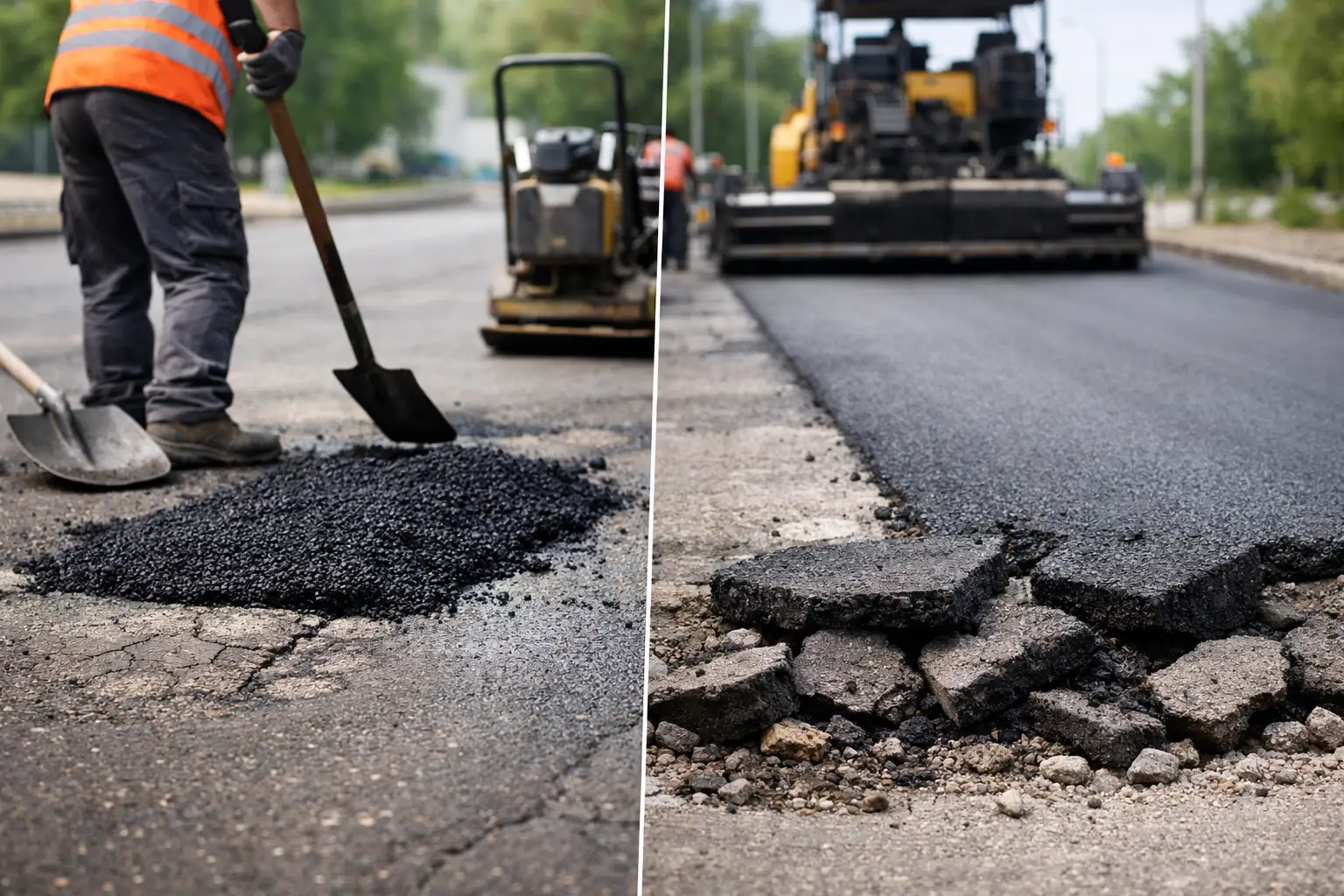
A pothole at the end of a driveway can look like a simple repair. But when the surrounding asphalt is cracked, soft, or breaking apart, the real question is not just how to fill the hole. It is whether asphalt patching versus replacement will give your property a repair that lasts.
For Pennsylvania homes and commercial properties, that decision matters. Water gets into small cracks, freezes, expands, and weakens the base beneath the surface. Traffic, snowplows, UV exposure, and fuel drips add more stress. Address the damage at the right stage, and you can protect your investment. Wait too long or choose the wrong fix, and a small repair can turn into a much larger expense.
Asphalt Patching Versus Replacement: The Real Difference
Asphalt patching repairs a defined damaged area. A professional crew removes failed asphalt, evaluates the base, adds fresh material where needed, compacts it properly, and ties the new patch into the surrounding surface. It is designed to stop a localized problem from spreading and restore a smooth, safe surface.
Replacement is a broader solution. Depending on the condition of the pavement, it may mean removing and rebuilding the full driveway or parking lot, or replacing a substantial section where failure extends beyond one isolated area. Replacement addresses widespread structural deterioration rather than treating individual symptoms.
Neither choice is automatically better. The right choice depends on the condition of the asphalt below the surface, not only what the damage looks like from the curb.
When Asphalt Patching Is the Smart Investment
Patching is often the practical answer when the rest of the pavement remains solid and the damage is limited. A single pothole, a low area that holds water, or a few failed spots near the garage or curb line does not necessarily mean the entire surface has reached the end of its life.
A properly installed patch can be especially effective when damage was caused by a specific issue, such as water draining from a downspout, a heavy vehicle repeatedly parking in one spot, or a small section of weakened base. The key is correcting the cause along with the surface failure. If water continues to flow under the asphalt, even a well-compacted patch will eventually be tested again.
For homeowners, patching can preserve a driveway while keeping the project focused and cost-conscious. For commercial properties, it can remove trip hazards and vehicle hazards without disrupting the entire lot. A targeted repair also prepares the surface for future seal coating, which helps protect sound asphalt from moisture and oxidation.
Patching is generally a strong choice when:
- Damage is confined to a few distinct areas.
- The surrounding asphalt is firm, stable, and mostly free of widespread cracking.
- The pavement has a sound base and does not flex or sink under normal traffic.
- Drainage issues can be corrected before or during the repair.
A patch should not be a shortcut. Throwing loose material into a pothole may improve appearance for a short time, but it does not rebuild the failed area. Long-lasting repairs require clean edges, proper depth, base preparation when necessary, hot asphalt, and thorough compaction.
Signs Replacement May Be the Better Call
Replacement becomes the better value when asphalt failure is widespread, structural, or recurring. At that point, patching every problem area can become a cycle of repair bills without giving the property a stable surface.
Alligator cracking is one of the clearest warning signs. These connected, web-like cracks usually indicate that the base beneath the asphalt has weakened. Surface sealant cannot fix it, and patching only the most visible sections may not solve failures developing nearby.
Large areas of settling, repeated potholes, crumbling edges throughout the driveway, or extensive cracking across a parking lot also point toward a larger issue. If the pavement has reached a stage where patches would cover a significant portion of the surface, replacement may provide a cleaner result and better long-term value.
Age matters, but it is not the only factor. A well-maintained driveway can serve a property for many years, while an asphalt surface exposed to poor drainage and skipped maintenance can deteriorate much sooner. The condition of the base, the amount of traffic, and the history of repairs tell a more useful story than age alone.
The Cost Question: Lowest Price or Best Value?
Patching usually costs less upfront because it repairs less area. That makes sense when the failure is isolated. Spending replacement-level money on a driveway that only needs one or two professional patches is unnecessary.
But the least expensive estimate is not always the least expensive outcome. If a surface has broad structural damage, repeated patching can add up quickly. It may also leave a property with uneven transitions, mismatched areas, and continuing water problems. In that situation, replacement can reduce future repair needs and restore a consistent, durable surface.
Commercial property owners should also consider safety and presentation. A parking lot full of temporary-looking repairs can create trip risks, damage vehicles, and make a property feel neglected. A sound repair plan supports smoother traffic flow, clearer striping, ADA-compliant access, and a more professional appearance.
The best decision is based on what the asphalt needs now and what it is likely to need over the next several years. A straightforward assessment should explain the repair scope, identify drainage or base concerns, and separate necessary work from optional improvements. There should be no pressure to replace pavement that can still be responsibly repaired.
Why Pennsylvania Weather Changes the Equation
Pennsylvania asphalt takes a beating from freeze-thaw cycles. Water enters cracks, freezes during cold weather, expands, and opens those cracks wider. When temperatures rise, water moves deeper into the base. Over time, the asphalt loses support from below, leading to sinking, potholes, and broken edges.
That is why crack repair and patching should happen before damage becomes extensive. Seal coating also plays an important role for asphalt that is still structurally sound. It helps shield the surface from water, sun, oil, and everyday wear while restoring that clean black finish homeowners value.
Seal coating is not a cure for failed asphalt. It cannot strengthen a collapsed base or hide active alligator cracking for long. The disciplined approach is to repair what is broken first, then protect what remains. The Eagle Protects. Your Asphalt Lasts.
A Practical Way to Decide
Start by looking beyond the pothole or crack you can see. Does the pavement feel stable underfoot and under vehicle weight? Are cracks isolated, or do they run through much of the surface? Does water drain away from the asphalt, or does it stand along the edges and low spots after rain?
If the damage is confined and the surrounding pavement is sound, patching is often the right move. If problems cover much of the surface, return after prior repairs, or involve widespread sinking and cracking, replacement deserves serious consideration.
A professional site evaluation can make that choice clearer. The goal should be a repair plan that fits the property, not a one-size-fits-all recommendation. Eagle Seal Coating treats every job like our reputation depends on it. Because it does.
Do not wait for a small depression to become a deep pothole or for a few cracks to become a failed driveway. A clear, no-pressure estimate can help you act while patching is still an option and protect the asphalt you already own.
Need Help With Your Driveway?
Get a free, no-obligation estimate from Eagle Seal Coating. We'll give you an honest recommendation — no pressure.
Get My Free Estimate →