A driveway rarely fails all at once. It starts with a thin crack near the edge, a faded gray surface, or a spot that stays wet long after a storm. Good driveway care catches those early warnings before Pennsylvania weather turns a manageable repair into broken asphalt, potholes, or premature replacement.
For homeowners, an asphalt driveway is a visible part of the property and a working surface that takes daily abuse. For commercial properties, the stakes also include safe access, curb appeal, and a professional first impression. The right maintenance plan protects both the surface and the investment underneath it.
Driveway Care Starts With Water Control
Water is asphalt’s most persistent enemy. A small surface crack can allow water to reach the base below the pavement. Once that base becomes soft or unstable, vehicle weight puts more pressure on the weakened area. In winter, trapped water freezes, expands, and pushes the crack wider. When it thaws, the process repeats.
That is why cracks should not be treated as a cosmetic issue. They are an opening for deeper damage. Professional crack filling seals those openings with the right material, helping keep moisture out of the pavement structure where it can do the most harm.
Pay attention to where water goes after rain. Puddles that remain for a day or more, runoff flowing across the driveway, and downspouts that discharge onto asphalt can all speed up deterioration. Sometimes a repair needs more than crack filling. If drainage is the root problem, it should be addressed before spending money on a new protective coating.
Know the Difference Between Cracks and Structural Damage
Not every crack calls for the same solution. Thin, isolated cracks are often good candidates for timely filling and seal coating. Wider cracks, alligator-style cracking, crumbling edges, depressions, and potholes can point to damage below the surface. Coating over those conditions may improve the color temporarily, but it will not restore strength to failed asphalt.
A dependable contractor should explain what the pavement needs and why. That may mean repairing a damaged section before seal coating, rather than selling a quick cosmetic fix. It is the practical choice because repairs made at the right stage help prevent a small failure from spreading across the driveway.
Watch for these conditions between maintenance visits:
- Cracks that widen, connect, or collect water
- Low areas where tires repeatedly pass through standing water
- Loose aggregate or crumbling along driveway edges
- Potholes, soft spots, or a web-like pattern of connected cracks
- Oil, gasoline, or other automotive spills that leave the surface soft or stained
The earlier these issues are assessed, the more repair options you are likely to have.
Seal Coating Protects the Surface, Not Failed Asphalt
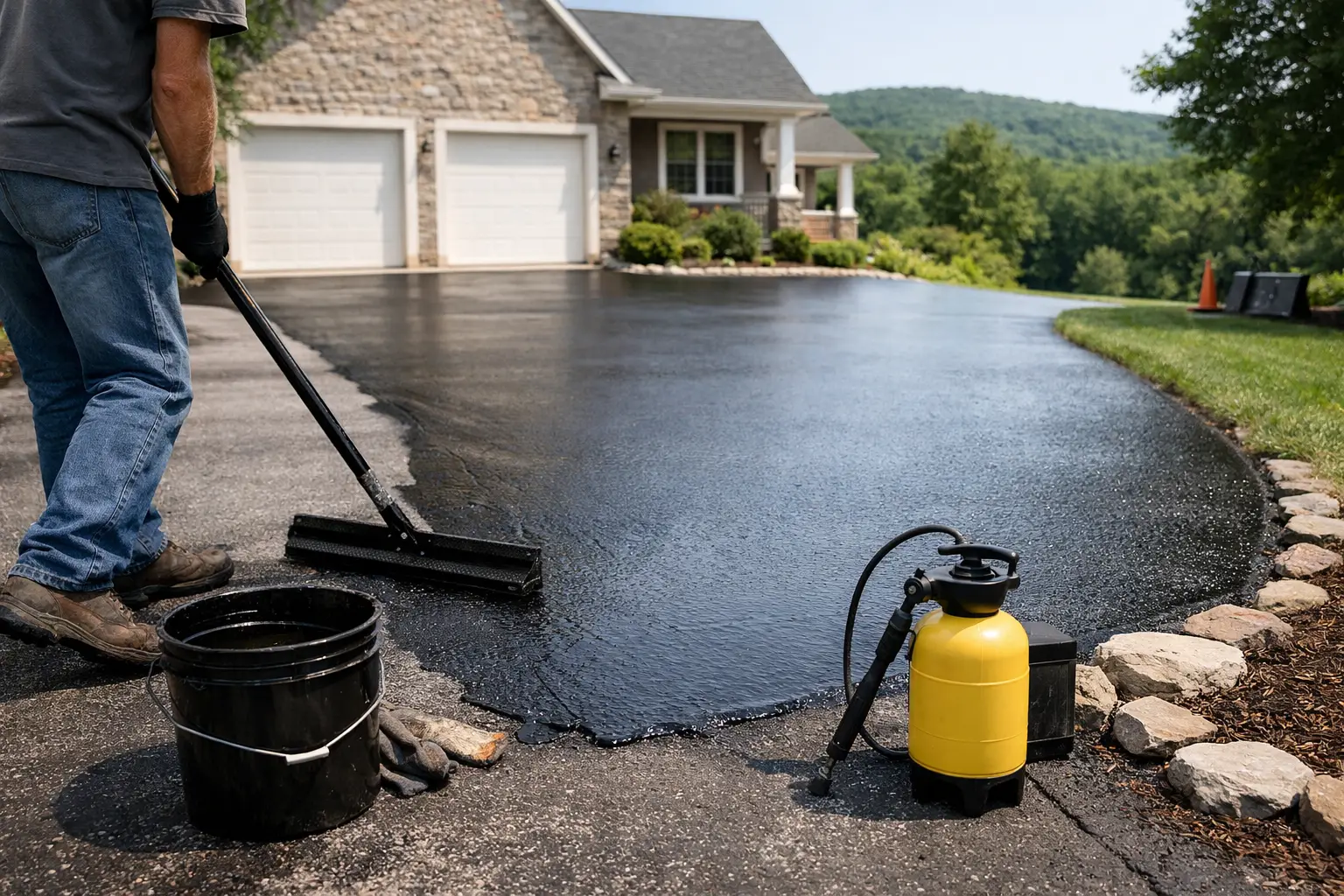
Fresh seal coating gives a driveway its clean black finish, but appearance is only part of the value. A quality sealer creates a protective barrier against sunlight, water, everyday traffic, and minor fluid exposure. UV rays dry out asphalt binders over time, making the surface brittle and more likely to crack. Seal coating helps slow that aging process.
Timing matters. An asphalt driveway generally needs to cure before its first seal coat, and established driveways benefit from periodic recoating based on surface condition, traffic, drainage, and exposure. A driveway shaded by trees may deal with moisture and organic buildup. One with full sun may fade and dry faster. A household with several vehicles may see more wear at turning points and parking areas.
There is no responsible one-size-fits-all schedule. The surface should be inspected first. If it is heavily cracked, breaking apart, or suffering from drainage problems, repair work should come before sealing. Applied to stable asphalt that has been properly cleaned and prepared, premium-grade seal coating is a smart layer of protection.
Keep Heavy Loads Off the Edges
Asphalt is strongest where it has proper support underneath it. Driveway edges often have less support and are especially vulnerable to cracking when heavy vehicles drive or park along them. Delivery trucks, dumpsters, trailers, and repeated sharp turns can damage an edge quickly, particularly after rain or during thawing conditions.
When possible, keep tires off the outer edge and avoid parking in exactly the same place every day. Do not allow vehicles to sit for long periods with a sharp wheel turn in one spot. In hot weather, asphalt can soften, and concentrated weight can leave marks or depressions.
This does not mean a driveway must be handled delicately. It means using it with an understanding of where stress builds up. Small habits can extend the life of a surface that is otherwise in good condition.
Clean Spills Before They Become Surface Damage
Motor oil, gasoline, transmission fluid, and other petroleum-based products can work against asphalt binders. A fresh spill should be absorbed and cleaned promptly rather than left to sit. The longer it remains, the more likely it is to stain or soften the affected area.
Avoid using harsh chemicals or aggressive pressure washing methods that can damage the surface or force water into existing cracks. Basic sweeping, seasonal cleanup, and careful spill response are usually enough for routine upkeep. Remove leaves, dirt, and debris from edges and drainage paths so water can move away from the driveway instead of sitting on it.
For commercial properties, routine cleaning matters just as much. A parking area that is free of debris, standing water, and visible fluid stains looks better, supports safer walking conditions, and makes maintenance concerns easier to spot.
Pennsylvania Weather Rewards Preventive Maintenance
West Chester and surrounding Pennsylvania communities experience the full range of asphalt stress: summer heat, rain, snow, ice, and repeated freeze-thaw cycles. That makes waiting costly. By the time a crack becomes a pothole, water has often already reached the base beneath the surface.
Spring is a good time to inspect for winter damage. Look for new cracks, heaving, loose material, and areas where water collects. Summer provides favorable conditions for many repair and seal coating projects, while fall is the right time to make sure cracks and drainage concerns are addressed before cold weather returns.
Winter is not the season for most coating work, but it is a good season to limit damage. Use care when shoveling or plowing around driveway edges, and avoid metal blades scraping directly across the asphalt. Use de-icing products thoughtfully, following the product instructions and avoiding unnecessary overapplication.
A Better Maintenance Plan Costs Less Than Neglect
The most expensive driveway is often the one that received no attention until replacement became the only practical option. Crack filling, pothole repair, and periodic seal coating cost far less than rebuilding a surface with a failed base. They also help preserve the neat, finished appearance homeowners expect from their property.
For commercial owners and facility managers, planned maintenance brings another advantage: predictability. Repairing problems on a schedule can reduce disruptive emergency work and help keep parking areas safer for customers, tenants, and employees. Clear line striping and ADA-compliant markings should be part of that larger care plan when traffic patterns or markings begin to fade.
Eagle Seal Coating approaches each project with a straightforward standard: repair what needs repair, protect what can be protected, and leave the surface looking like work worth standing behind. A clear estimate should tell you what is included, what condition the asphalt is in, and whether a repair-first approach makes more sense than coating alone.
When to Bring in a Professional
A professional inspection is worthwhile when cracks multiply, a pothole forms, water repeatedly pools, or the driveway has lost its protective finish. It is also a good idea before listing a home, after a hard winter, or before a small issue spreads through an otherwise sound surface.
Take a walk down your driveway after the next rain. If you see standing water, open cracks, or crumbling edges, do not wait for another season to make the decision harder. Timely care protects the asphalt you already own and keeps your property looking properly maintained.
Need Help With Your Driveway?
Get a free, no-obligation estimate from Eagle Seal Coating. We'll give you an honest recommendation — no pressure.
Get My Free Estimate →