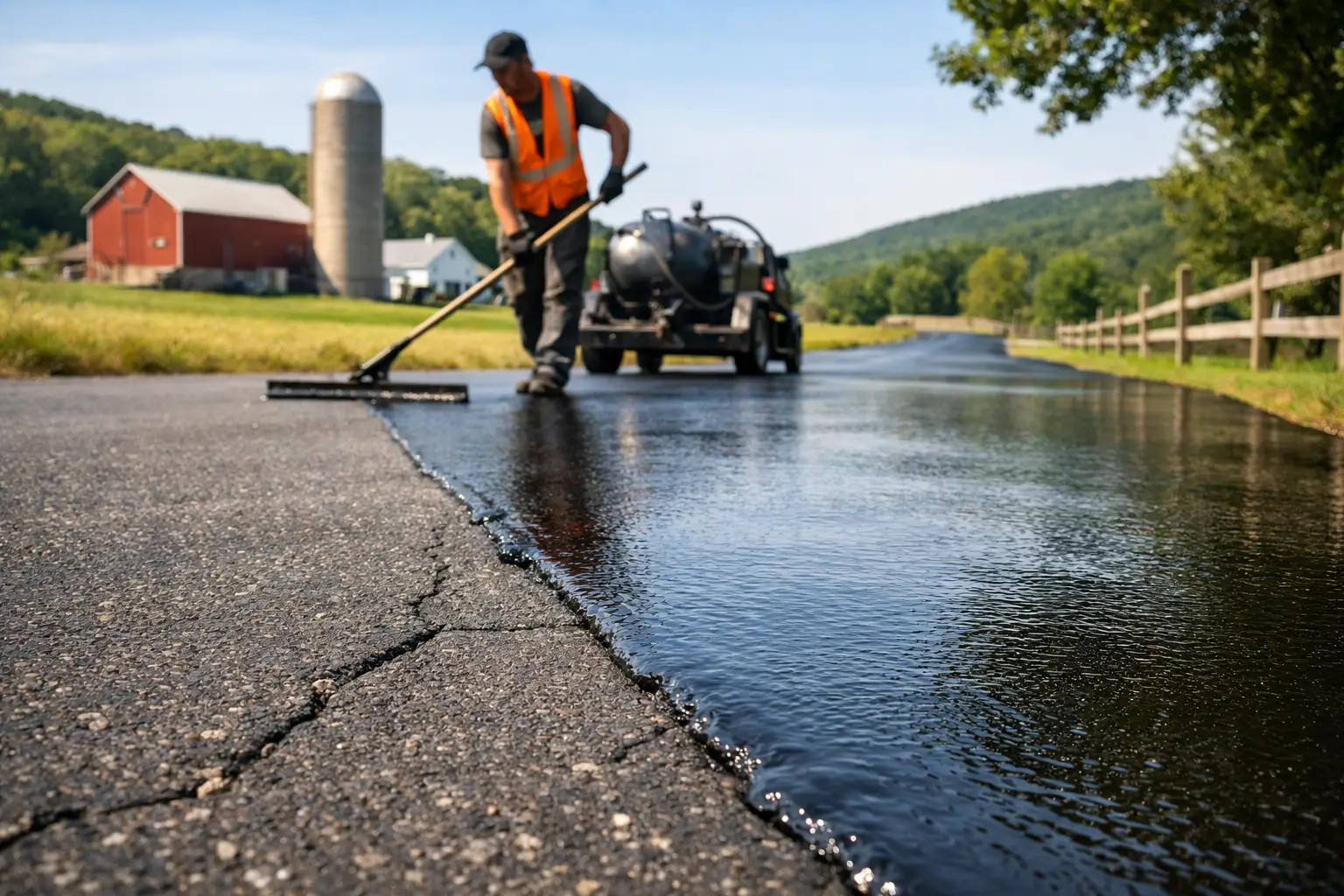
A driveway can look fine from the street while water is working its way into small surface cracks. In Pennsylvania, that is where the expensive damage begins. So, is sealcoating worth it? For sound asphalt that is repaired and sealed at the right time, the answer is usually yes. It is preventive maintenance that helps protect a much larger investment: the pavement underneath.
Sealcoating is not a magic fix, and a black surface alone does not mean a driveway or parking lot is healthy. But when it is part of a disciplined maintenance plan, it can slow the daily wear that turns minor flaws into cracks, potholes, and premature replacement costs.
What Sealcoating Actually Does
Asphalt is made with stone and aggregate held together by a petroleum-based binder. Sunlight, oxygen, traffic, water, salt, and automotive fluids gradually wear that binder down. As the surface oxidizes, it fades from black to gray, becomes more brittle, and is more likely to crack.
A professional sealer creates a protective wear layer over the asphalt. It helps limit exposure to UV rays, moisture, fuel drips, road salt, and normal vehicle traffic. It also restores the clean, dark appearance property owners expect from a well-maintained driveway or parking lot.
The key word is helps. Sealcoating does not stop every crack, repair a failed base, or bring severely deteriorated pavement back to life. Its value comes from protecting asphalt before damage gets deep.
Is Sealcoating Worth It? It Depends on Timing
The best candidate for sealcoating is asphalt that remains structurally sound but is beginning to show surface aging. Light fading, minor hairline cracks, a dry-looking finish, and reduced water runoff are signs that maintenance should be considered. A well-timed application can keep those conditions from gaining ground.
It is less worthwhile to seal over widespread alligator cracking, deep potholes, sinking areas, or crumbling edges without repairs. Those issues often point to water infiltration or base failure below the surface. Covering them with sealer may improve the color for a short time, but it does not address the reason the pavement is failing.
A reputable contractor should inspect the surface first, explain what needs repair, and tell you plainly if sealing should wait. Good maintenance is not about selling a coat of sealer for every surface. It is about putting the right work in the right order: repair, prepare, seal, and maintain.
For homeowners: protect curb appeal and pavement life
A driveway is one of the first things people see at a home, but its practical role matters just as much. It carries vehicles every day, channels water near the house, and takes the full force of Pennsylvania weather. Small cracks left open through freezing weather can widen quickly as water enters, freezes, and expands.
Sealing a driveway after cracks are properly filled helps reduce surface exposure and gives the property a fresh, cared-for appearance. It is generally far more manageable to maintain a driveway every few years than to face a major patching, resurfacing, or replacement project earlier than necessary.
That said, homeowners should not judge the job by color alone. Proper cleaning, crack repair, edge work, material quality, and cure conditions all affect performance. A deep black finish is a welcome result. Lasting protection is the reason the work matters.
For commercial properties: maintain safety and first impressions
For a parking lot, pavement condition reflects directly on the property. Faded, cracked asphalt can make a retail center, office building, apartment community, or professional facility look neglected. More importantly, damaged pavement and unclear markings can create trip hazards, traffic confusion, and avoidable liability concerns.
A maintenance plan that combines crack repair, sealcoating, and line striping keeps a lot easier to navigate and more professional in appearance. Fresh striping can restore parking organization, fire-lane visibility, directional arrows, accessible spaces, and ADA-compliant markings where required.
Commercial owners also need to plan around operations. The lowest bid is not always the lowest cost if the crew lacks preparation, uses thin material, delays reopening, or leaves a poor finish. Clear scheduling and a defined scope protect both the pavement and the business using it.
The Cost Question: Maintenance Versus Major Repair
Sealcoating costs money, so it is fair to ask whether the return is real. The clearest answer is to compare it with the alternative. Asphalt replacement requires removing and rebuilding a much larger portion of the surface. Resurfacing and extensive patching also cost considerably more than routine preventive care.
When a surface is still a good candidate, sealing can help extend its serviceable life by reducing the conditions that speed up deterioration. It can also make future problems easier to spot. Cracks, fluid leaks, and surface damage stand out more clearly on a maintained dark surface than on faded, neglected pavement.
There are trade-offs. Sealer needs dry weather and adequate temperatures to cure correctly. A driveway or lot may need to stay off limits for a period after application. The surface will also need recurring care over its lifespan. Those are reasonable considerations, not reasons to wait until the asphalt is failing.
The better question is not whether sealcoating eliminates all future expense. It does not. The question is whether a scheduled, smaller maintenance cost can help postpone a much larger pavement expense. For healthy asphalt, that is usually the point.
What Makes a Sealcoating Job Worth Paying For
Not every sealcoating job delivers the same value. Quality begins before the material is applied. The surface should be cleaned thoroughly so the sealer can bond properly. Vegetation, loose debris, dirt, and heavy oil spots need attention. Cracks should be filled with the appropriate repair material, and potholes or failed areas should be repaired before sealing.
Application matters, too. Professional crews use materials suited to the surface and project conditions, apply them evenly, and protect adjacent concrete, garages, curbs, and landscaping from overspray or messy edges. On commercial work, organized traffic control and precise striping are part of a finished job, not an afterthought.
Ask what preparation is included, what repairs are recommended, how long the surface should cure, and what the final price covers. Straight answers matter. A contractor who takes time to inspect your pavement is more likely to recommend work that fits its actual condition.
When to Schedule Sealcoating in Pennsylvania
Weather drives the schedule. Sealcoating needs a clean, dry surface and conditions warm enough for the material to set and cure as intended. Spring through early fall is often the practical window, though exact timing depends on temperatures, recent rain, shade, and the forecast.
Do not wait for the driveway to become pale, rough, and heavily cracked before calling. An annual visual check is a smart habit. Look for standing water, open cracks, crumbling edges, faded areas, and spots where the surface appears dry or worn. Catching issues early gives you more repair options and better control over the budget.
For many residential driveways and commercial lots, resealing is considered every two to three years. Traffic level, sun exposure, drainage, snow removal, and the existing pavement condition can move that schedule sooner or later. A shaded driveway with poor drainage may need attention differently than a lightly used lot with strong drainage.
The Eagle Standard: Protect the Asphalt You Have
The right sealcoating project starts with an honest look at the pavement. If repairs are needed, handle them first. If the asphalt is sound and ready, protect it with quality materials and careful workmanship. That is how Eagle Seal Coating approaches every driveway and parking lot: every job treated like our reputation depends on it. Because it does.
A free, no-pressure estimate can help you understand whether your surface needs sealing now, crack repair first, or a broader maintenance plan. The Eagle protects. Your asphalt lasts.
Before the next freeze-thaw cycle or another season of hard sun and traffic, take a close look at your pavement. A few small cracks may be asking for attention today, not a major repair bill tomorrow.
Need Help With Your Driveway?
Get a free, no-obligation estimate from Eagle Seal Coating. We'll give you an honest recommendation — no pressure.
Get My Free Estimate →