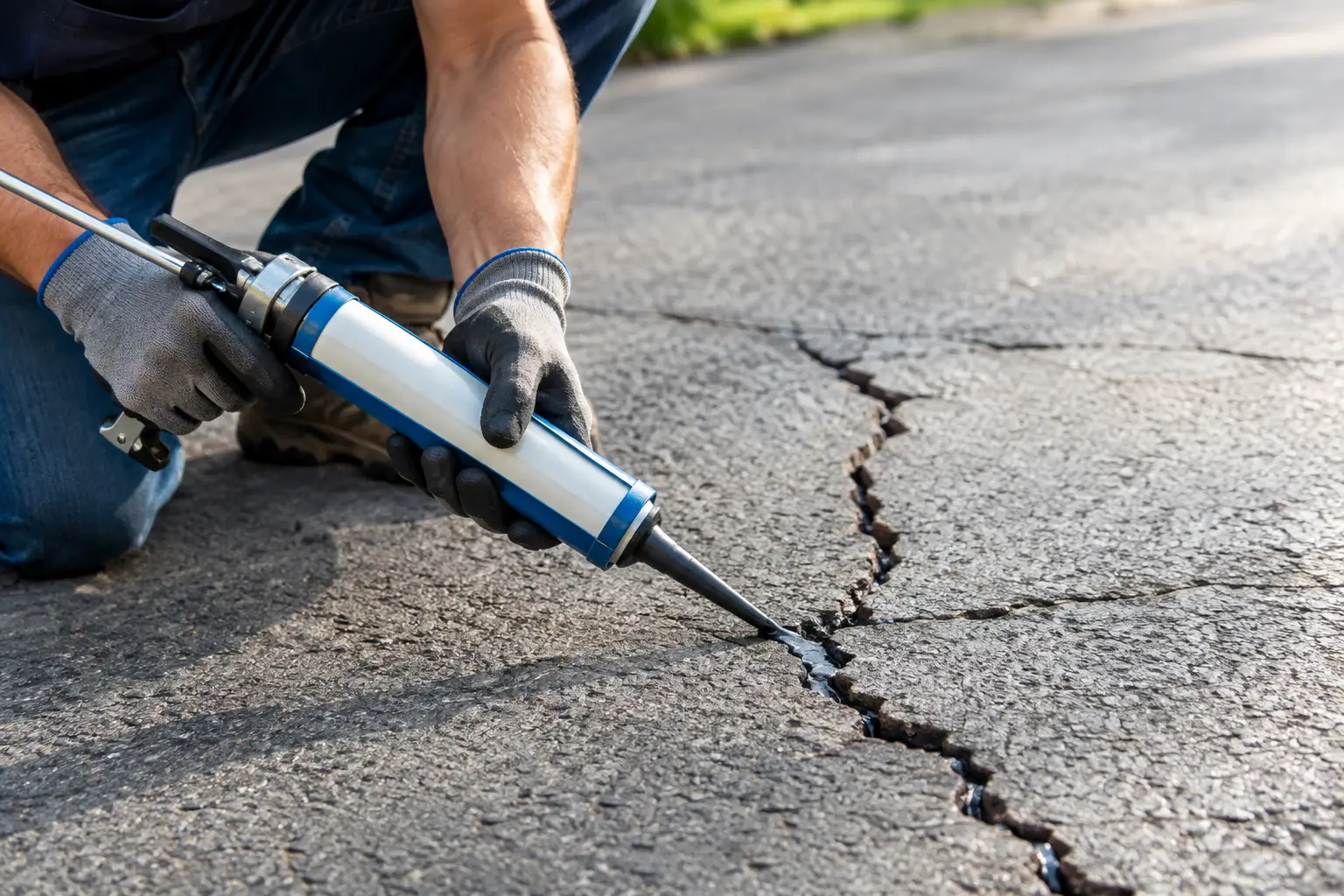
A driveway with alligator cracking has moved beyond a cosmetic crack-filling job. Those connected, scale-like cracks are a warning that the asphalt is flexing because the support underneath has weakened. To fix alligator cracks permanently, the failed pavement and, in many cases, the damaged base below it must be repaired. Anything less may look better for a season, but the pattern will return.
For Pennsylvania homeowners and property managers, that distinction matters. Water works its way through open asphalt, freeze-thaw cycles enlarge the damage, and traffic keeps pressing on a surface that no longer has a stable foundation. The right repair stops that cycle before a small failed area becomes a larger paving expense.
What Alligator Cracks Really Mean
Alligator cracking is also called fatigue cracking. It appears as a web of interconnected cracks that resembles reptile skin, usually in wheel paths, parking spaces, turning areas, or sections of a driveway that carry repeated vehicle weight.
A single linear crack can often be cleaned, filled, and sealed successfully. Alligator cracks are different. The asphalt mat has lost structural support. The problem may be caused by a thin or poorly compacted base, water trapped beneath the surface, drainage that directs runoff toward the pavement, heavy vehicles, or years of deferred maintenance.
Seal coating cannot repair alligator cracking. Neither can a surface crack filler applied over broken, unstable pavement. Seal coat is a protective layer for sound asphalt. It helps defend against UV exposure, water, fuel drips, and normal wear. It is not a substitute for rebuilding the section that has failed.
How to Fix Alligator Cracks Permanently
Permanent repair starts with an honest assessment of the affected area. A qualified asphalt contractor should look beyond the visible crack pattern and determine whether the surrounding pavement remains firm, whether water is contributing to the problem, and how deep the failure extends.
The proven approach is usually a full-depth patch. That means removing the broken asphalt, addressing the underlying base, installing new asphalt, compacting it properly, and blending the repair into the surrounding surface.
1. Mark and remove all failed pavement
The repair area should extend beyond the visible cracking. Cutting only along the exact crack lines leaves weak asphalt at the patch edge, where failure can quickly spread back into the new work.
The contractor marks a clean, square or rectangular section around the damaged pavement and saw-cuts the perimeter. The broken asphalt is removed down to the base. This clean edge gives the new patch a stronger bond and a neater finished appearance.
2. Repair the base, not just the surface
This is the step that determines whether the repair lasts. If the stone base is soft, washed out, saturated, or uneven, new asphalt placed over it will eventually crack again.
The base may need to be excavated, replaced with properly graded aggregate, leveled, and compacted. If the soil beneath is weak or waterlogged, it may require further correction before new stone is installed. Compaction is not a detail to rush. A stable base carries the load. The asphalt on top protects it.
For a driveway, the required depth depends on traffic and site conditions. A passenger-car driveway needs a different design than a parking lot used by delivery trucks, dumpsters, or frequent commercial traffic. The right repair matches the pavement to the load it actually carries.
3. Correct the water problem
Water is often the reason alligator cracks appeared in the first place. Runoff that drains across the driveway, downspouts that discharge beside the pavement, low areas that hold standing water, and edges without support can all undermine an asphalt base.
Before the patch is closed, identify where water is coming from and where it will go. The answer may be as simple as redirecting a downspout or restoring proper surface slope. In other situations, the repair may need drainage improvements, edge support, or grading work. It depends on the site, but ignoring drainage turns a quality patch into a temporary solution.
4. Install and compact hot-mix asphalt
Fresh hot-mix asphalt is installed at the proper thickness, then compacted with the right equipment. The goal is a dense, smooth patch that sits flush with the existing pavement and sheds water rather than collecting it.
A patch that is too thin, poorly compacted, or left high or low at the edges can create a new point of failure. Precise workmanship matters here. The repair should feel solid under traffic and look like a deliberate restoration, not a quick cover-up.
5. Protect the surrounding asphalt
Once repaired asphalt has cured appropriately, seal coating the sound portions of the driveway or parking lot helps defend the rest of the surface from oxidation and water intrusion. It restores the deep black appearance people expect while extending the service life of pavement that is still structurally sound.
The timing depends on the repair materials, weather, and the condition of the pavement. A reputable contractor will recommend a maintenance schedule based on the actual surface, not sell a one-size-fits-all package.
When a Full-Depth Patch Is Not Enough
A full-depth patch is the right answer when alligator cracking is isolated to one or several defined areas. If the cracking covers much of the driveway or appears throughout a parking lot, patching every section may not be the most cost-effective long-term choice.
Widespread fatigue cracking can mean the entire pavement structure is near the end of its useful life. Depending on the condition of the base and the amount of damage, the better option may be milling and resurfacing, broader reconstruction, or replacement. Resurfacing can provide a clean new wearing course, but only if the base below is still stable. Placing new asphalt over a failed foundation simply hides the problem until it reflects through again.
This is where straightforward guidance saves money. The least expensive estimate is not always the lower-cost repair. A patch that fails within a year costs more than a properly scoped repair completed once.
Repairs That Do Not Permanently Fix Alligator Cracks
There is a place for crack filling, seal coating, and cold patch materials. They just are not permanent fixes for structural fatigue cracks.
Crack filler can reduce water entry in isolated cracks. Seal coating protects intact asphalt and improves appearance. Cold patch can be useful for a short-term pothole repair, especially during cold or wet conditions when hot-mix work is not practical. None of these methods rebuilds a weak base or restores strength to broken asphalt.
Be cautious of repairs that promise a permanent result without removing the cracked pavement. If the alligator pattern remains visible beneath a coating, or if the contractor does not address drainage and base conditions, the underlying failure is still in place.
How to Prevent Alligator Cracks From Returning
After a proper repair, regular maintenance gives your asphalt the best chance of a long service life. Keep drainage paths clear, redirect roof runoff away from pavement, and address new cracks before water reaches the base. Avoid parking heavy equipment or loaded trailers in the same location for long periods, particularly on residential driveways not designed for that weight.
For commercial properties, inspect high-stress areas regularly. Loading zones, dumpster pads, entrances, turning lanes, and accessible parking areas take more abuse than the rest of the lot. Early repairs protect both the budget and the safety of customers, tenants, and employees.
A professional seal coating schedule also helps preserve sound pavement between major repairs. The Eagle Standard is simple: repair the structure first, then protect the surface. Every job is treated like our reputation depends on it. Because it does.
If you see a cluster of interconnected cracks, do not wait for the next winter to test it. Have the area evaluated while the damage is contained. A clear repair plan, a stable base, and good water control will give your driveway or parking lot the solid footing it needs to keep working hard.
Need Help With Your Driveway?
Get a free, no-obligation estimate from Eagle Seal Coating. We'll give you an honest recommendation — no pressure.
Get My Free Estimate →