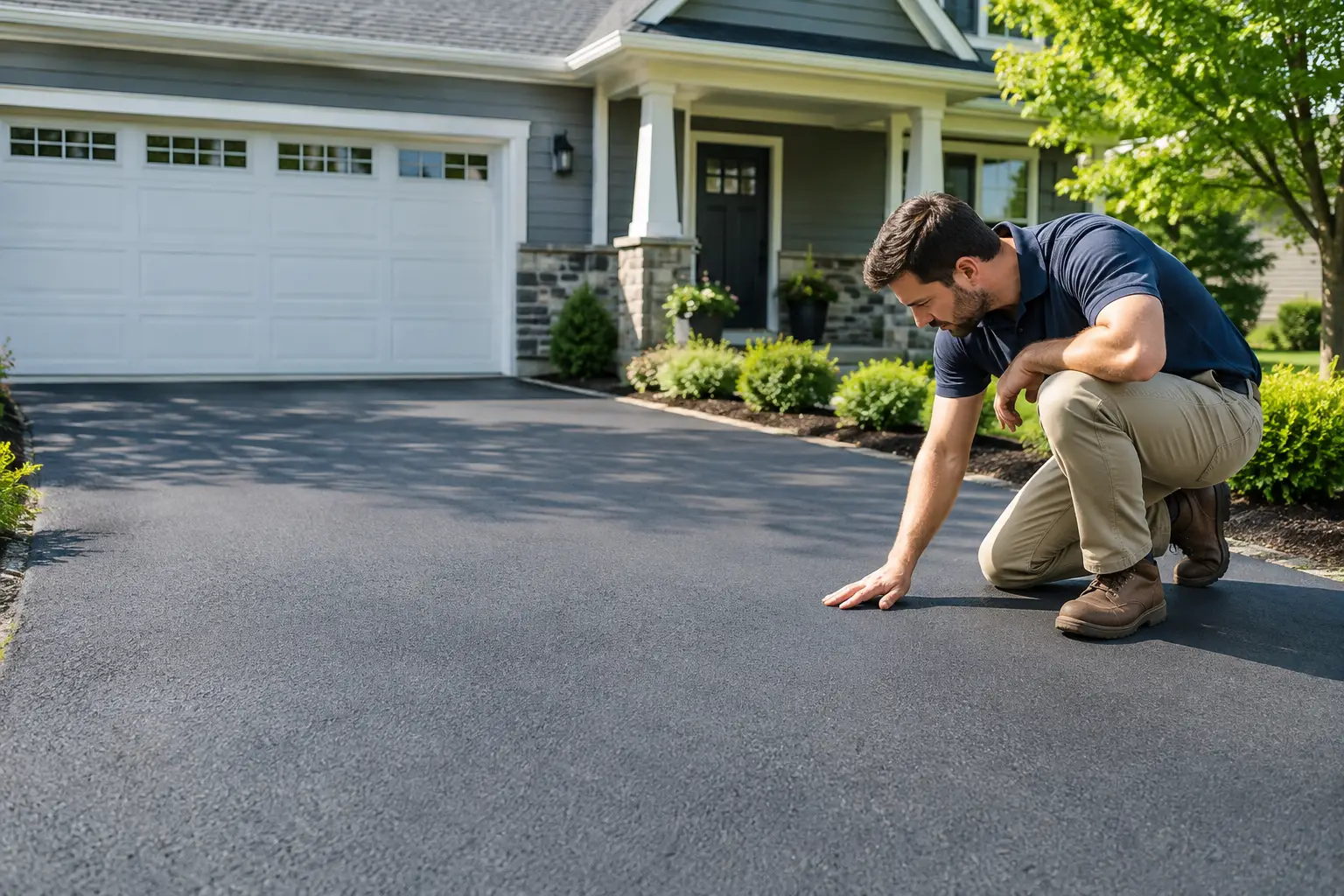
A driveway rarely fails all at once. It starts with a hairline crack near the edge, a low spot that holds rainwater, or a faded gray surface that no longer sheds the sun. Left alone through a Pennsylvania winter, those small warning signs can turn into broken asphalt, potholes, and a much larger repair bill. These driveway longevity tips help homeowners protect the surface they rely on every day.
Asphalt is durable, but it is not maintenance-free. Water, sunlight, vehicle weight, salt, fuel, and freeze-thaw cycles all work against it. The good news is that timely maintenance can slow that damage dramatically. The Eagle Protects. Your Asphalt Lasts.
Start With Water Control
Water is asphalt’s most persistent enemy. When it enters through cracks or flows beneath the driveway, it weakens the base that supports the surface. Once that base loses strength, asphalt can sink, separate, or break apart under the weight of vehicles.
Walk your driveway after a hard rain. Look for standing water, water running toward the garage, or soil washing away along the edges. A small puddle may be a grading issue, a clogged drain, or a low area that needs attention before the surface deteriorates.
Keep nearby gutters and downspouts from dumping directly onto the driveway. Extend downspouts where needed so roof runoff is carried away from the asphalt and its edges. If the driveway slopes toward the home or consistently collects water, a contractor can assess drainage and recommend a practical repair. Seal coating will protect a sound surface, but it cannot correct water that is undermining the base below it.
Repair Cracks Before Winter Makes Them Worse
A crack is an opening for water, not just a cosmetic flaw. During cold weather, trapped water freezes and expands. When it thaws, the opening remains wider. Repeated freeze-thaw cycles can turn a narrow crack into a network of fractured asphalt.
Check for cracks at least twice a year, especially in spring and fall. Pay close attention to driveway edges, the area where vehicles turn or stop, and places where tree roots may be pushing upward. Small cracks are generally the best candidates for prompt crack filling or sealing. Wider cracks, crumbling sections, and sunken areas may need a more substantial repair.
Do not wait until the driveway is covered in cracks to act. Early crack repair costs far less than removing failed sections or replacing the entire driveway. It also gives a protective coating a cleaner, more stable surface to do its job.
Use Seal Coating at the Right Time
Professional seal coating restores the deep black appearance homeowners want, but its real value is protection. A quality coating creates a barrier against UV exposure, water penetration, oxidation, and everyday wear. It helps slow the drying and fading that makes asphalt more brittle over time.
Timing matters. New asphalt needs time to cure before it is seal coated, while older pavement should be cleaned and repaired before any coating is applied. Applying sealer over active cracks, loose material, or a damp surface does not solve the underlying problem. Proper preparation is where durable work begins.
For many residential driveways, a maintenance schedule of roughly every two to three years is a reasonable starting point. The right interval depends on sun exposure, traffic, drainage, pavement age, and previous repairs. A driveway that bakes in direct sun all day or sees frequent heavy vehicles may need closer attention than one with lighter use and good shade.
Be cautious of bargain work that skips cleaning, crack repair, or edge protection. A dark finish can look good for a short time, but appearance alone is not the standard. Premium materials, careful surface preparation, and even application are what make a seal coating investment worthwhile.
Keep Heavy Loads Off Weak Areas
Residential asphalt is designed for normal passenger vehicles, not repeated delivery trucks, dumpsters, construction equipment, or long-term trailer storage. Heavy loads can leave depressions or cause cracking, particularly when the driveway is hot and soft during summer.
If you expect a heavy delivery, ask whether the truck can stay on the street or use a route that avoids tight turns and thin edges. Do not park a loaded trailer in the same spot for weeks. Moving vehicles periodically helps prevent concentrated stress on one area.
Driveway edges deserve special care because they have less support than the center of the pavement. Avoid driving off the edge, and do not allow lawn equipment or vehicles to repeatedly climb over it. If an edge begins to crumble, repair it before the damage creeps inward.
Clean Up Spills and Seasonal Debris
Motor oil, gasoline, power-steering fluid, and other automotive chemicals can soften asphalt binders. A small spill should be cleaned as soon as practical using an absorbent material and a driveway-safe cleaner. Do not scrub aggressively with harsh solvents that may create additional damage.
Leaves, pine needles, and dirt may seem harmless, but they hold moisture against the surface and can clog drainage paths. Sweep the driveway regularly, especially near garage doors, drains, and along the edges. This simple habit makes cracks and low spots easier to spot before they become serious.
Winter calls for a little extra discipline. Use a plastic shovel or a snowblower with properly adjusted skids rather than a metal blade that can scrape the surface. Use de-icing products sparingly and follow their directions. De-icers are often necessary for safe footing, but excessive use can increase moisture exposure and carry chemicals into cracks.
Do Not Ignore Potholes, Raveling, or Soft Spots
Potholes do not heal themselves. They form when water and traffic break down asphalt and the base beneath it. Raveling, which looks like loose stones or a rough, grainy surface, is another sign that the asphalt binder is wearing away.
Soft spots, depressions, and recurring puddles require more than a surface patch in many cases. The damaged asphalt may need to be removed, the base rebuilt or compacted, and new asphalt installed before seal coating. That added repair work is not an upsell. It is often the difference between a repair that lasts and one that fails after the next hard winter.
A qualified contractor should explain the condition clearly and recommend the level of repair the driveway actually needs. Some areas can be patched. Others need full-depth correction. Honest advice protects both your property and your budget.
Build a Simple Driveway Maintenance Routine
The best driveway longevity tips are not complicated. They are consistent. A few minutes of observation each season can prevent years of neglected damage.
In spring, inspect for new cracks, heaving, and winter damage. In summer, watch for fading, soft spots, and vehicle leaks. In fall, clear debris and address cracks before freezing temperatures arrive. In winter, manage snow and ice carefully while keeping drainage paths open.
Take photos when you notice a concern. Comparing pictures over several months can reveal whether a crack is stable or spreading, whether a low area is getting deeper, or whether an edge repair is beginning to fail. This is particularly useful for homeowners planning a seal coating or repair project but unsure whether the work can wait.
Choose Workmanship Over a Quick Black Finish
A driveway is one of the first things people see at your home, but curb appeal is only part of the equation. Good asphalt maintenance protects a working surface that carries vehicles, directs water, and supports safe access every day.
Eagle Seal Coating approaches every driveway with that standard in mind: assess the condition, repair what needs repair, prepare the surface properly, and apply protection with care. No pressure, just straightforward recommendations and workmanship treated like our reputation depends on it. Because it does.
If you see growing cracks, standing water, loose asphalt, or a surface that has faded to gray, do not wait for another season to make the decision for you. A free, clear estimate can help you understand what your driveway needs now and what can be planned for later.
Need Help With Your Driveway?
Get a free, no-obligation estimate from Eagle Seal Coating. We'll give you an honest recommendation — no pressure.
Get My Free Estimate →