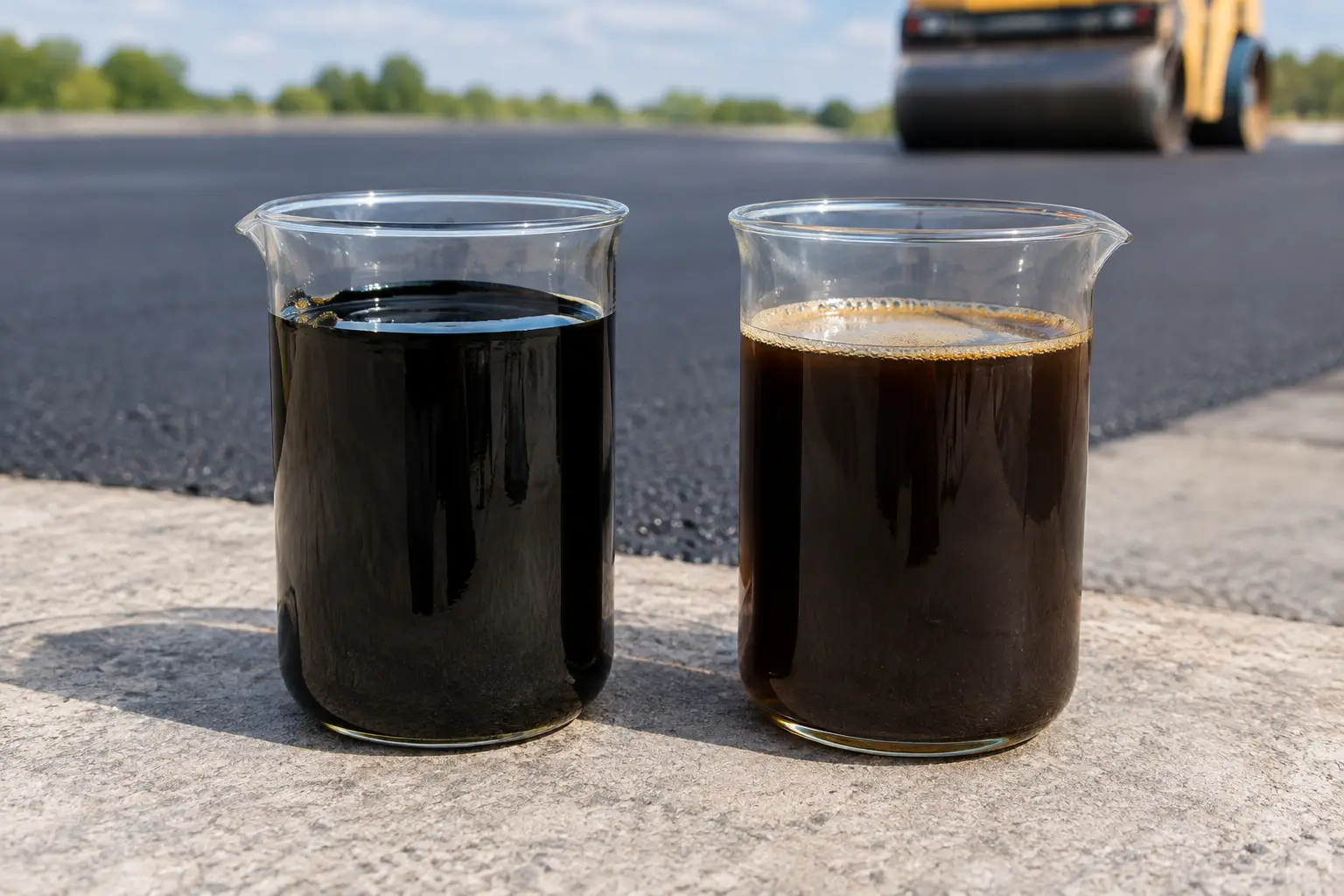
A sealcoat can make worn asphalt look new again, but the black finish is only part of the job. The real purpose is protection: slowing the damage caused by sun, rain, road salt, oil, and Pennsylvania freeze-thaw cycles. When comparing coal tar versus asphalt emulsion, the right choice depends on how the pavement is used, its condition, and the standards that matter on your property.
For a homeowner protecting a driveway or a facility manager maintaining a busy parking lot, the goal is the same: keep water out, preserve the asphalt underneath, and avoid paying for major repairs before they are necessary. Material matters, but so do crack repair, surface preparation, weather conditions, and proper application.
Coal Tar Versus Asphalt Emulsion: The Core Difference
Coal tar sealer and asphalt emulsion sealer are both protective coatings applied over cured asphalt. They are not the same as asphalt itself, and neither one can repair a pavement base that has failed. Their role is to shield a sound or properly repaired asphalt surface from the elements and restore a clean black appearance.
Coal tar sealer is made from refined coal tar materials combined with water, fillers, and additives. It has long been used on commercial pavement because of its resistance to petroleum products, chemicals, and UV exposure. It typically produces the deep black finish many property owners expect from a fresh sealcoat.
Asphalt emulsion sealer is a water-based coating made with asphalt particles suspended in water, along with polymers, sand, and other performance additives. Quality formulations are designed to bond well with asphalt, protect against weather, and provide a durable, uniform finish. Many property owners and contractors prefer it where local requirements, environmental considerations, or site-specific conditions make it the better fit.
The right conversation is not simply, “Which sealer is best?” It is, “Which coating makes sense for this pavement, this traffic level, and this property?”
Where Coal Tar Sealer Performs Well
Coal tar has earned its reputation for a reason. On pavement exposed to frequent fuel drips, oil leaks, grease, or certain chemicals, it can offer strong resistance. That matters most at gas stations, automotive facilities, loading areas, and parking lots where vehicle fluids are a routine concern.
It also holds up well against UV exposure. Sunlight oxidizes asphalt over time, turning it gray and brittle. A properly applied coating helps reduce that exposure, and coal tar’s dark finish can give a lot or driveway a sharp, freshly maintained look.
For the right commercial application, coal tar can be a practical choice. But the product should never be selected based on color alone. Some municipalities, communities, and property owners restrict or avoid coal tar sealers because of environmental concerns related to PAHs, or polycyclic aromatic hydrocarbons. Requirements can vary by location, so a responsible contractor checks the applicable rules and discusses material options before work begins.
Coal tar also needs the same disciplined installation any quality sealcoat requires. The pavement must be clean, dry, and structurally ready. Cracks need attention first. Applying a premium coating over loose aggregate, standing water, or active deterioration is not protection. It is a short-lived cosmetic cover.
Where Asphalt Emulsion Makes Sense
Asphalt emulsion is often an excellent fit for residential driveways, office parks, retail properties, and many other paved surfaces. It is water-based and formulated to protect asphalt from oxidation, moisture, and normal daily traffic while delivering a rich black finish.
Modern asphalt emulsion products are not all alike. Premium, polymer-modified formulas can provide strong adhesion and flexibility, which is valuable in Pennsylvania’s changing weather. Asphalt expands and contracts through hot summers, cold winters, and repeated freeze-thaw conditions. A coating system that works with the pavement, rather than becoming brittle too quickly, supports long-term maintenance.
For homeowners, asphalt emulsion is often the straightforward option when the driveway is in good repair and the main concerns are curb appeal, weather protection, and extending pavement life. For commercial properties, it can also be a sound choice when the site does not face constant fuel exposure and the maintenance plan includes prompt attention to spills, cracks, and drainage problems.
Its performance still depends on the product grade and the installer. A thin, watered-down application may look black for a short time, but it will not deliver the same protection or wear life as a properly specified material installed at the correct coverage rate.
Fuel Resistance Is Not a Small Detail
This is one of the clearest differences between the two materials. Coal tar generally has stronger resistance to fuel and oil than asphalt emulsion. If vehicles regularly idle, leak fluids, or refuel on the pavement, that advantage deserves real weight in the decision.
That does not mean every parking lot needs coal tar. Most lots have occasional leaks, not constant fuel exposure. Prompt cleanup and routine maintenance go a long way. The question is frequency and concentration. A residential driveway with the occasional oil spot is a different environment than a service lane where fluids are part of daily operations.
Appearance and Wear Depend on Preparation
Both coatings can provide a clean, jet-black appearance when applied correctly. Coal tar may retain its dark color well, while quality asphalt emulsion can also provide a professional finish that refreshes the entire property.
What customers often notice first is color. What protects the investment is preparation. A professional sealcoating job begins with cleaning the surface, edging where needed, treating oil spots appropriately, filling cracks, repairing potholes, and making sure the pavement is dry enough to accept the coating. Those steps determine whether the finished surface looks even and whether the sealer can do its job.
Choose Based on Your Pavement, Not a One-Size-Fits-All Rule
A driveway and a commercial lot should not be evaluated the same way. Before recommending a coating, look at the pavement’s age, traffic, drainage, cracking, repairs, and exposure to fluids. The following factors deserve a direct answer:
- Is the surface structurally sound, or does it need crack filling, patching, or base repair first?
- Does the area see routine fuel, oil, grease, or chemical exposure?
- Are there local restrictions, property standards, or environmental preferences affecting material choice?
- How much vehicle traffic, turning movement, and delivery activity does the pavement handle?
- Is water draining properly, or is it sitting along edges, low spots, and cracks?
Water is the enemy behind many asphalt failures. Once it gets through cracks and reaches the base, it can weaken the pavement from underneath. In winter, that trapped water freezes and expands. By spring, a hairline crack can become a pothole, a broken edge, or a larger repair bill.
Sealcoating is most valuable as preventative maintenance. It is not a rescue treatment for asphalt that has already reached the end of its service life. If the surface is severely alligatored, soft, crumbling, or sinking, repairs or resurfacing should come before any protective coating.
Timing Matters in Pennsylvania
Whether using coal tar or asphalt emulsion, application conditions matter. The surface needs to be clean and dry, and the weather must allow the material to cure correctly. Cool temperatures, rain, heavy shade, humidity, and overnight moisture can all affect dry time and performance.
Property owners should also plan around access. A residential driveway usually needs to stay clear long enough for the coating to set. A commercial lot may need work staged by section so customers, tenants, employees, and deliveries can keep moving safely. Fresh line striping should follow once the sealcoat has cured, restoring visible parking stalls, traffic arrows, fire lanes, and ADA-compliant markings.
A good contractor will explain the schedule clearly instead of promising an unrealistic turnaround. Protecting asphalt is careful work. Every job should be treated like the company’s reputation depends on it. Because it does.
A Better Sealcoating Decision Starts With an Honest Site Review
There is no benefit in pushing a material that does not match the property. Coal tar may be appropriate where fuel resistance is a priority and allowed by local requirements. Asphalt emulsion may be the better choice for a driveway, a standard commercial lot, or a property looking for a quality water-based system. Both can perform well when the pavement is properly repaired, prepared, and maintained.
At Eagle Seal Coating, the focus is on protecting the asphalt you already own with clear recommendations, premium materials, and workmanship that holds up. A free, no-pressure estimate can identify cracks, drainage concerns, and surface needs before small issues become expensive ones. The Eagle Protects. Your Asphalt Lasts.
Need Help With Your Driveway?
Get a free, no-obligation estimate from Eagle Seal Coating. We'll give you an honest recommendation — no pressure.
Get My Free Estimate →