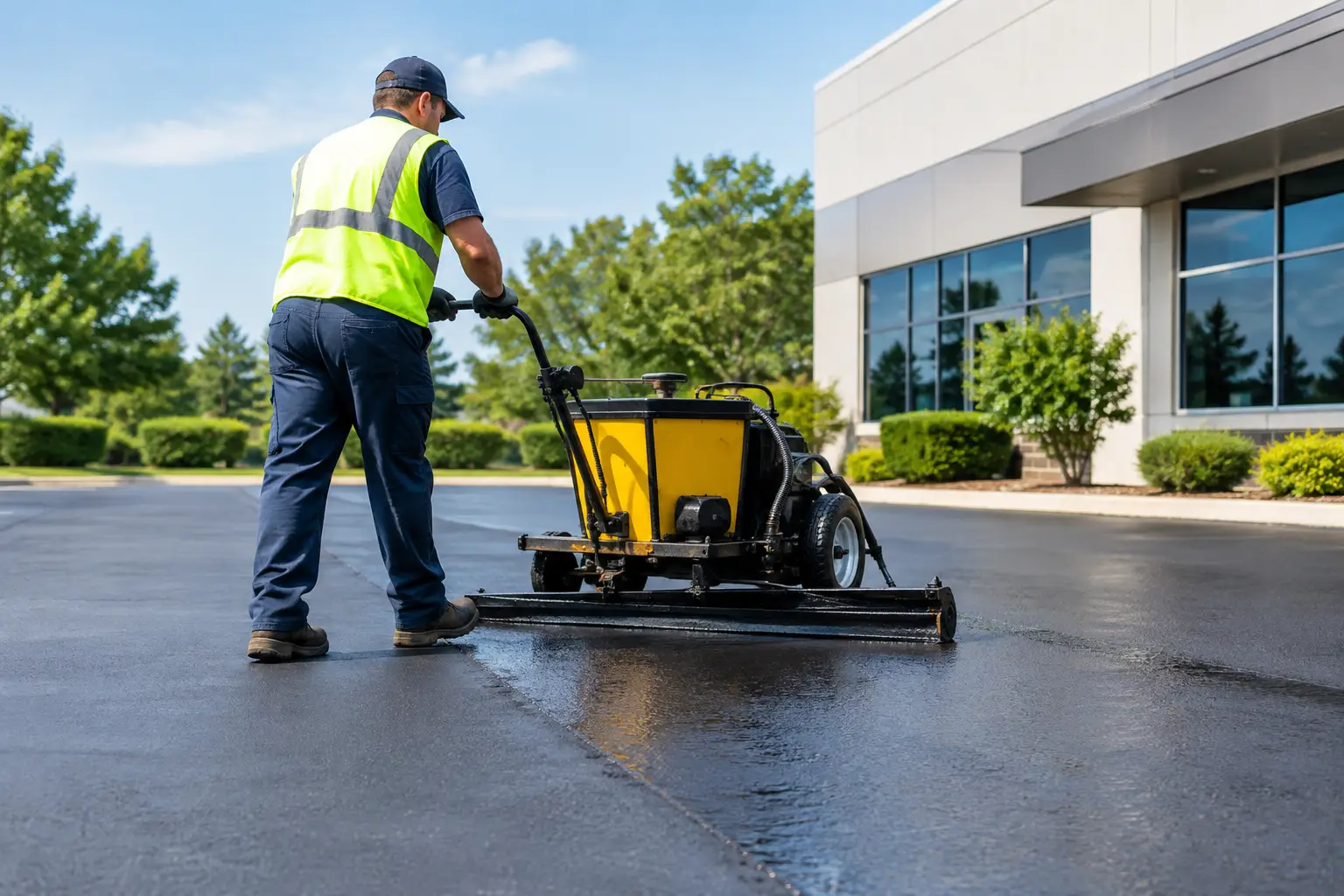
A parking lot starts sending signals long before it fails. Faded lines, open cracks, standing water, loose edges, and potholes tell customers and tenants that routine care has been delayed. Commercial asphalt upkeep changes that trajectory. It protects the surface your visitors use every day, controls repair costs, and keeps a working property looking cared for.
For Pennsylvania property owners and facility managers, asphalt takes a beating. Summer sun dries out the binder that holds aggregate together. Winter freeze-thaw cycles push water deeper into small cracks. Vehicles add constant weight, turning minor flaws into wider breaks and eventually into costly pavement failures.
The right maintenance plan is not about making a parking lot look black for a season. It is about addressing damage at the right time, with the right materials, before water and traffic gain the upper hand.
Why Commercial Asphalt Upkeep Pays for Itself
Asphalt is built to flex under traffic, but it cannot perform well once its protective surface begins to break down. Oxidation from UV exposure makes pavement dry and brittle. Water enters through cracks, softens the base beneath the asphalt, and creates the conditions for potholes, settlement, and alligator cracking.
That is why waiting for visible failure is usually the expensive option. A narrow crack can often be cleaned, sealed, and monitored. A pothole may be repaired before it reaches the underlying base. Once the base has been compromised across a larger area, however, patching alone may no longer be enough. Resurfacing or replacement becomes the conversation.
A disciplined maintenance program helps property owners spend money where it delivers the most value. Rather than reacting to emergencies, you can schedule repairs, sealing, and restriping around tenant needs, seasonal conditions, and budget cycles. The result is a lot that stays safer, cleaner, and more presentable without treating every issue like a full reconstruction project.
Start With Repairs Before Seal Coating
Seal coating is a protective finish, not a cure for structural damage. It can restore a clean, jet-black appearance and shield sound asphalt from sun, water, and everyday wear. It cannot fill deep potholes, stabilize a failed base, or repair widespread cracking on its own.
A proper commercial asphalt upkeep plan begins with an honest inspection. The surface should be checked for open cracks, potholes, crumbling edges, drainage trouble, vehicle fluid stains, and areas where pavement has settled. Repair work comes first so the surface is stable before protective coating is applied.
Crack Sealing Stops Water at the Entry Point
Cracks are one of the first places asphalt loses the fight against moisture. Even a small opening gives rain and melting snow a path below the surface. In Pennsylvania, that water can freeze, expand, and widen the crack through the winter.
Cleaning and sealing cracks early helps keep water out of the pavement structure. The right timing matters. A lot with a few isolated cracks may be an excellent candidate for straightforward maintenance. A lot covered in interconnected, fatigue-style cracking may need a more substantial repair plan. A contractor should explain the difference clearly, without pressure or guesswork.
Pothole Repair Protects Drivers and the Pavement Base
Potholes are more than an appearance problem. They create trip hazards, vehicle damage concerns, drainage issues, and complaints from customers or tenants. They also expose the pavement base to more water and traffic damage every day they remain open.
Professional repair removes loose material, prepares the damaged area, and installs new asphalt where it can properly bond and compact. The goal is not simply to cover a hole. It is to restore a stable driving surface that holds up under regular use.
Seal Coating Preserves Sound Asphalt
Once repairs are complete and the pavement is in suitable condition, seal coating provides a valuable layer of surface protection. Premium sealcoat helps defend against oxidation, UV exposure, water intrusion, and the worn gray appearance that makes a property look neglected.
The visual result matters, too. A fresh black surface creates contrast for bright striping, directional arrows, accessible parking symbols, and curbs. For retail centers, offices, apartment communities, and medical properties, that cleaner presentation can make the first arrival feel more organized and professional.
How often should a commercial lot be seal coated? It depends on traffic volume, pavement condition, drainage, sun exposure, and the type of use. A lightly traveled office lot may follow a different schedule than a busy retail center with frequent delivery vehicles. The surface should be evaluated on its condition, not placed on an automatic schedule that ignores what the pavement actually needs.
Line Striping Is Part of Property Safety
A well-maintained parking lot still needs clear guidance. Faded or poorly laid-out markings create confusion at entrances, parking spaces, fire lanes, loading areas, and pedestrian crossings. They can also create accessibility concerns when ADA-required spaces and access aisles are not properly marked.
Professional line striping gives drivers and pedestrians a clearer path through the property. Fresh, crisp markings help maximize usable parking, support traffic flow, identify accessible spaces, and reinforce safety expectations. It is a straightforward service with a visible impact.
Striping should usually follow seal coating after the protective surface has had appropriate time to cure. This sequence protects the finish and delivers the sharpest final appearance. It also gives property managers an opportunity to review layout changes, including new reserved spaces, directional arrows, or updated accessible markings, before paint goes down.
Watch Drainage and Edges Closely
Water is asphalt’s most persistent enemy, and it does not always arrive through a crack in the middle of the lot. Poor drainage can leave standing water near low spots, catch basins, entrances, or sidewalks. Over time, repeated saturation weakens the pavement and accelerates breakup.
Parking lot edges deserve attention as well. Without support from curbs, concrete, or a stable shoulder, asphalt edges can crack and crumble under turning vehicles. Delivery routes and dumpster areas are common trouble spots because heavy loads concentrate force in smaller areas.
An effective maintenance assessment looks beyond the visible hole or crack. It asks why the issue appeared there. If drainage is pushing water toward a recurring failure area, or if heavy trucks are breaking down an edge, addressing the cause may save repeat repair costs later.
Build a Schedule Around Your Property
The best commercial asphalt upkeep plan is practical enough to follow. For many properties, a seasonal walkthrough is a smart starting point. Spring inspections reveal winter damage. Summer and early fall often provide favorable conditions for repairs, seal coating, and striping. Before winter, open cracks and drainage concerns should be addressed wherever possible.
A useful inspection should cover more than the driving lanes. Check entrances, high-traffic parking stalls, loading zones, dumpster pads, sidewalks near pavement edges, stormwater flow, curb lines, and accessible parking areas. Keep notes and photographs so recurring problems are easier to track from one season to the next.
Facility managers with multiple properties may benefit from scheduled maintenance planning. It provides a clearer record of pavement condition and helps prioritize the locations that need attention first. A newer lot may need protective maintenance, while an older area with heavy traffic may require targeted repairs before coating can make sense.
Choose Workmanship Over a Quick Cover-Up
Commercial paving and maintenance work is highly visible. Customers notice potholes. Tenants notice faded markings. Employees notice whether the walk from their vehicle feels safe. A rushed repair or thin, poorly applied coating can create a temporary visual improvement without delivering the protection the property needs.
Look for a contractor who explains the service scope in plain language, prepares the surface properly, uses quality materials, and treats timing seriously. Weather, curing conditions, traffic control, and site access all affect the finished result. Good workmanship includes respecting those details, not working around them just to finish faster.
Eagle Seal Coating approaches every parking lot with that standard in mind: protect the pavement, make the property look right, and complete the work as though the company’s reputation is on the line. Because it is.
Your asphalt does not need to be perfect to deserve attention. It needs a clear assessment, timely repairs, and maintenance that matches how the property is used. A free, no-pressure estimate can give you a practical starting point before small pavement problems become major ones.
Need Help With Your Driveway?
Get a free, no-obligation estimate from Eagle Seal Coating. We'll give you an honest recommendation — no pressure.
Get My Free Estimate →