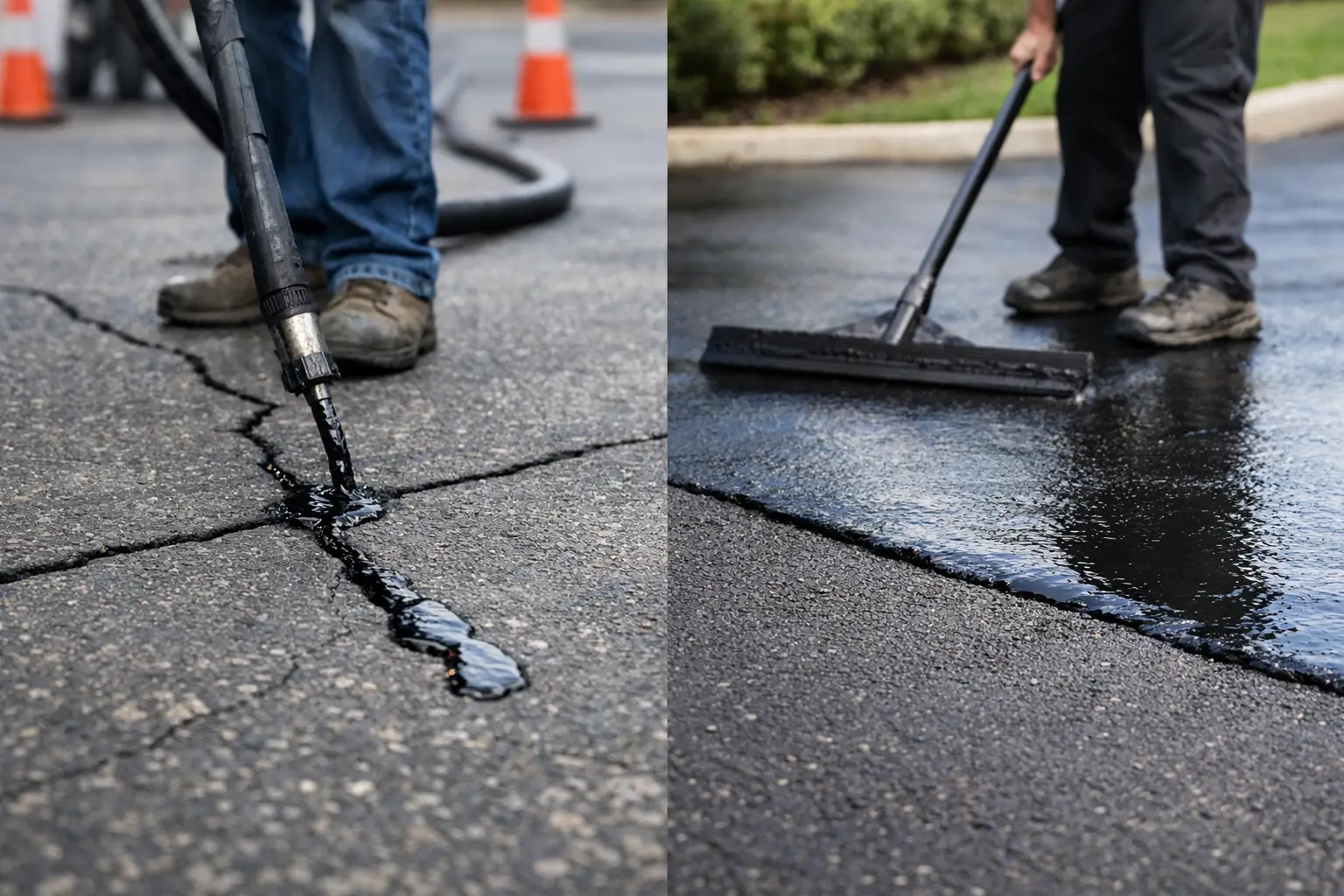
A small driveway crack can look harmless in July and become a much larger repair by spring. That is why asphalt crack filling vs sealcoating is not an either-or decision for most Pennsylvania property owners. They are different maintenance services with different jobs, and doing them in the right order protects your pavement from water, weather, and unnecessary deterioration.
Crack filling addresses active openings in the asphalt surface. Sealcoating protects the larger surface around those repairs from sun, moisture, oxidation, and daily wear. When the asphalt is in decent structural condition, combining both services as part of a planned maintenance schedule is usually the strongest value.
What Crack Filling Actually Does
Asphalt cracks are an entry point. Rainwater, melting snow, and moisture from freeze-thaw cycles work their way below the surface, where they can weaken the base that supports your driveway or parking lot. Once the base loses strength, cracks spread, edges break down, and potholes can follow.
Professional crack filling seals those openings with a flexible material designed to move with the pavement. This is particularly important in southeastern Pennsylvania, where seasonal temperature swings can cause asphalt to expand and contract. A crack that is left open through winter may come out of the season wider, deeper, and more expensive to repair.
Crack filling is a targeted repair, not a cosmetic cover-up. It is best suited for cracks that have not yet turned into widespread surface failure. The goal is simple: stop water from getting where it does the most damage.
For homeowners, that may mean extending the life of a driveway before a larger resurfacing project is needed. For commercial properties, it can help preserve a parking lot while reducing trip hazards, protecting curb appeal, and avoiding disruptions caused by major repairs.
When Crack Filling Should Come First
Crack filling should always come before sealcoating when visible cracks are present. Applying sealer over open cracks may darken them temporarily, but it does not close the gap or prevent water intrusion. The crack will continue moving beneath the coating, and the sealcoat can split along the same line.
A good contractor evaluates the type and condition of the crack before recommending a repair. Narrow surface cracks may need standard crack filling. Wider cracks, alligator cracking, crumbling areas, and pavement that has sunk or shifted may point to a deeper base issue. In those cases, filling alone is not the right fix. Patching, infrared repair, or resurfacing may be necessary before any protective coating is applied.
That honest distinction matters. A driveway or parking lot does not benefit from sealcoat applied over failing asphalt. The Eagle Standard is to repair what needs repair first, then protect the surface that is worth preserving.
What Sealcoating Does for Asphalt
Sealcoating is a protective surface treatment applied across sound asphalt. It restores a clean black appearance, but its purpose goes well beyond looks. Quality sealcoat helps shield pavement from UV exposure, oxidation, water, road salts, and everyday vehicle traffic.
Asphalt contains binders that naturally dry out over time. Sunlight and oxygen speed up that process, causing the surface to fade from black to gray and become more brittle. A properly applied sealcoat helps slow that aging process. It also creates a more uniform finish that improves the appearance of a home, retail center, office property, or multifamily community.
For commercial lots, sealcoating also creates a better foundation for fresh line striping. Clear parking stalls, directional arrows, fire lanes, and ADA-compliant markings are easier to see and maintain on a clean, dark surface. That supports a safer and more professional property.
Sealcoating is not designed to fix structural damage. It cannot rebuild an unstable base, fill potholes, or permanently repair large cracks. Think of it as protection for maintained pavement, not a substitute for repair work.
Asphalt Crack Filling vs Sealcoating: The Right Order
The right sequence is repair first, protect second. Cracks, potholes, depressions, and failed areas should be addressed before sealcoating begins. After repairs have properly cured, the surface is cleaned, prepared, and coated to help protect the investment.
This order delivers better results for several reasons. Filling cracks first blocks a direct path for water. Sealcoating afterward protects the surrounding asphalt and gives the driveway or lot a consistent finished appearance. It also helps prevent new surface wear from developing as quickly.
Trying to save money by skipping crack filling often has the opposite effect. Water below the surface can create damage that no coating can solve. A modest crack repair today may help avoid a more substantial patch or replacement later.
There is one important exception: brand-new asphalt. Fresh pavement needs time to cure before it is sealed. Sealing too soon can interfere with that process and may not allow the pavement to perform as intended. The correct timing depends on the asphalt mix, weather, traffic, and surface condition, so it is worth getting a professional recommendation rather than following a one-size-fits-all schedule.
How Often Should You Schedule Each Service?
There is no single calendar that fits every property. A shaded residential driveway with light traffic ages differently than a busy medical office lot, a retail center, or a loading area exposed to fuel drips and frequent turning vehicles.
As a general maintenance approach, inspect asphalt at least once a year, especially after winter. Fill cracks when they appear rather than waiting for a future sealcoating visit. Sealcoating is commonly scheduled every two to three years for pavement that is in good condition, though traffic levels, drainage, exposure, and prior maintenance can change that timing.
The surface itself provides useful clues. Fading color, small new cracks, rough texture, and water that lingers after rain are all reasons to take a closer look. Early action is usually less disruptive and more affordable than waiting for visible failure.
Signs You May Need More Than Crack Filling and Sealcoating
Some asphalt problems require a more substantial repair plan. Watch for potholes, widespread interconnected cracking, sections that feel soft under traffic, standing water, loose aggregate, or edges that are breaking away. These conditions can signal a compromised base or drainage problem.
A qualified assessment should identify the cause before recommending the fix. For example, a low area that repeatedly holds water may need correction before sealing. Otherwise, the same problem can return even with quality materials and careful application.
This is especially true for commercial properties. Parking lots need to perform safely for customers, employees, deliveries, and emergency access. Repairing damaged areas before applying a protective finish helps safeguard the surface and keeps line striping clear and functional.
What Quality Workmanship Changes
Materials matter, but preparation and application matter just as much. Proper crack filling requires clean, dry cracks and the right material for the repair. Proper sealcoating requires a clean surface, suitable weather, careful edging, and enough time to cure before traffic returns.
Rushed work can leave behind thin coverage, uneven edges, missed cracks, or a finish that does not hold up as it should. A professional crew should explain the service scope clearly, identify repairs that need attention, and avoid promising that a cosmetic coating will solve structural problems.
For property owners, the practical goal is not simply a darker surface. It is pavement that stays smoother, looks cared for, and holds up longer against Pennsylvania weather. That is where preventative maintenance earns its value.
If you see cracks in your driveway or parking lot, do not wait for the next hard winter to make the decision for you. A straightforward inspection and free estimate can clarify whether you need crack filling, sealcoating, or a repair plan that protects your asphalt for the miles ahead.
Need Help With Your Driveway?
Get a free, no-obligation estimate from Eagle Seal Coating. We'll give you an honest recommendation — no pressure.
Get My Free Estimate →