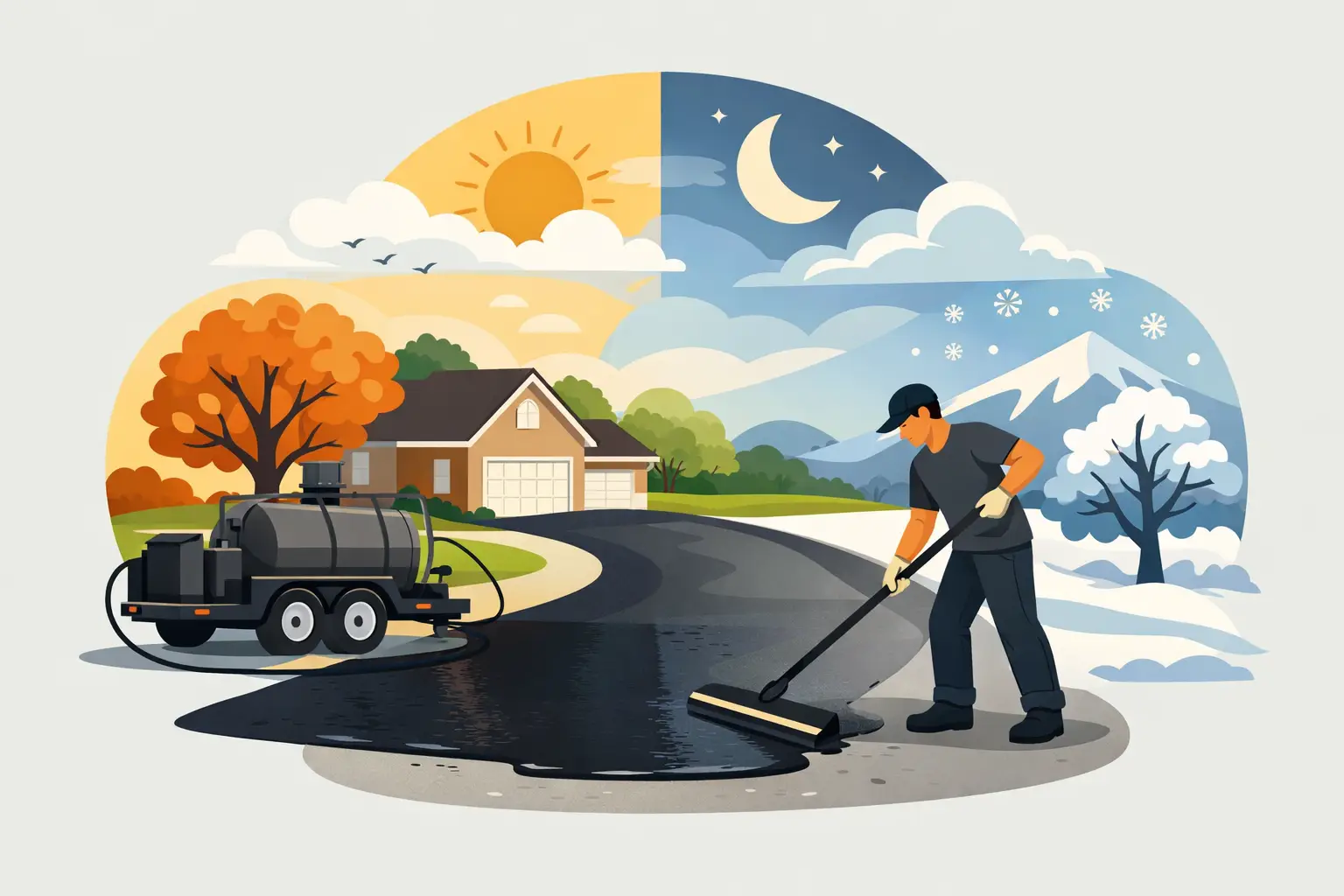
A driveway can look fine from the street while small cracks are quietly letting water into the base beneath it. In Pennsylvania, that is where costly damage starts. The best time to sealcoat asphalt driveway surfaces is when the pavement is sound, clean, dry, and the forecast gives the coating enough warm, rain-free time to cure properly.
For most homeowners in West Chester and across southeastern Pennsylvania, late spring through early fall is the dependable sealcoating window. But the calendar alone does not decide the job. Temperature, rain, humidity, the driveway’s condition, and its age all matter. A properly timed sealcoat protects your asphalt. A rushed application can leave you with uneven coverage, tracking, or a coating that does not hold up the way it should.
Best Time to Sealcoat Asphalt Driveway Surfaces
The strongest window for residential sealcoating in Pennsylvania typically runs from late May through September. Daytime temperatures should generally be at least 50 degrees Fahrenheit and rising, with warm conditions continuing long enough for the material to dry and cure.
Early summer and early fall are often ideal because they can bring moderate temperatures and more predictable drying conditions. That said, a dry July week may be a better choice than a damp September stretch. Good workmanship follows the weather, not just the month on the calendar.
A professional crew will look beyond today’s forecast. The driveway needs to be dry before application, and it needs enough rain-free time afterward to set correctly. Morning dew, overnight showers, and a thunderstorm forecast can all change the right scheduling decision.
Why warm, dry weather matters
Sealcoat is a protective surface treatment. It needs favorable conditions to bond evenly and cure into the clean black finish homeowners expect. Cool weather slows drying. Rain can wash out or streak fresh material. Heavy humidity can extend cure times, especially in shaded areas where moisture lingers.
For a reliable application, these conditions should be in place:
- Air and pavement temperatures should be above 50 degrees Fahrenheit, with warmer conditions generally preferred.
- The pavement must be dry, including cracks, low spots, and shaded sections.
- Rain should stay out of the forecast during application and the initial curing period.
- The driveway should have enough time without traffic for the coating to harden properly.
The exact drying and cure time depends on the product used, sunlight, temperature, humidity, and airflow. A sunny, breezy day can move quickly. A cloudy, humid day may require more patience. This is not the place to guess. Protecting the result is part of doing the job right.
Spring, Summer, or Fall: What Works Best?
Spring can be a good time to schedule sealcoating after winter has exposed new cracks, surface wear, and edge damage. The advantage is simple: you address problems before summer heat and rain work deeper into the pavement. The challenge is Pennsylvania’s unpredictable spring weather. A driveway may need a little more time to dry after a wet stretch, and cool nights can limit available application days.
Summer offers the most consistently favorable temperatures. Sealcoat generally dries well in warm conditions, and homeowners can plan around vacations, parties, and regular driveway use. The trade-off is heat. On extremely hot days, direct sun can make pavement temperatures climb quickly. Experienced crews adjust their timing and application approach to keep the finish even rather than treating every summer day as identical.
Early fall is another excellent option, particularly when daytime temperatures remain comfortably warm and rain is limited. It gives your driveway a renewed protective layer before winter’s freeze-thaw cycles arrive. Waiting too late into the season, however, can create problems. Cool temperatures, shorter days, falling leaves, and damp conditions do not give sealcoat the curing environment it needs.
If you want the straightforward answer, schedule during a stable late-spring, summer, or early-fall weather window. Then let the actual forecast make the final call.
Do Not Sealcoat a New Asphalt Driveway Too Soon
Fresh asphalt needs time to cure before it is sealed. In many cases, a new driveway should cure for at least six months, and some conditions may call for waiting closer to a year. New asphalt contains oils that need time to oxidize and harden. Sealcoating too early can interfere with that process and affect how well the coating adheres.
Your installer can give the best recommendation based on the mix, installation date, traffic, drainage, and local conditions. The driveway may look finished the day it is paved, but it is still curing beneath the surface.
The same principle applies after substantial repairs. Patches and repaired sections should be allowed to set and cure as recommended before they are coated. A professional estimate should explain what needs repair now, what can be sealed, and what needs time before the next step.
Repair First, Then Sealcoat
Sealcoating is preventative maintenance, not a structural repair. It protects a sound asphalt surface from water intrusion, UV exposure, oxidation, and everyday spills and wear. It will not correct a pothole, stabilize a failed base, or permanently close an active crack by itself.
Before sealcoating, the driveway should be inspected for cracks, potholes, soft areas, drainage issues, oil spots, and crumbling edges. Cracks should be cleaned and properly filled. Potholes should be repaired. Debris and vegetation need to be removed so the coating can bond to the asphalt rather than dirt, loose material, or moisture.
This prep work is where a sealcoating job earns its value. A jet-black finish looks good, but the real purpose is preserving the asphalt underneath it. Skipping repairs for the sake of a quick cosmetic result only delays the problem.
Plan for Curing Before You Schedule
A freshly sealcoated driveway should not be treated like normal pavement immediately after the crew leaves. Homeowners should plan to keep vehicles off the surface until it has cured sufficiently, based on site conditions and the contractor’s instructions. Foot traffic, bicycles, kickstands, sharp furniture legs, and turning tires can all mark a coating before it has hardened.
This matters when you are planning a family gathering, moving day, delivery, or landscaping project. Schedule the sealcoating around those events, not directly before them. If you have multiple vehicles, decide where they will be parked before work begins. A little planning protects the finish and keeps the process stress-free.
It also helps to avoid placing heavy items along driveway edges. Asphalt edges are naturally more vulnerable because they lack the support found in the center of the driveway. Keeping heavy vehicles off the edges and maintaining proper drainage will extend the life of both the pavement and the sealcoat.
How Often Should You Sealcoat?
Most residential asphalt driveways benefit from sealcoating about every two to three years. The right interval depends on sun exposure, traffic, drainage, snow removal, vehicle use, and the condition of the existing surface. A shaded driveway may face more moisture issues. A driveway with full sun may oxidize faster. One that sees frequent trucks, trailers, or oil leaks may need closer attention.
The goal is not to apply material every year. The goal is to inspect regularly and seal at the right time, before the surface becomes dry, gray, brittle, and heavily cracked. Consistent maintenance is far less disruptive than waiting until resurfacing or replacement becomes the only practical answer.
Eagle Seal Coating approaches each driveway with that standard in mind: repair what needs repair, protect what can be protected, and never force a one-size-fits-all schedule.
A Better Window Means a Better Result
The best time to sealcoat is not simply the first warm day of the year. It is a dry, stable weather window when your asphalt is ready, repairs are complete, and your household can give the coating time to cure. That is how a driveway gets more than a fresh black appearance. It gets a layer of protection built to stand up to the seasons ahead.
If you are seeing fading, small cracks, loose edges, or worn areas, do not wait for another Pennsylvania winter to make the decision for you. A clear assessment and a properly timed plan can keep a manageable maintenance job from becoming a major driveway expense.
Need Help With Your Driveway?
Get a free, no-obligation estimate from Eagle Seal Coating. We'll give you an honest recommendation — no pressure.
Get My Free Estimate →