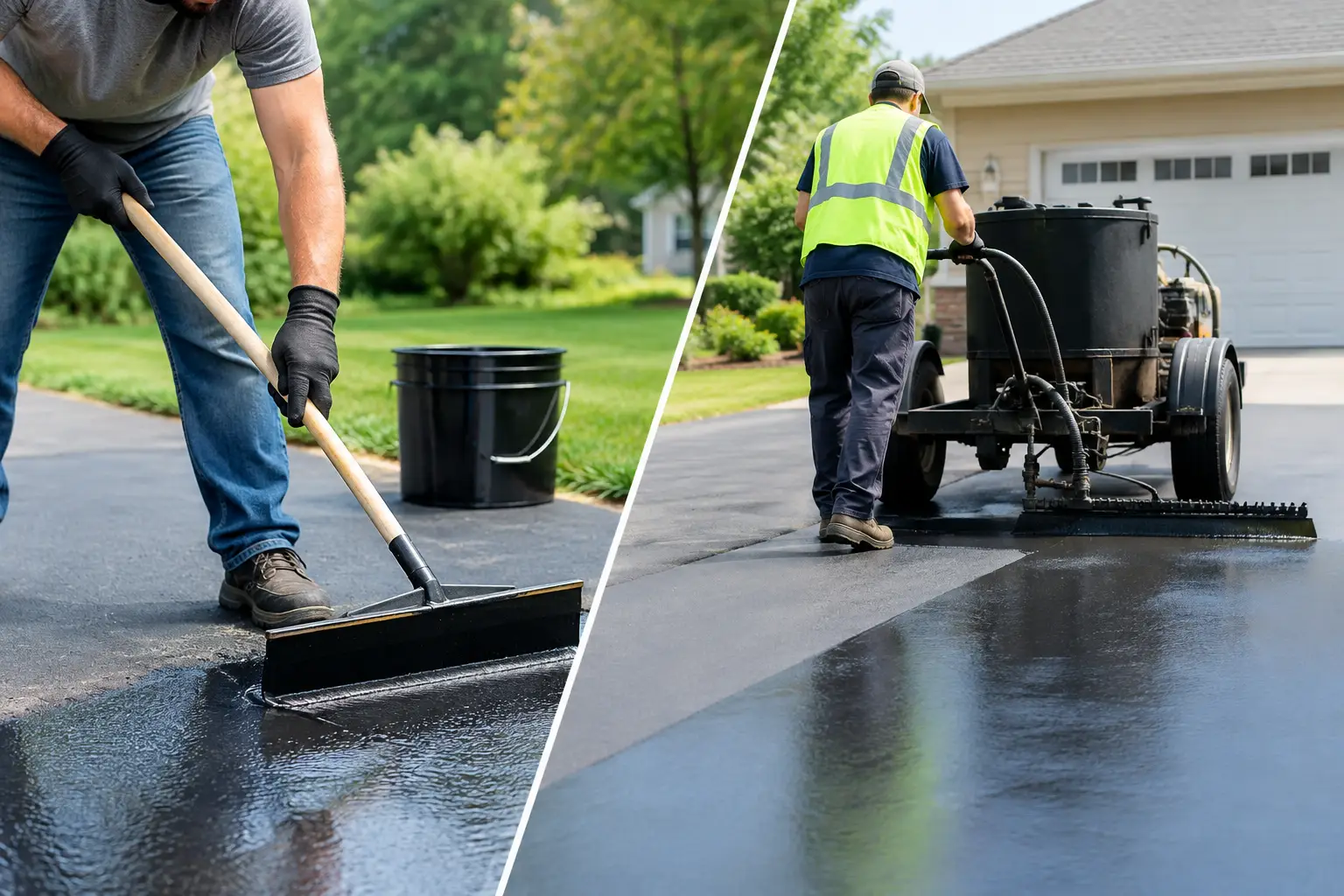
A driveway can look fine from the street while water is working its way into small cracks, sunlight is drying out the binder, and winter is preparing to make every weak spot worse. That is why the choice between DIY versus professional sealcoating is about more than getting a black finish. It is about how well the surface is prepared, what material is applied, and whether the work truly protects the asphalt beneath it.
A do-it-yourself project can make sense for a small, sound driveway when the owner has the time, tools, and patience to do the preparation correctly. Professional work is often the better value when cracks, drainage, traffic, timing, or long-term durability are part of the picture. The right choice depends on the condition of your pavement, not just the price of a bucket of sealer.
What Sealcoating Is Supposed to Do
Sealcoating is a protective maintenance treatment, not a repair for failing asphalt. When applied to a properly prepared surface, quality sealer helps defend pavement against UV exposure, water intrusion, oxidation, fuel drips, and everyday wear. It also restores the deep black appearance that makes a driveway or parking lot look cared for.
The key word is prepared. Sealer cannot bridge a pothole, stabilize crumbling edges, or stop an active crack from spreading. If water can continue entering the pavement through an open crack, the damage below the surface will keep moving. In Pennsylvania, freeze-thaw cycles turn that small opening into a larger problem quickly.
That is why a good sealcoating job starts with an honest assessment. Sound asphalt with minor surface wear may be ready for sealing. Asphalt with cracks, low spots, potholes, or base failure needs repair first.
DIY Versus Professional Sealcoating: The Real Differences
The visible difference may not be obvious on day one. Both a homeowner-applied coating and a professionally applied coating can look dark when fresh. The real difference usually appears over the next year or two, when uneven coverage, missed cleaning, thin material, or untreated cracks begin to show.
Surface preparation decides the result
DIY instructions often make the process sound simple: clean the driveway, fill cracks, stir the sealer, and apply it with a squeegee. Those are the basic steps, but each one has a standard behind it.
The surface must be dry, clear of loose debris, and free from dirt, vegetation, oil, and failing material. Oil spots may need treatment so the coating can bond. Cracks need to be cleaned and filled with the right material. Potholes and broken asphalt need repair, not a layer of sealer over the top.
Professional crews bring commercial cleaning equipment, crack-filling materials, repair methods, and the experience to recognize when a driveway is not ready to seal. That preparation takes time, but it prevents the common problem of fresh sealer peeling or wearing away unevenly.
Materials are not all alike
Store-bought sealer can be a reasonable option for light-duty residential maintenance, but products vary widely in solids content, coverage, additives, and expected wear. A thin consumer-grade coating may produce a quick color change without delivering the same protective film or durability as a premium-grade professional material.
Professional sealcoating contractors select materials based on the pavement and how it is used. A quiet residential driveway has different needs from a retail parking lot that sees turning vehicles, delivery traffic, fuel exposure, and frequent braking. Properly mixed commercial-grade sealer, applied at the right rate, produces a more uniform finish and better long-term protection.
More product is not automatically better, either. Heavy application can lead to tracking, scuffing, or a coating that does not cure as intended. The goal is controlled, even coverage, not simply making the surface as black as possible.
Application tools affect consistency
For a small driveway, a homeowner may use a squeegee, brush, or roller. Those tools can work, but they require steady technique and attention around edges, garage approaches, and transitions. It is easy to leave thin spots, puddle material in low areas, or create visible lines across the driveway.
Professional crews use tools and application methods designed for larger, more consistent coverage. They also protect adjacent concrete, landscaping, garage doors, and curbs from splatter and overspray. On commercial work, experienced application matters even more because an uneven parking lot finish reflects poorly on the property and can interfere with later line striping.
Timing and weather are part of the job
Sealcoating needs suitable weather to cure. The pavement must be dry, temperatures must support curing, and rain cannot be waiting just around the corner. Humidity, shade, cool overnight temperatures, and heavy dew can all affect how the coating sets.
A DIY project often gets scheduled around a free weekend. A professional crew schedules around pavement conditions and forecast windows. That does not mean weather is always predictable, but it does mean the decision to apply material should be based on more than convenience.
The Cost Question: Upfront Price Versus Long-Term Value
DIY sealcoating usually has the lower upfront cost. You are paying for sealer, crack filler, cleaning supplies, tools, and your own labor. For a small driveway in good condition, that can be a practical choice if you already understand the process and can commit the time.
The hidden cost is redoing weak work. If the driveway is not cleaned well, if cracks are missed, or if sealer is applied under poor conditions, you may spend money and still leave the pavement exposed. You may also need to remove or work around a failing coating before the next proper application.
Professional sealcoating costs more because it includes labor, preparation, materials, equipment, and accountability for the finished work. The best value is not necessarily the lowest estimate. Ask what preparation is included, whether crack repair is separate, what material will be used, how long the driveway must stay off limits, and whether the contractor stands behind the job.
For commercial properties, professional service is usually the clearer choice. Closing off traffic, coordinating tenants or customers, repairing damaged areas, and restriping ADA-compliant spaces require planning that goes far beyond applying sealer. An organized maintenance plan can also help property managers avoid expensive surprises and keep the lot safe and presentable.
When DIY Can Be a Reasonable Choice
DIY may be worth considering when the surface is small, relatively new, structurally sound, and free of significant cracks or drainage issues. It can also work for owners who are comfortable with physical outdoor work, can clean and prepare the pavement thoroughly, and have a dependable dry-weather window.
Be realistic about the condition of the asphalt. A driveway with edge deterioration, alligator cracking, deep depressions, or recurring puddles is not a good candidate for a weekend coating project. Sealer may temporarily darken those areas, but it will not correct the damage causing them.
If you choose the DIY route, do not rush the preparation. Clean the surface thoroughly, allow it to dry completely, repair cracks with appropriate material, follow the product coverage instructions, and keep vehicles off the driveway until the coating has cured. A patient application is better than a fast one.
When Professional Sealcoating Is the Better Call
Professional service makes sense when protecting the driveway is a priority, when repair work is needed before sealing, or when you want a consistent finish without spending your weekend managing materials and weather. It is also the practical choice for larger driveways, steep grades, shared access areas, and any commercial pavement.
A reputable contractor should not pressure you into sealing asphalt that needs more serious repair. They should explain the scope clearly, point out problem areas, and provide straightforward pricing. That approach protects the customer as much as the pavement.
At Eagle Seal Coating, every job is treated like our reputation depends on it. Because it does. That means looking beyond the surface color to address cracks, damaged areas, and the conditions that shorten asphalt life.
Protect the Pavement Before Damage Spreads
The best time to make a decision is before small cracks become water paths and before a faded driveway begins to break apart at the edges. Whether you take on a small DIY project or choose professional help, make preparation and long-term protection the standard. A clear, no-pressure estimate can give you a practical starting point and help you spend wisely on the asphalt you already own.
Need Help With Your Driveway?
Get a free, no-obligation estimate from Eagle Seal Coating. We'll give you an honest recommendation — no pressure.
Get My Free Estimate →