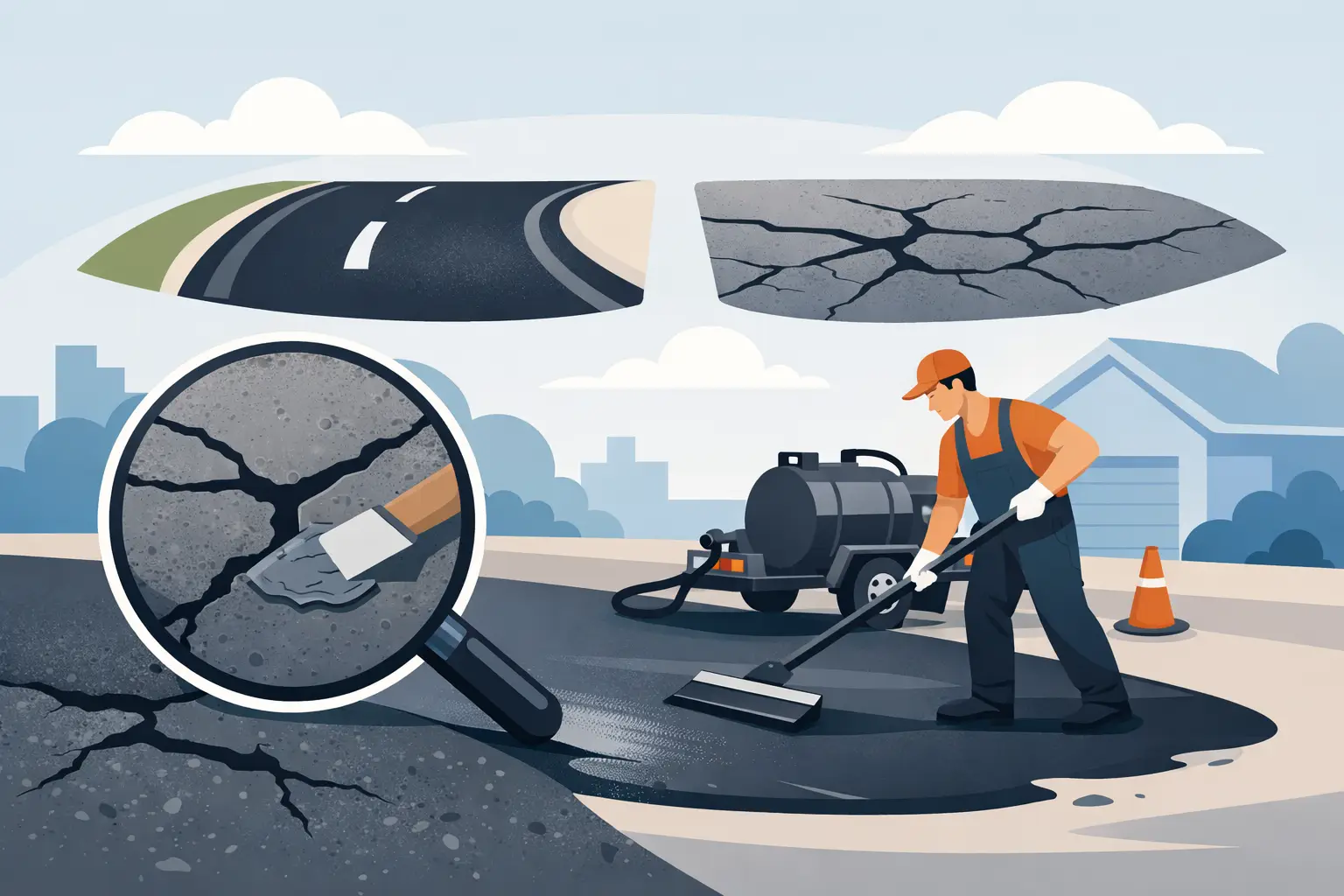
A driveway can look tired long before it looks broken. Faded gray asphalt, small surface cracks, and a rough texture are early warnings that water and weather are gaining ground. So, does sealcoating fix cracks? No. Sealcoating protects sound asphalt and improves its appearance, but it is not a crack repair material.
That distinction matters in Pennsylvania. Once water works into an open crack, freeze-thaw cycles can widen it, loosen the base beneath the pavement, and turn a manageable repair into a pothole or failed section. The right order is simple: repair the cracks first, then sealcoat the surface to help prevent the next round of damage.
Does Sealcoating Fix Cracks or Just Cover Them?
Sealcoat is a protective coating applied across an asphalt surface. It restores a deep black finish while helping defend pavement against UV exposure, water, vehicle fluids, oxidation, and everyday wear. It is one of the best maintenance steps a homeowner or property manager can take for asphalt that is still structurally sound.
But sealcoat is relatively thin. It follows the shape of the surface below it, including existing cracks. A hairline crack may look less noticeable immediately after sealing, especially on a freshly blackened driveway, but the movement and opening beneath the coating remain. As temperatures change and vehicles pass over the area, that crack can show through again.
Trying to use sealcoating as a substitute for crack filling can create a false sense of security. The pavement may look better for a season, but water still has a route into the asphalt and base. Good asphalt maintenance is not about making damage disappear for a photo. It is about stopping damage before it spreads.
Why Cracks Need Repair Before Sealcoating
Asphalt is flexible, but it is not immune to movement. Sunlight dries out the binder that holds aggregate together. Heavy vehicles stress weak areas. Water enters small openings, then expands when it freezes. In southeastern Pennsylvania, that cycle is especially hard on driveways and parking lots.
Crack repair seals the opening where water enters. Depending on the crack type and condition, a professional may use a hot rubberized crack filler, a compatible asphalt crack sealant, or a more substantial repair for broken edges and deteriorated sections. The goal is to create a durable, flexible barrier that moves with the pavement better than a surface coating alone can.
Once cracks are properly treated and the repair has cured as needed, sealcoating adds the broader layer of protection. It helps slow oxidation, reduces surface wear, and gives the pavement a clean, uniform appearance. Repair handles the problem area. Sealcoat protects the larger investment around it.
Small Cracks Are Usually the Best Time to Act
Narrow, isolated cracks are often the least expensive damage to address. They may not look urgent, but they are an open door for moisture. Filling them early can help preserve the base and keep the surrounding asphalt from unraveling.
If a crack has widened, has crumbling edges, or dips when driven over, it may need more than standard crack filling. The same is true when multiple cracks form an interconnected pattern. That pattern can signal base failure, poor drainage, or asphalt that has reached the point where patching or resurfacing should be considered.
When Sealcoating Is the Right Answer
Sealcoating makes sense when the asphalt is in generally good condition after necessary repairs are complete. A well-timed application can extend the usable life of a driveway or parking lot and postpone more costly work.
For a residential driveway, sealcoating is often a practical choice when the surface has faded, feels dry or rough, and has only minor cracks that can be repaired first. It also makes sense after a patch repair, once the new asphalt has had appropriate time to cure. The finished surface looks refreshed, but the real value is in the protection it provides against the elements.
For commercial properties, sealing can help maintain a professional first impression while protecting larger paved areas from traffic, fuel drips, and weather. It also creates a clean background for crisp parking-lot line striping, including ADA-compliant markings where required. A properly maintained lot is easier to navigate, safer for visitors, and less likely to demand emergency repairs.
The timing depends on the pavement’s age, traffic level, exposure, drainage, and prior maintenance. Many properties benefit from a regular maintenance schedule rather than waiting until the asphalt looks severely worn. There is no one-size-fits-all interval, but a professional inspection can identify whether sealing now will deliver real value or whether repairs should take priority.
Situations Where Sealcoating Will Not Solve the Problem
Sealcoating cannot correct structural failures. If asphalt is soft, badly sunken, severely alligatored, or full of deep potholes, the problem is below the surface. Applying sealcoat over those conditions may improve color briefly, but it will not rebuild a compromised base or restore pavement strength.
Watch for these signs that repair work should come first:
- Cracks wider than a narrow hairline, especially if they are spreading or collecting debris
- Potholes, broken edges, or loose asphalt aggregate
- Web-like alligator cracking in wheel paths or traffic areas
- Low spots where water stands after rain
- Areas that flex, sink, or feel soft under vehicle weight
These conditions do not automatically mean full replacement is necessary. Localized patching, drainage corrections, or resurfacing may be enough, depending on the cause and extent of the damage. The key is an honest assessment before coating is discussed.
The Right Process for a Lasting Finish
Quality sealcoating begins with preparation. Loose debris, dirt, vegetation, and oil spots need attention so the coating can bond properly. Cracks should be cleaned and repaired. Potholes and failed areas should be patched. On commercial work, the surface also needs to be planned around traffic flow, access, and the timing of line striping.
After preparation, premium-grade sealer is applied evenly at the proper coverage rate. Too little material may not provide meaningful protection. Too much can lead to tracking, slow drying, or an uneven finish. The details matter, from edging and cleanup to protecting garage doors, curbs, walks, and landscaping.
Drying and cure time also deserve respect. A driveway may look dry before it is ready for vehicles, and weather affects the schedule. Humidity, shade, temperature, and rain forecasts all influence the job. A dependable contractor will set clear expectations rather than rush the process just to finish a calendar slot.
At Eagle Seal Coating, every job is treated like our reputation depends on it. Because it does. That means identifying the repair work your asphalt actually needs, explaining the scope plainly, and applying protection only when it will serve the surface well.
Protect the Asphalt You Still Have
The best time to address cracks is before they become a larger pavement problem. Walk your driveway or parking lot after rain. Look for standing water, open seams, loose edges, and cracks that are getting wider from season to season. Those small details tell you where your asphalt needs attention.
Sealcoating is not a magic cover-up, and it should never be sold that way. When crack repair comes first, a properly applied sealcoat becomes what it is meant to be: a hardworking protective layer that keeps a sound surface looking sharp and lasting longer. Request a no-pressure estimate before the next freeze-thaw season gives those cracks more room to grow.
Need Help With Your Driveway?
Get a free, no-obligation estimate from Eagle Seal Coating. We'll give you an honest recommendation — no pressure.
Get My Free Estimate →