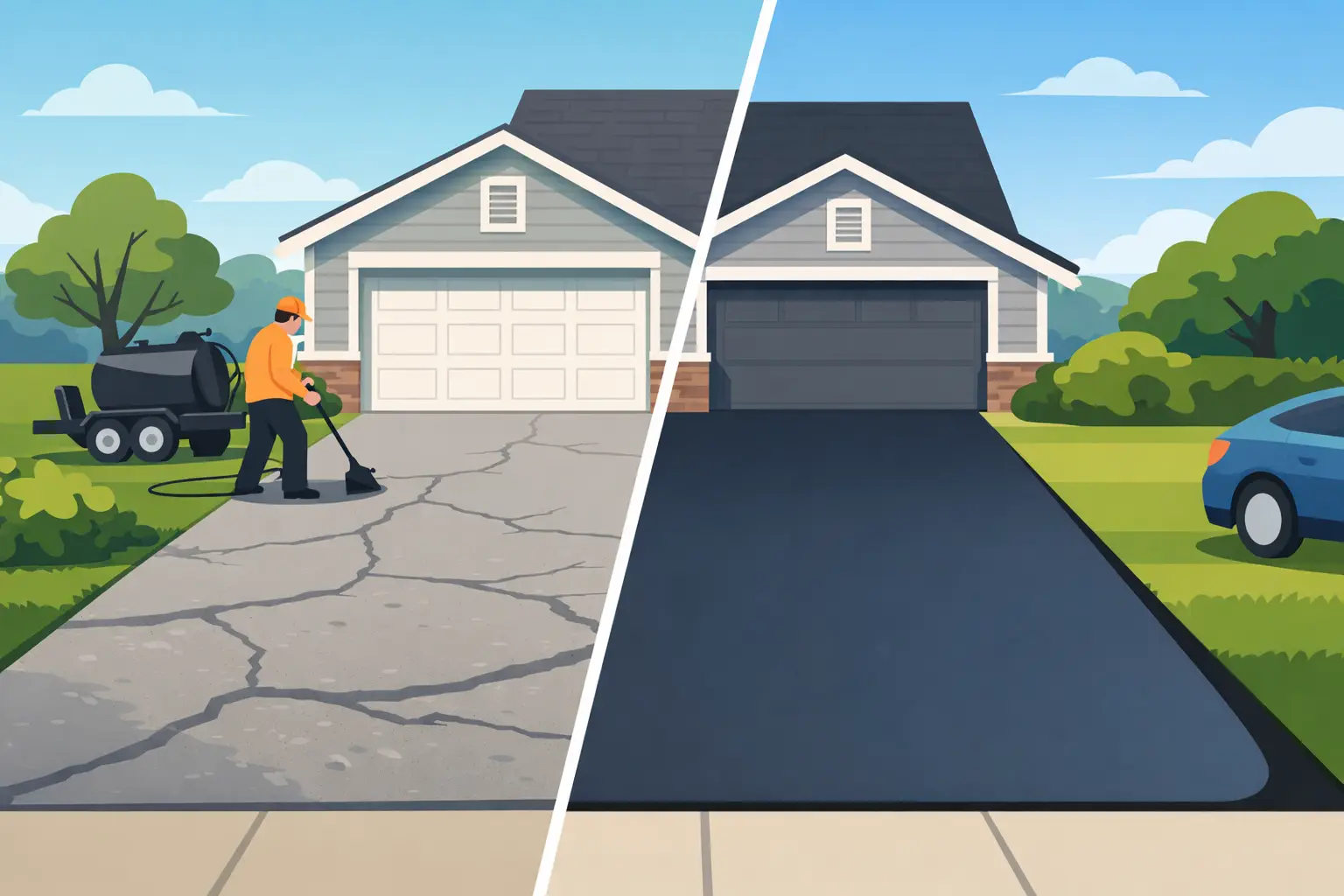
A driveway sealcoating before and after comparison can be striking. The faded, gray surface that made the front of your home look tired is replaced with a clean, deep-black finish and sharper edges. But the best change is not only the color. Proper sealcoating helps protect the asphalt beneath from the Pennsylvania weather that slowly breaks it down.
At Eagle Seal Coating, every job is treated like our reputation depends on it. Because it does. That means the visible result matters, but so does the preparation that makes that result last.
What a Driveway Looks Like Before Sealcoating
Most asphalt driveways do not fail all at once. They wear down gradually. Sunlight dries out the binder that holds the stone together. Rain enters hairline cracks. Winter freeze-thaw cycles widen those openings, and vehicle traffic works loose material at the surface.
Before sealcoating, homeowners often notice a driveway that has lost its dark color and looks gray, patchy, or dusty. Small cracks may appear near the edges or in areas where cars turn and stop. Low spots can hold water after a storm. In more advanced cases, the surface may have loose aggregate, shallow potholes, or crumbling edges.
A faded driveway is not automatically a failed driveway. In fact, that is often the right time to act. Sealcoating is preventative maintenance for sound asphalt. It helps slow oxidation, sheds water more effectively, and provides a renewed protective layer before minor wear turns into major repair work.
The condition of the driveway determines what must happen first. A few tight surface cracks may only need professional crack filling. Potholes, soft areas, deep alligator cracking, or widespread deterioration call for repair before any sealer is applied. Sealcoat can protect asphalt, but it cannot rebuild a driveway whose base or surface has already failed.
Driveway Sealcoating Before and After: The Real Difference
The after photo gets attention because the finish is immediate. A professionally sealed driveway looks darker, more uniform, and better maintained. It can make landscaping, stonework, and exterior paint stand out rather than compete with a dull, weathered surface.
That clean appearance is valuable, especially for homeowners preparing to sell or simply taking pride in the property they have worked hard to maintain. Still, appearance is only one part of the result.
A quality sealcoat creates a barrier at the surface that helps reduce exposure to UV rays, water, road salt residue, oil drips, and ordinary wear. Asphalt contains oils that keep it flexible. Over time, sun and weather pull those oils away. The pavement becomes dry and brittle, making it more likely to crack under changing temperatures and vehicle weight.
After sealcoating, the driveway has a refreshed protective surface that helps preserve the asphalt underneath. It does not make the pavement indestructible, and it will not erase structural problems. What it does is give well-maintained asphalt a better chance to perform longer before resurfacing or replacement becomes necessary.
The finish should look even, not rushed
A good finished driveway should have a consistent black appearance with clean transitions along garage doors, sidewalks, curbs, and landscape borders. There should not be heavy puddling of sealer, missed sections, sloppy overspray, or material tracked onto concrete and stone.
Some subtle variation can be normal while the coating cures, particularly on older asphalt with different levels of porosity. The goal is not a painted-on illusion. The goal is a properly applied protective coating that dries evenly and bonds to a prepared surface.
The Work Between Before and After Matters Most
The strongest driveway sealcoating results begin before the first coat goes down. Surface preparation is where disciplined workmanship separates a quick cosmetic job from a maintenance service built to protect your investment.
First, the driveway needs to be cleared of vehicles, debris, loose dirt, and vegetation growing through cracks. The crew evaluates the asphalt for areas that need crack filling or patching. Filling cracks before sealcoating is critical because water does not need a large opening to get below the surface. Once water reaches the base, it can weaken support beneath the driveway and accelerate damage.
Oil spots also need attention. Petroleum can interfere with adhesion, so those areas must be cleaned and treated correctly. If the surface is not clean and dry, even premium material cannot perform as intended.
Weather matters, too. Sealcoating should be scheduled when the pavement is dry and temperatures support proper curing. A rushed application ahead of rain or during unsuitable conditions can leave homeowners with uneven results and a coating that wears prematurely. This is one reason experienced local contractors pay close attention to the forecast instead of treating every day the same.
Once preparation is complete, the sealer is applied in a controlled, even coat. The application method may vary with the driveway layout, surface condition, and material being used. Edges require care. So do tight areas around garages, gates, and decorative hardscaping. The goal is straightforward: complete coverage without creating a mess around the property.
What Sealcoating Will Not Fix
Honest asphalt maintenance starts with clear expectations. Sealcoating is one of the smartest ways to protect a driveway, but it is not a substitute for repairs.
If your driveway has deep cracks that branch like a web, dips caused by base failure, severe raveling, or potholes, applying sealer alone can temporarily darken the surface without solving the problem. Those issues should be repaired first. In some cases, resurfacing or replacement may be the more responsible recommendation.
Homeowners should also understand that a newly sealed driveway needs time to cure. Walking on it is usually possible before vehicle traffic, but cars should stay off until the coating has had adequate time under the current weather conditions. Turning steering wheels while sitting still can scuff a fresh coating, especially during hot weather. Heavy items, sharp stands, and lawn equipment should also be kept off until the surface is ready.
A dependable contractor will explain the condition of your asphalt, the scope of the work, and realistic aftercare instructions before the job begins. No pressure. No vague promises. Just a clear recommendation based on what the driveway actually needs.
How Long Does the After Look Last?
The rich black finish will naturally soften over time. That is normal. Sun exposure, traffic, drainage, tree cover, winter conditions, and the quality of prior repairs all affect how long a driveway stays looking freshly sealed.
For many residential driveways, a regular maintenance schedule every two to three years is a practical starting point. A driveway with heavy daily use, strong sun exposure, or recurring water runoff may need closer attention. A newer driveway may need time to cure before its first sealcoat, while an older driveway may benefit from crack repair and sealing sooner.
The best schedule is based on condition, not a calendar alone. If the asphalt is turning gray, showing small new cracks, or absorbing water quickly instead of shedding it, it is worth having the surface evaluated. Addressing those signs early is usually less costly than waiting for water damage and freeze-thaw movement to spread.
Keep the improvement working for you
After sealcoating, keep the driveway clear of standing water whenever possible. Make sure downspouts do not discharge directly onto the pavement, trim back roots or vegetation that can lift edges, and clean fuel or oil spills promptly. Avoid parking heavy trailers or equipment in the same spot for long periods, especially near driveway edges where the base may be less supported.
These small habits protect the work and help the driveway continue to look cared for between maintenance visits.
A quality before-and-after result is not about hiding problems under a black coating. It is about repairing what needs repair, protecting sound asphalt, and giving your property a finish that looks as dependable as it performs. When you see the first signs of fading or cracking, acting early gives your driveway the strongest chance to last.
Need Help With Your Driveway?
Get a free, no-obligation estimate from Eagle Seal Coating. We'll give you an honest recommendation — no pressure.
Get My Free Estimate →