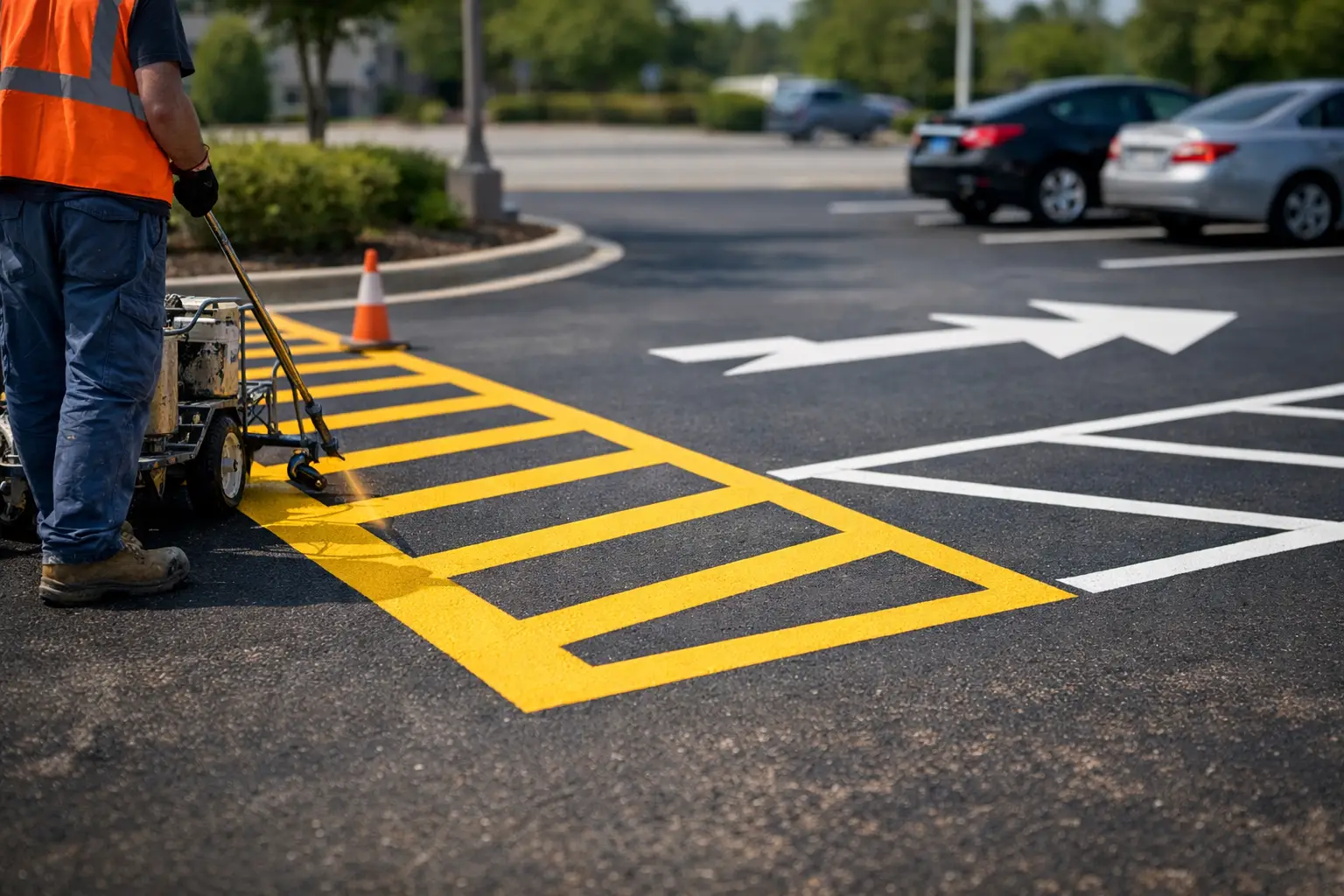
A parking lot can look busy long before it looks dangerous. Faded stall lines, a crosswalk that disappears in rain, or an accessible space with unclear access aisles all force drivers and pedestrians to guess. To improve parking lot safety markings, start by treating striping as a traffic-control system, not a cosmetic touch-up. Clear, durable markings direct vehicles, protect people on foot, support accessibility, and give your property the organized appearance customers expect.
For Pennsylvania property owners, timing matters too. Winter salt, plow blades, standing water, UV exposure, and freeze-thaw cycles wear down both pavement and paint. A line that looked acceptable last season may no longer provide the guidance your visitors need.
Start With the Way People Actually Use the Lot
The best striping plan follows real traffic patterns, not just the layout printed on an old site plan. Watch where cars enter, turn, back out, queue, and cut across travel lanes. Notice where delivery vehicles stop, where employees park, and where pedestrians naturally walk from spaces to the building entrance.
A retail center may need highly visible crosswalks near storefronts and clear directional arrows at busy entrances. An office property may need better visitor parking, fire-lane identification, and organized traffic flow during morning arrivals. At an apartment community, the priorities may include reserved spaces, visible stop bars, and safe pedestrian routes between buildings.
This assessment often reveals a simple but costly problem: parking spaces have gradually become too tight, travel lanes are blocked by poor parking behavior, or faded arrows no longer control one-way movement. Re-striping without correcting those issues only recreates the old confusion in fresh paint.
Improve Parking Lot Safety Markings at Key Conflict Points
Not every line carries the same safety value. Focus first on areas where a driver, pedestrian, or vehicle is most likely to encounter another person or object unexpectedly.
Entrances, exits, and internal intersections
Drivers need advance direction before they reach a decision point. Directional arrows should be placed where motorists can see and act on them, not after they have already committed to a turn. Stop bars, yield markings, and clearly painted lane edges make internal intersections easier to read, especially for unfamiliar visitors.
Keep markings consistent throughout the property. If one driveway uses arrows to show one-way circulation, the rest of the traffic route should reinforce that instruction. Mixed signals create hesitation, and hesitation in an active parking lot can lead to abrupt stops, unsafe turns, and minor collisions.
Pedestrian crossings and walkways
Pedestrian markings deserve more attention than a pair of faded white bars near the entrance. Crosswalks should connect logical walking routes, remain visible from approaching vehicles, and lead people toward a protected sidewalk or entrance path where possible.
High-contrast striping is particularly useful at locations where people may be distracted, such as near storefronts, pickup areas, loading zones, or school and medical office entrances. In some settings, additional measures such as signs, wheel stops, speed control devices, or upgraded lighting may be appropriate. Paint alone cannot solve a sightline or speed problem, but it is a critical part of the solution.
Accessible spaces and access aisles
ADA-compliant markings are both a legal obligation and a practical commitment to safe access. Accessible spaces need proper dimensions, visible symbols, designated access aisles, and a clear path from the parking area to the building entrance. Van-accessible spaces require additional clearance and appropriate identification.
Requirements can depend on the facility, number of spaces, local enforcement, and the condition of the existing lot. That is why guessing is not good enough. A professional review can identify missing access aisles, improperly located spaces, faded blue paint, or routes interrupted by cracked pavement, curbs, and drainage issues.
Fire lanes, loading zones, and restricted areas
Emergency access cannot depend on a visitor recognizing an old, barely readable curb stencil. Fire lanes and no-parking zones should be clearly marked and maintained so first responders, tenants, and delivery drivers understand where vehicles cannot stop.
Loading zones, dumpster approaches, and service entrances also benefit from precise markings. These areas experience heavy use and are often where large vehicles and pedestrians share limited space. Defining the work area helps protect the pavement while reducing blocked traffic lanes and avoidable conflicts.
Choose Materials That Hold Up to Pennsylvania Weather
Fresh striping looks sharp on day one. The real test is whether it remains visible through sun, rain, snow, traffic, salt, and routine plowing. Material selection should match the property, traffic volume, pavement condition, and expected maintenance schedule.
A low-traffic office lot may perform well with a standard traffic paint application on a clean, properly prepared surface. A busy retail center, medical facility, or multifamily property may justify more durable materials or more frequent touch-ups. The right answer depends on use. Paying for the most expensive option is not automatically necessary, but applying low-grade paint to a high-wear lot is usually false economy.
Surface preparation matters just as much as the paint. Loose debris, oil residue, failing sealer, moisture, and crumbling asphalt can prevent markings from bonding properly. If the pavement has cracks, potholes, or widespread deterioration, address those conditions before striping. Otherwise, the new layout can begin breaking apart almost immediately.
Seal coating and line striping work well together when scheduled in the right order. A properly sealed surface helps restore a clean, jet-black background that makes white, yellow, and blue markings easier to see. Striping should follow after the sealer has cured according to product and weather conditions. Rushing either step can compromise the finished result.
Design for Visibility, Not Just Space Count
A property owner may be tempted to fit as many spaces as possible into a lot. But overcrowded layouts create door dings, blocked aisles, difficult backing movements, and poor accessibility. Well-designed stalls, travel lanes, and turning areas allow visitors to use the lot with confidence.
Visibility also changes by time of day and weather. Rain can reduce contrast. Glare can hide worn paint. Snow piles can block arrows and pedestrian routes. Consider how markings will perform under the conditions your customers and employees actually face. Clear symbols, proper line width, and thoughtful placement make a major difference when visibility is less than ideal.
Lighting should support the marking plan. If a crosswalk, accessible route, or pedestrian island is poorly lit, repainting alone will not fully correct the risk. Likewise, shrubs, signs, and parked trucks should not block critical sightlines at exits or intersections. Safety improves fastest when striping, pavement condition, lighting, and property maintenance work together.
Build Marking Maintenance Into Your Property Plan
Parking lot markings do not fail all at once. They fade gradually, which makes it easy to postpone maintenance until visitors are already struggling to see the layout. A routine inspection catches problems before they affect safety, curb appeal, or compliance.
Walk the property at least twice a year and after a hard winter. Look for fading lines, worn accessible symbols, unclear arrows, peeling paint, damaged wheel stops, blocked drains, and pavement cracks that cross pedestrian routes. Review high-traffic areas more often, particularly entrances, pickup zones, fire lanes, and spaces nearest the building.
A practical maintenance plan may include crack filling, pothole repair, seal coating, and scheduled line striping rather than waiting for a full lot overhaul. This approach controls costs and keeps the property looking cared for. It also prevents small pavement failures from undermining your fresh markings.
For commercial properties, it helps to document the layout and maintenance dates. That record makes future planning easier, especially when property management changes or a tenant requests reserved parking, loading adjustments, or accessibility updates.
Get a Layout That Works Before the Paint Goes Down
Professional line striping is more than operating a paint machine in straight lines. It requires measuring, planning, surface preparation, traffic awareness, and a working understanding of accessibility requirements. The finished result should look crisp because the work behind it was precise.
Eagle Seal Coating approaches parking lot striping with the same standard applied to every asphalt project: every job treated like our reputation depends on it. Because it does. Whether your lot needs a targeted refresh or a complete new layout after repairs and seal coating, the goal is clear markings that help people move safely and make your property look ready for business.
Before approving any work, ask for a clear scope that identifies what will be marked, what repairs are needed first, and how the contractor will handle accessible spaces, traffic flow, and restricted areas. Straight answers at the estimate stage lead to fewer surprises when the work begins.
The most useful parking lot marking is the one nobody has to think about. Drivers follow it naturally, pedestrians know where to walk, accessible spaces remain usable, and your pavement presents a clear, professional first impression. Inspect the areas where people hesitate today, then correct them before a faded line becomes a preventable problem.
Need Help With Your Driveway?
Get a free, no-obligation estimate from Eagle Seal Coating. We'll give you an honest recommendation — no pressure.
Get My Free Estimate →