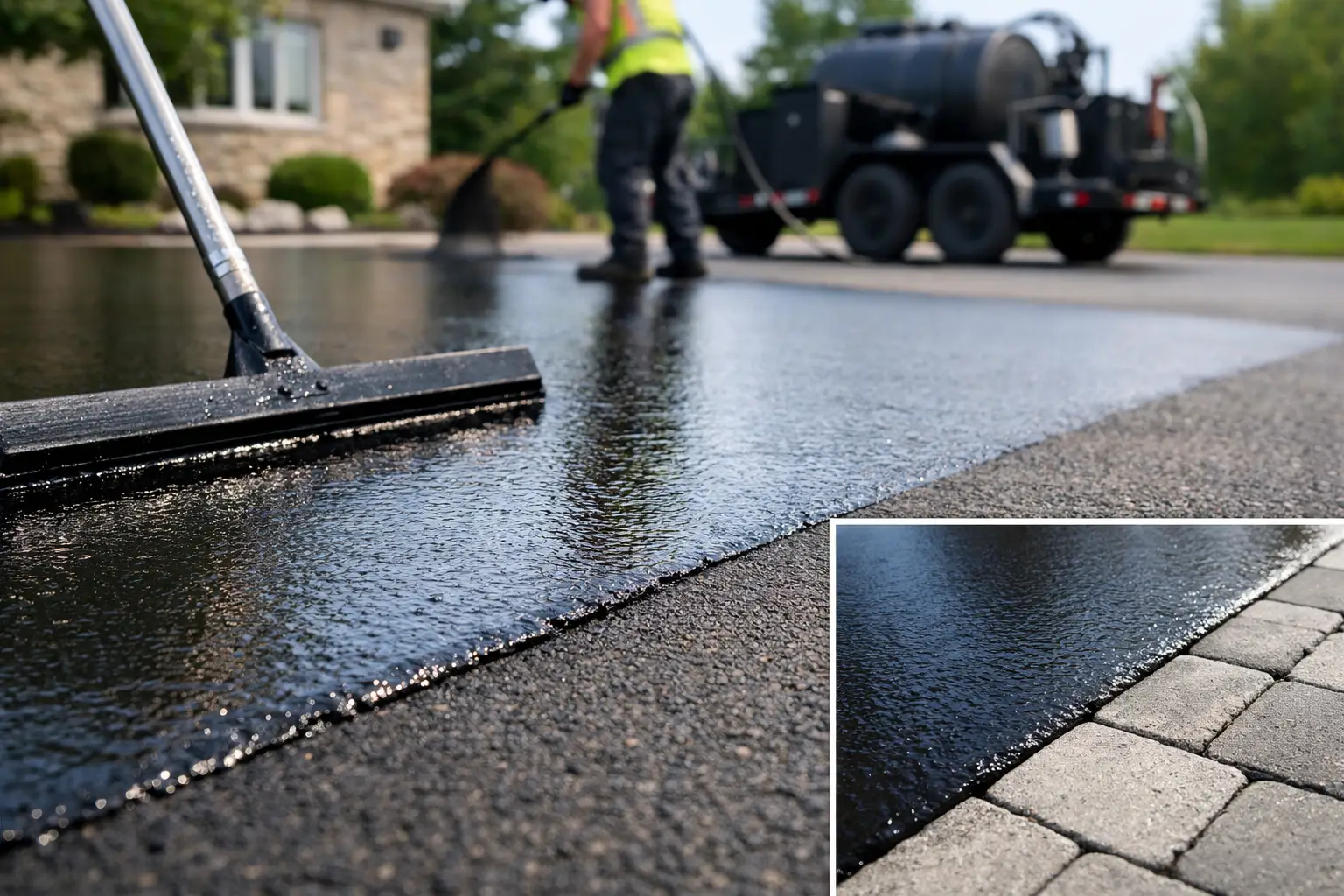
A blacktop driveway or parking lot does more than carry vehicles. It frames a home, welcomes customers, and takes a daily beating from Pennsylvania weather. Pavement sealing gives that asphalt a protective layer against the water, sun, salt, oil, and traffic that slowly turn a solid surface into a costly repair project.
The work is not simply about making pavement look black again. A properly prepared and professionally sealed surface helps slow oxidation, limits moisture intrusion, and keeps small issues from becoming major failures. The result is a cleaner appearance today and a better chance of avoiding premature resurfacing tomorrow.
Pavement Sealing Is Protection, Not Just Color
Asphalt contains binders that hold the aggregate together. Over time, UV exposure dries and oxidizes those binders. The surface fades from black to gray, becomes brittle, and starts losing the flexibility it needs to handle vehicle loads and seasonal movement.
Water makes that process worse. Once it enters cracks, it can reach the base beneath the asphalt. In Pennsylvania, freeze-thaw cycles turn trapped water into expanding ice, widening cracks and weakening the pavement from below. What begins as a hairline crack can develop into broken edges, alligator cracking, or a pothole.
A quality sealcoat helps shield the surface from the elements that cause this deterioration. It also provides resistance against common driveway and parking-lot contaminants, including fuel drips, motor oil, and de-icing materials. No surface treatment can make asphalt indestructible, but regular protection can extend its useful life and improve its appearance between larger maintenance projects.
That distinction matters. Pavement sealing is preventive maintenance. It is not a substitute for repairing failed asphalt. Cracks, potholes, drainage problems, and soft areas need to be addressed before the protective coating goes down. Sealing over active damage may improve color for a short time, but it will not stop structural failure underneath.
When Pavement Sealing Makes Sense
The right timing depends on the condition and age of the pavement. New asphalt generally needs time to cure before it is sealed, often around 60 to 90 days depending on weather and mix conditions. Sealing too early can interfere with that curing process. A professional evaluation helps determine when the surface is ready.
For established driveways, many properties benefit from sealing every two to three years. Commercial parking lots may need a different schedule based on traffic, turning movements, delivery vehicles, sun exposure, and the condition of existing repairs. A busy retail lot and a low-traffic residential driveway should not be treated as though they face the same demands.
Look closely at the surface after rain or during strong sunlight. Fading color, fine cracks, rough texture, loose aggregate, and dull areas are signs that the asphalt is losing protection. These are the right conditions to address before water finds a path into the base.
If cracks are wider, potholes are forming, or parts of the pavement feel soft under traffic, repair should come first. A dependable contractor will say so clearly. The right scope may include crack filling, patching, drainage correction, and sealing in the proper order. Honest maintenance protects the customer as much as it protects the pavement.
Driveways need a clean, durable finish
Homeowners often notice pavement problems first at the curb. A faded driveway can make an otherwise well-kept property look neglected, while cracks along the edges can spread quickly where vehicles turn or park. Sealing restores a crisp, jet-black finish that strengthens curb appeal without the cost of replacement.
Preparation is where the quality shows. The driveway should be cleaned of dirt, leaves, oil spots, and loose material. Cracks should be treated appropriately, edges should be protected, and the application should be even without thin spots, puddling, or sloppy overspray onto concrete and landscaping.
After sealing, the driveway needs time to dry and cure before traffic returns. Exact timing depends on temperature, humidity, shade, and the coating used. Planning the work around the forecast is part of disciplined workmanship, not an afterthought.
Parking lots require a broader maintenance plan
For commercial properties, pavement condition affects more than appearance. Cracks and potholes can create trip hazards, damage vehicles, collect water, and leave visitors with the wrong first impression before they enter the building.
A parking-lot sealing project should consider traffic flow, entrances, loading areas, drainage patterns, and striping needs. Line markings often need to be refreshed after sealing so spaces, directional arrows, fire lanes, loading zones, and accessible parking remain clear. ADA-compliant markings are particularly important for safe access and property compliance.
The work may need to be phased so tenants, customers, and employees can continue using part of the property. That is where planning matters. Closing an entire lot may be fastest, but it is not always practical. A well-managed project balances durable results with minimal disruption to the people who rely on the property.
What Professional Pavement Sealing Includes
The difference between a surface that lasts and one that disappoints usually comes down to preparation, materials, and application control. The coating itself matters, but it cannot perform well on a dirty, damaged, or poorly repaired surface.
First comes an inspection. The pavement should be evaluated for cracks, potholes, oil contamination, drainage trouble, and areas where the base may be failing. Next comes cleaning and repair. Debris must be removed, vegetation along edges should be cleared, and cracks or damaged sections should be addressed according to their condition.
Then the sealcoat is applied using the method best suited to the surface and project size. The goal is uniform coverage that protects the asphalt without leaving heavy buildup in low spots or thin areas along edges. Professional-grade materials and careful application create the consistent black finish property owners expect.
At Eagle Seal Coating, every job is treated like our reputation depends on it. Because it does. That means a clear scope of work, careful attention to the details customers can see, and the practical repairs they may not think to ask about before they become more expensive.
Protect the Investment Before Damage Spreads
Pavement sealing is one of the most cost-effective ways to care for sound asphalt, but it works best as part of a regular plan. Keep the surface clean, address spills promptly, watch for standing water, and repair cracks before winter has a chance to work them wider.
Avoid sharp turns from heavy vehicles in the same spot whenever possible, especially during hot weather when asphalt is softer. Do not let soil, mulch, or grass build up along the edges, where it can trap moisture and hide early deterioration. Small habits help preserve the work long after the crew leaves.
For property owners, the practical question is not whether asphalt will age. It will. The question is whether you will protect it while maintenance is straightforward or wait until repairs become disruptive and expensive. A free, no-pressure estimate can give you a clear picture of what your driveway or parking lot needs now – and what can reasonably wait.
Need Help With Your Driveway?
Get a free, no-obligation estimate from Eagle Seal Coating. We'll give you an honest recommendation — no pressure.
Get My Free Estimate →