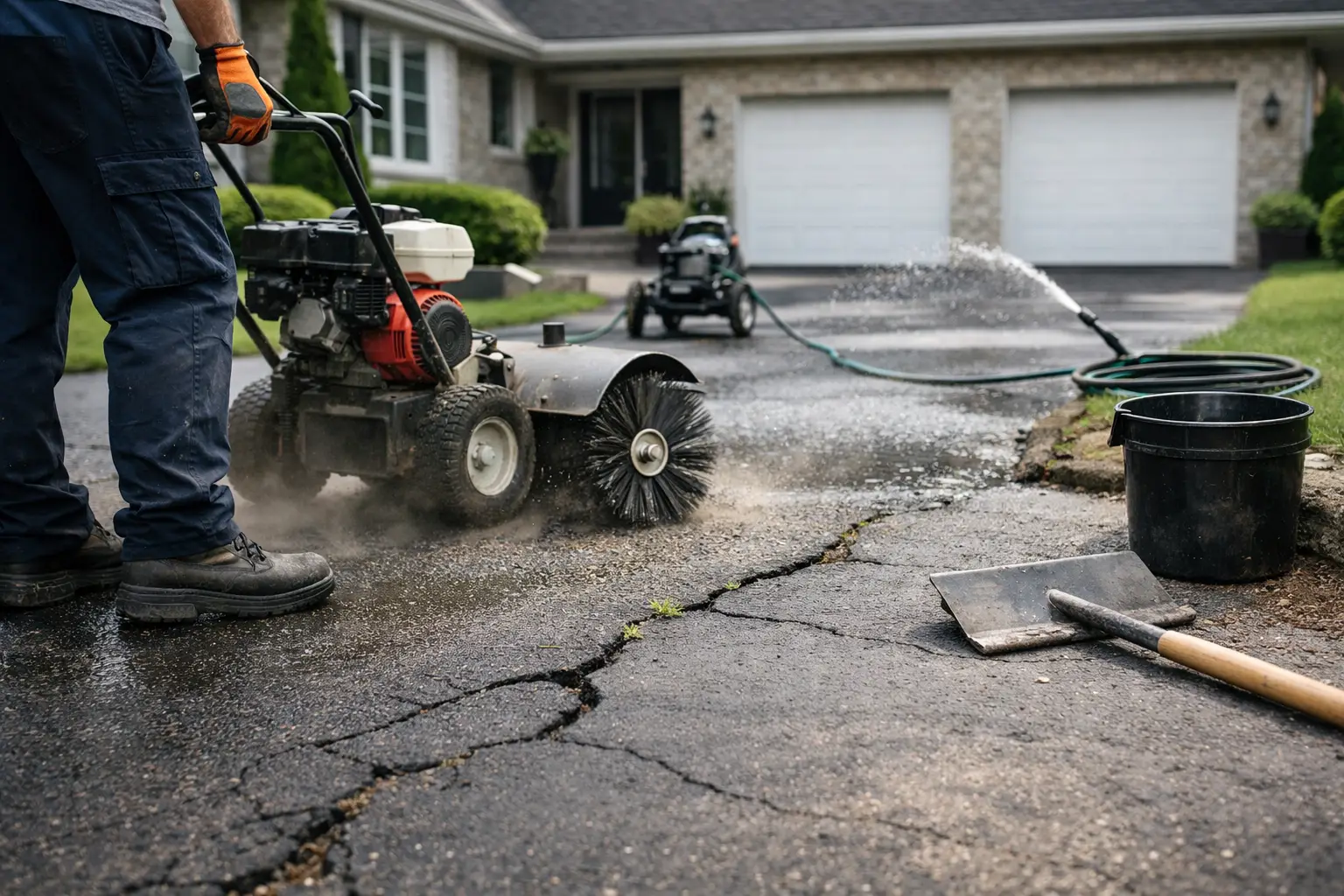
A sealcoat can only protect the surface beneath it. To prepare driveway for sealcoating properly, start by treating cracks, stains, loose debris, and drainage issues as more than cosmetic concerns. Water, oil, and failing asphalt can prevent the coating from bonding as it should. A clean, sound surface gives your driveway the protection and sharp black finish it deserves.
For Pennsylvania homeowners, preparation also means paying attention to weather and cure time. Our freeze-thaw cycles are hard on asphalt. Skipping the groundwork may save a little time now, but it can lead to peeling, premature wear, and repairs that cost more later.
Start With a Real Look at the Asphalt
Walk the driveway slowly, preferably in dry daylight. Look for hairline cracks, wider open cracks, low spots that hold water, crumbling edges, and areas where the surface has become loose or gray. A driveway does not need to look perfect before sealcoating, but it does need to be structurally sound enough for the coating to do its job.
Sealcoating is surface protection, not structural repair. It helps shield asphalt from water intrusion, oxidation from UV exposure, road salt, fuel drips, and everyday traffic. It will not rebuild a section that is badly broken apart, correct a deep depression, or hide a pothole. Those conditions should be repaired first.
Pay close attention to the edges. Asphalt often begins to fail there because there is less support than in the center of the drive. If an edge is crumbling, a professional may recommend patching it before applying sealer. That repair creates a stronger boundary and helps keep damage from moving farther into the driveway.
Repair Cracks and Potholes Before Sealing
Cracks are an open invitation for water. Once water reaches the base beneath the asphalt, it can weaken the foundation. In winter, that water freezes, expands, and makes the crack wider. By spring, a small opening may have become a much more expensive repair.
Small, stable cracks can often be cleaned and filled with a compatible crack filler before sealcoating. Wider cracks, alligator cracking, potholes, and soft spots require a closer evaluation. If the asphalt moves underfoot, breaks apart at the edges, or has repeated damage in the same area, filling alone may not be the right answer. A proper patch may be needed to remove failed material and restore the base.
Fresh repair materials need adequate time to cure before sealcoat is applied. The exact waiting period depends on the repair product, weather, and condition of the driveway. This is one reason a site-specific estimate matters. Good preparation follows the condition of the pavement, not a one-size-fits-all schedule.
Remove Dirt, Vegetation, and Loose Material
A driveway should be thoroughly cleaned before sealer goes down. Sweep away leaves, sand, gravel, grass clippings, and loose asphalt. Use a stiff broom or blower to clear the driveway, then give special attention to cracks, edges, and the transition where the driveway meets a garage, walkway, or curb.
Weeds growing through cracks should be removed at the root where possible. Simply cutting them at the surface leaves material behind that can continue to hold moisture and interfere with repairs. If vegetation is treated with a weed killer, allow it to dry and follow product directions before any cleaning or repair work begins.
Pressure washing can help on heavily soiled pavement, but it is not automatically the best solution for every driveway. High pressure may loosen already failing asphalt or force water into open cracks. If washing is used, the driveway must dry completely before sealcoating. A damp surface can compromise adhesion and finish consistency.
Treat Oil, Gas, and Chemical Stains
Oil stains deserve more attention than ordinary dirt. Petroleum products can soften asphalt and leave a residue that prevents sealcoat from bonding evenly. Common problem spots include the area below a parked vehicle, near garage doors, and around equipment storage areas.
Absorb fresh spills as soon as possible. For older stains, use an appropriate asphalt-safe cleaner or degreaser, scrub the area, and rinse according to the product instructions. Do not assume water alone will solve the problem. If a stain has deeply penetrated or softened the pavement, it may need a primer, spot treatment, or repair before sealcoating.
This is a practical trade-off: a faint old stain may still be manageable with proper prep, while a heavily saturated area can require additional work. Honest advice is better than covering a problem and hoping for the best.
Trim the Edges and Protect Nearby Areas
Clean borders are part of a professional result. Trim grass back from the driveway edge so it does not hang over the asphalt. Remove soil that has built up against the pavement, especially where it traps moisture. The goal is to let water move away from the driveway rather than sit against its sides.
Before work begins, move vehicles, planters, basketball hoops, portable goals, and anything else that could block access. Cover or protect items close to the work area when needed. Keep gates accessible, and let the contractor know about sprinkler heads, drainage features, underground utilities, or fragile concrete borders near the driveway.
Homeowners should also make arrangements for pets and children. Fresh sealcoat needs protected space to cure, and foot traffic can leave marks before the surface has set.
Check Drainage Before You Seal
Water is asphalt’s most persistent enemy. Look for puddles after rain, water flowing toward the garage, downspouts that discharge directly onto the driveway, or soil that channels runoff along the pavement edge. Sealcoating helps protect the surface, but it cannot solve a drainage problem below or beside the asphalt.
Minor issues may be addressed by extending a downspout, clearing a clogged drainage path, or restoring edge support. More serious low spots may need patching or leveling work. Addressing water first protects the investment you are about to make in maintenance.
Choose the Right Weather and Clear the Schedule
Sealcoating needs dry pavement and suitable temperatures. Rain, heavy dew, cold conditions, and high humidity can delay application or extend cure times. A dependable contractor watches the forecast and will reschedule rather than apply material in conditions that put the result at risk.
Ask how long to keep vehicles off the driveway. The answer depends on the coating used, temperature, sunlight, humidity, and whether repairs were completed beforehand. Foot traffic may be allowed sooner than vehicle traffic, but do not guess. Following the recommended cure window prevents tire marks, scuffs, and damage to a fresh finish.
If you are planning around work, school, or a weekend event, build in extra time. The best-looking result comes from allowing the driveway to dry, receive the coating under proper conditions, and cure without being rushed.
When Professional Preparation Makes the Difference
Homeowners can handle basic clearing, moving vehicles, and trimming back vegetation. But repairs, stain treatment, surface assessment, and application timing are where experienced workmanship pays off. The right crew can tell the difference between a driveway ready for protection and one that needs attention first.
At Eagle Seal Coating, every job is treated like our reputation depends on it. Because it does. That means recommending repairs where they are needed, preparing the surface with discipline, and using quality materials to protect the asphalt instead of merely making it look black for a short time.
A well-prepared driveway is not just ready for a better appearance. It is ready to resist the water, sun, traffic, and Pennsylvania weather that work against it every day. Clear the surface, address the damage, give repairs time to cure, and let the finished coating do the job it was made to do.
Need Help With Your Driveway?
Get a free, no-obligation estimate from Eagle Seal Coating. We'll give you an honest recommendation — no pressure.
Get My Free Estimate →