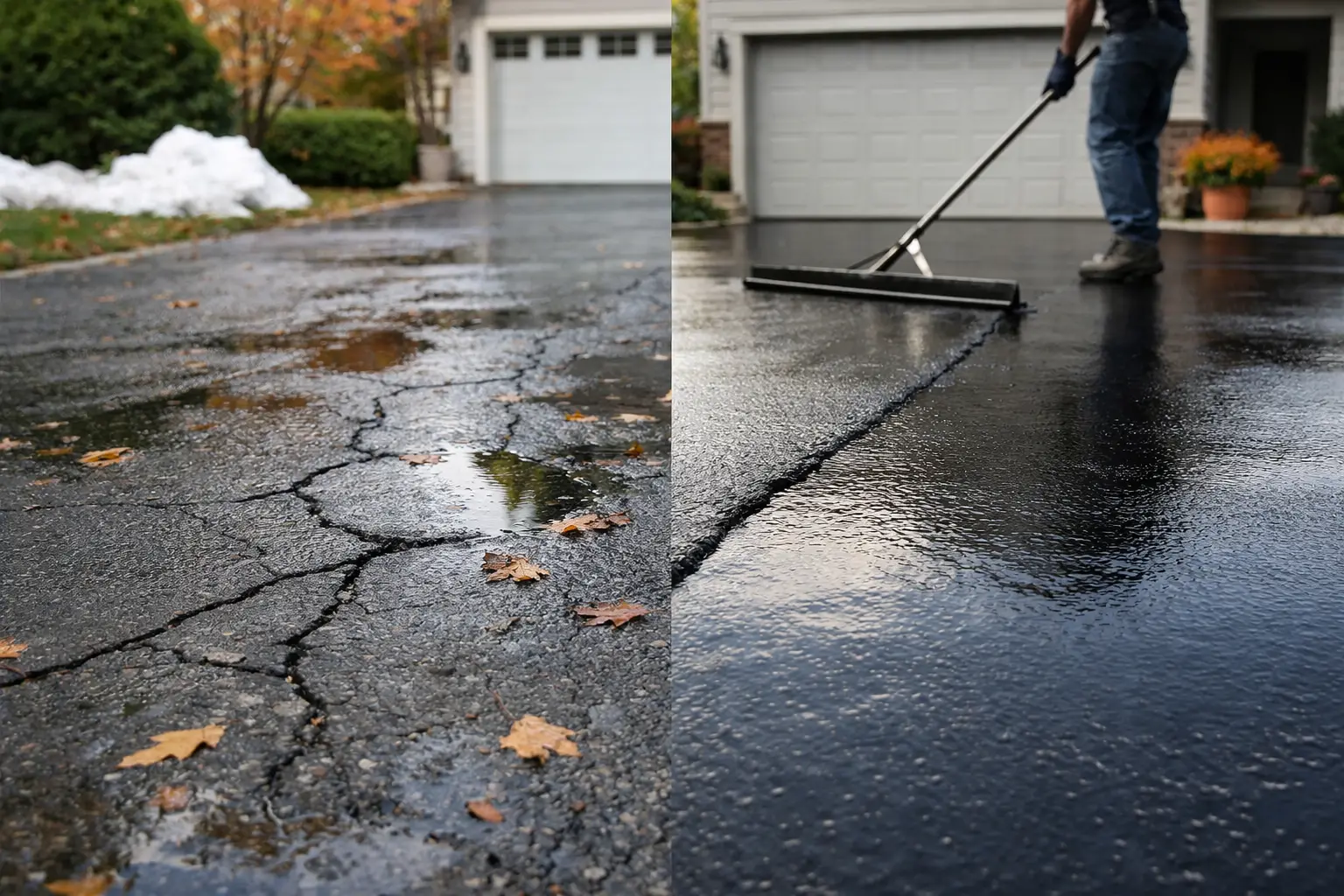
A driveway rarely fails all at once. It starts with a faded patch near the garage, a hairline crack that catches your eye after rain, or an edge that looks a little rougher than it did last season. Knowing the signs your driveway needs sealing gives you a chance to protect the surface before Pennsylvania weather turns minor wear into expensive repair work.
Seal coating is not a cosmetic cover-up. Applied at the right time, it helps shield asphalt from sun exposure, water intrusion, vehicle fluids, and daily traffic. It also restores the clean black finish that makes a home look cared for from the street.
1. Your Asphalt Has Turned Gray
Fresh asphalt is dark because its binder contains oils that help hold the aggregate together. Over time, sunlight oxidizes that binder. The surface fades from black to charcoal, then gray, and eventually begins to look dry or dusty.
A faded driveway is one of the clearest signs the protective oils in the asphalt are breaking down. UV exposure is especially hard on open driveways with little shade. Once the surface loses flexibility, it becomes more vulnerable to cracking under traffic and temperature changes.
Seal coating adds a protective layer that limits further oxidation and gives the driveway a renewed black appearance. If the asphalt is only slightly faded and still structurally sound, this is often the right time to act. Waiting until it is severely gray and brittle may mean cracks need repair first.
2. Small Cracks Are Starting to Spread
A few narrow cracks may not look urgent, but they are an opening for water. Rain and melting snow work their way below the surface, where they can weaken the base that supports your driveway. In Pennsylvania, that water can freeze, expand, thaw, and repeat the cycle many times each winter.
Cracks should be cleaned and properly filled before seal coating. The coating protects the surrounding surface, but it is not a substitute for crack repair. Skipping that step can allow the crack to continue moving beneath the new finish.
Watch for cracks that are growing longer, branching out, or appearing in several areas at once. Those are signs your driveway needs sealing and may need prompt repair work to stop water from gaining ground.
3. Water Is Not Beading or Running Off
After a good rain, look at how water behaves on your driveway. A protected surface encourages water to run off. A worn surface may absorb moisture, leaving dark spots that linger long after the rest of the pavement has dried.
Standing water is also worth attention. Sometimes the issue is a low spot or drainage problem rather than a sealing issue alone. Seal coating can protect the asphalt surface, but it cannot correct a failed base or eliminate a depression where water collects. A dependable contractor should explain the difference clearly and recommend repair when repair is the better answer.
If water is soaking in around cracks, driveway edges, or worn areas, the surface is no longer doing its job. Addressing it before winter can help prevent deeper damage below the asphalt.
4. The Surface Looks Dry, Rough, or Pebbly
As asphalt ages, the binder that holds its stone aggregate in place begins to weaken. You may notice small loose stones, a rough texture, or areas that look worn thin. This process is called raveling, and it can make a driveway deteriorate faster than many homeowners expect.
Early raveling can often be slowed with the right preparation and professional seal coating. But if the surface is heavily deteriorated, cracked throughout, or losing aggregate across large areas, sealing alone may not be enough. Patching, resurfacing, or more extensive repair may be the honest recommendation.
The goal is not to apply a coating to every old driveway. The goal is to protect asphalt while it can still benefit from protection. That is how preventive maintenance saves money over the life of the pavement.
5. Your Driveway Has Oil, Gas, or Fluid Stains
Leaking vehicles leave more than an unsightly mark. Petroleum-based fluids can soften and weaken asphalt, especially when they sit in the same place for weeks or months. You may see a dark, sticky area near a parking spot, beneath a work vehicle, or where lawn equipment is stored.
Small stains should be cleaned as soon as practical. For more serious soft spots, the damaged asphalt may need to be cut out and repaired before seal coating. Applying sealer over active contamination without proper preparation can compromise the finish and leave the underlying problem untreated.
Once repairs are made, seal coating provides another layer of defense against occasional drips and spills. It will not make asphalt immune to oil, but it gives the surface better protection than bare, weathered pavement.
6. The Edges Are Crumbling
Driveway edges do not have the support of pavement on both sides, so they are often the first place asphalt breaks down. You might notice loose pieces near the lawn, cracks along the border, or tire tracks that have pushed the edge outward.
Sealing can help protect sound edges from moisture and oxidation. It cannot rebuild an edge that has already collapsed. Those areas may need patching first, particularly if vehicles regularly drive close to the border or if runoff is washing away support along the driveway.
Keeping heavy vehicles off unsupported edges, directing downspouts away from the pavement, and repairing edge damage early can make a major difference. A small repair now is usually far less disruptive than rebuilding a large section later.
7. It Has Been Several Years Since the Last Seal Coat
There is no single calendar rule for every driveway. Sun exposure, drainage, vehicle traffic, asphalt age, and the condition of past work all matter. Still, many residential driveways benefit from professional inspection and maintenance every two to three years.
A lightly used, shaded driveway in excellent condition may not need sealing as often. A wide, sun-exposed driveway with multiple vehicles may need attention sooner. The best decision comes from the surface condition, not a one-size-fits-all sales pitch.
If you cannot remember when the driveway was last sealed, take a close look for fading, fine cracks, rough texture, and water absorption. Those visible changes tell you more than the calendar alone.
What to Do Before You Seal
A lasting seal coat depends on preparation. The driveway should be cleaned thoroughly, with dirt, loose material, vegetation, and debris removed from cracks and edges. Cracks need appropriate filling, potholes need repair, and oil-damaged areas should be evaluated before any protective coating is applied.
Weather matters, too. Seal coating needs a dry surface and suitable temperatures to cure properly. Rushing the job ahead of rain or applying material over damp pavement can affect results. Professional scheduling is part of protecting the work, not a delay tactic.
For homeowners, the practical benefit is simple: proper prep helps the coating adhere evenly, look better, and perform longer. A jet-black finish is appealing, but the protection beneath that finish is what helps preserve your driveway.
Protect the Driveway Before Damage Sets In
The best time to address asphalt wear is when the damage is visible but still manageable. Faded color, early cracking, water absorption, and rough texture are warnings that your driveway is losing its defenses. Waiting for potholes or major breakup usually means a larger repair bill and fewer options.
Eagle Seal Coating treats every driveway like a visible investment because it is one. A clear assessment, careful prep, premium materials, and precise application can help protect your asphalt through the seasons ahead. If you are seeing these warning signs, request a free, no-pressure estimate while preventive maintenance is still on your side.
Need Help With Your Driveway?
Get a free, no-obligation estimate from Eagle Seal Coating. We'll give you an honest recommendation — no pressure.
Get My Free Estimate →