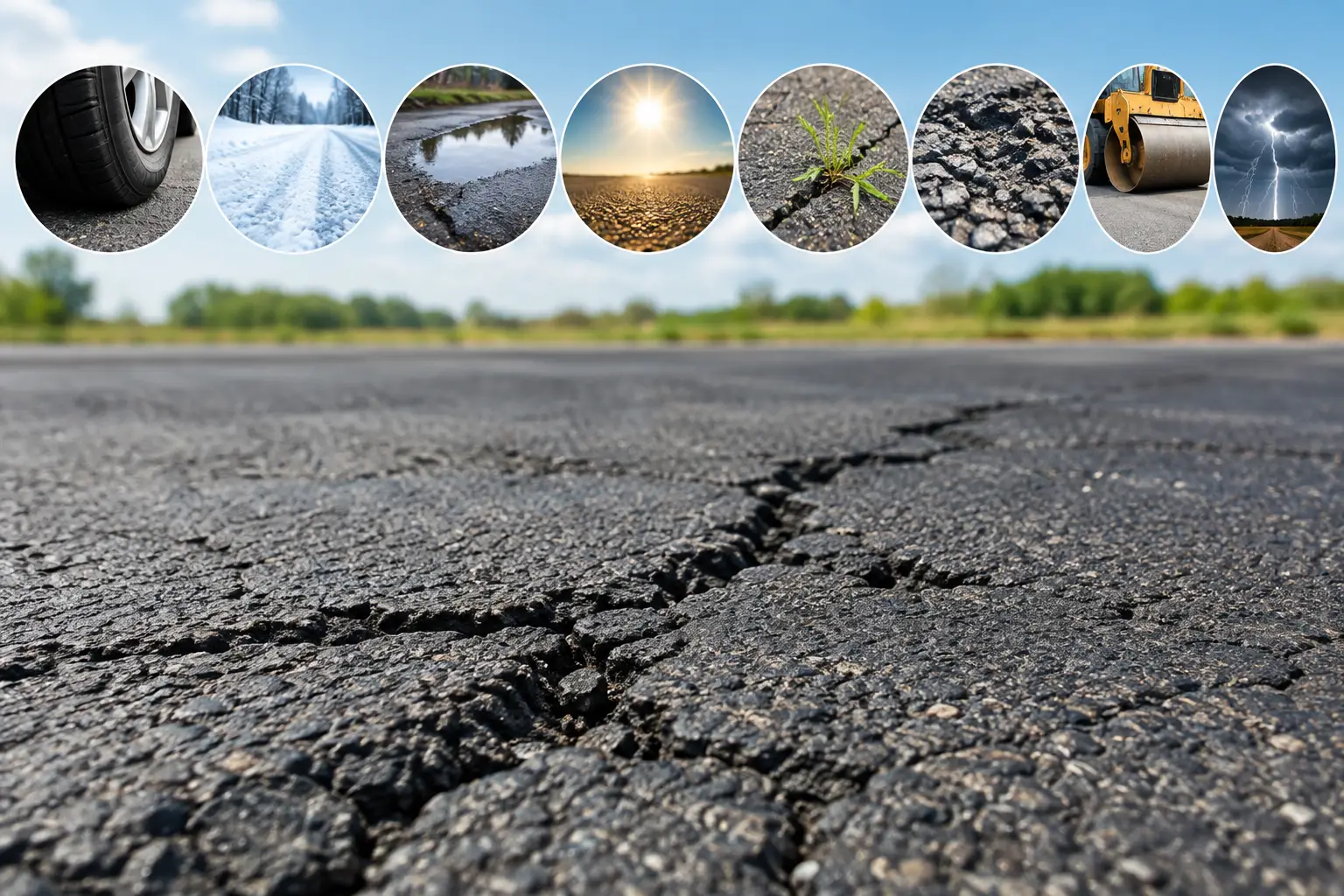
A small driveway crack can look harmless in July and become a broken, crumbling edge by spring. That is the hard truth behind what damages asphalt: most serious failures begin with a small opening, then water, weather, and traffic do the rest. For Pennsylvania homeowners and property managers, protecting asphalt means catching those early warning signs before a simple repair turns into resurfacing or replacement.
Asphalt is durable, but it is not maintenance-free. It needs a sound base, good drainage, timely crack repair, and protection from the elements. The Eagle protects. Your asphalt lasts.
What Damages Asphalt Most Often?
The biggest threats are usually working together, not acting alone. Water enters a crack. Freezing temperatures expand that water. Vehicles flex the weakened area. Sun dries out the surface. Before long, the pavement loses the smooth, solid appearance it had when it was new.
1. Water infiltration
Water is asphalt’s most persistent enemy. A paved surface is designed to shed water, not hold it. When cracks, open joints, or low spots allow water through, it reaches the base material beneath the asphalt. The base softens, shifts, and loses the support needed to carry vehicle weight.
This is why a shallow crack can lead to a pothole. The surface may still look mostly intact, but the structure underneath is weakening. As cars, delivery trucks, and daily traffic pass over that area, the unsupported asphalt breaks apart.
Standing water deserves attention, too. A puddle that remains long after rain has stopped may point to poor drainage or a settling area. Seal coating helps protect the surface from moisture, but it cannot correct a failed base or a drainage problem. Those conditions need to be addressed before sealing.
2. Freeze-thaw cycles
Pennsylvania winters are especially hard on driveways and parking lots. Water seeps into cracks, freezes, expands, and forces the crack wider. When temperatures rise, the water thaws and settles deeper into the opening. The next freeze repeats the process.
This cycle can turn hairline cracking into alligator cracking, potholes, and broken edges in a single season. Repairing cracks before winter is one of the most cost-effective maintenance decisions a property owner can make. It keeps water out while the damage is still manageable.
3. Sun and oxidation
Asphalt contains binders that hold the aggregate together and give new pavement its deep black color. Ultraviolet exposure and oxygen slowly dry out those binders. Over time, the surface fades from black to gray, becomes less flexible, and starts to show fine cracking.
Fading is more than a cosmetic issue. It signals oxidation, which makes pavement more vulnerable to water and traffic damage. Professional seal coating restores a clean, dark appearance while creating a protective barrier against UV exposure, moisture, and normal wear.
The timing depends on the condition and age of the pavement. A newly installed driveway needs time to cure before it is sealed, while older asphalt should be evaluated for cracks and repairs first. Applying sealer over active damage is not a substitute for fixing it.
4. Oil, gasoline, and vehicle fluids
Leaking vehicles can leave more than an unsightly stain. Gasoline, oil, transmission fluid, and other petroleum-based products can soften asphalt binders. In a driveway, this damage often shows up beneath the spot where a car is regularly parked. In commercial lots, it is common near loading areas, service entrances, and high-turnover parking spaces.
Small spills should be cleaned as soon as possible. Heavier contamination may require removal and patching if the asphalt has become soft or deteriorated. A quality seal coat adds a layer of protection, but it cannot make a fuel-soaked section structurally sound again.
5. Heavy loads and repeated traffic
Asphalt is built for a certain type and volume of traffic. A residential driveway can handle everyday passenger vehicles, but repeated use by heavy moving trucks, dumpsters, construction equipment, or delivery vehicles can overstress the surface and base.
The same principle applies to commercial properties. Traffic lanes, dumpster pads, loading zones, entrances, and sharp turning areas receive more stress than open parking spaces. These areas often need a maintenance plan tailored to how the property is actually used.
Damage from weight typically appears as ruts, depressions, cracking, or pavement that feels soft under a tire. If the base has failed, a surface-only patch will not provide a lasting result. Proper repair means removing the failed material, rebuilding the affected area as needed, and installing new asphalt with the right compaction.
6. Poor drainage and weak edges
Water does not have to enter through a visible crack to cause trouble. If water flows toward the driveway instead of away from it, or if downspouts discharge directly onto the pavement, the asphalt may stay saturated for long periods. That constant moisture can undermine the base and accelerate cracking.
Edges are also vulnerable because they have less support than the center of the pavement. Driving off the side, parking too close to an unsupported edge, or allowing soil to erode beside the asphalt can cause edge cracks and breakage. Keeping the surrounding grade stable and directing water away from the paved area makes a real difference.
For parking lots, drainage concerns may involve catch basins, curbs, grading, or ponding near building entrances. These issues affect more than pavement life. They can create slippery conditions, trip hazards, and winter ice problems.
7. Tree roots and ground movement
Roots can push upward from below, creating ridges and raised sections in asphalt. Removing the visible bump without addressing the root or underlying soil movement may only delay the problem. In some cases, careful root management and a properly designed repair are needed to restore a safe surface.
Ground movement can also come from poor compaction, buried utility work, settling fill, or changes in drainage. Depressions and localized cracks are often signs that something underneath the pavement has shifted. A professional assessment helps determine whether the repair should be a crack fill, patch, or deeper base correction.
8. Delayed maintenance
The most preventable damage is the damage left alone too long. Cracks do not seal themselves. Potholes do not stay the same size. Faded pavement does not regain flexibility on its own. Waiting can feel like saving money, but deterioration usually makes the eventual repair larger and more expensive.
A practical maintenance schedule starts with regular visual checks. Look for new cracks, widening cracks, low areas that hold water, crumbling edges, oil stains, and fading color. After winter and after periods of heavy rain are especially useful times to inspect a driveway or lot.
For commercial properties, clear line striping should also be part of the review. Fresh, accurate markings improve traffic flow, define parking spaces, support ADA-compliant access, and help visitors move safely through the property. Maintenance is not just about extending asphalt life. It is about keeping the entire paved area safe and professional.
Protecting Asphalt Before Damage Spreads
Good asphalt maintenance follows the condition of the surface, not a one-size-fits-all calendar. Cracks should be cleaned and sealed before water can reach the base. Potholes and failed areas should be repaired properly, with weak material removed rather than simply covered. Seal coating should be applied to sound, repaired asphalt when weather conditions allow it to cure correctly.
There are trade-offs. A driveway with only minor surface oxidation may benefit from routine sealing. A driveway with widespread alligator cracking, drainage failure, or soft spots may need more substantial repair before any protective coating makes sense. Honest recommendations matter because the right repair should solve the problem, not just hide it for a season.
If your asphalt is showing cracks, fading, puddling, or broken edges, act while the damage is still contained. Eagle Seal Coating provides straightforward assessments, durable repairs, and surface protection with no pressure. A free estimate can give you a clear picture of what your pavement needs and what can wait. Every job is treated like our reputation depends on it. Because it does.
Need Help With Your Driveway?
Get a free, no-obligation estimate from Eagle Seal Coating. We'll give you an honest recommendation — no pressure.
Get My Free Estimate →